










































Community-Based Surveillance - Word of Mouth: Learning from Polio Communication and Community Engagement Initiatives
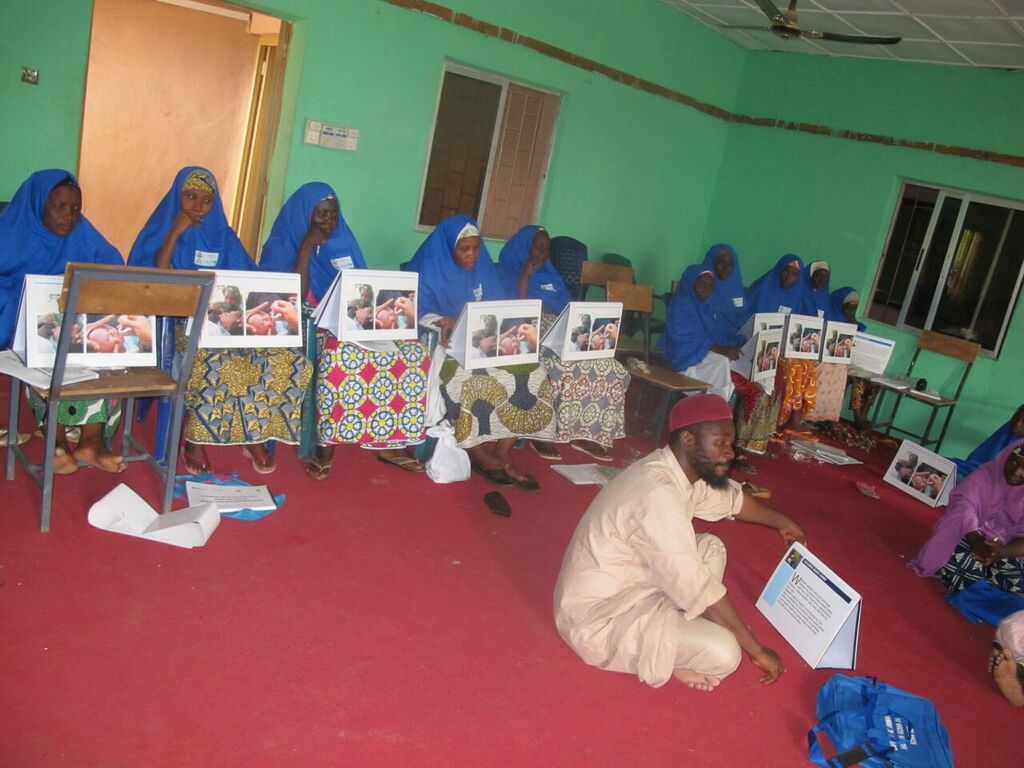
Community-Based Surveillance
Surveillance of disease incidence and trends is normally the exclusive domain of professionals trained to monitor, gather, analyze, and report relevant data. Contrary to the professionalization of this role, the polio program sought the significant engagement of communities in the surveillance process. As a result, many countries are now using community-based surveillance, including South Sudan, Ethiopia, Nigeria, Somalia, and Kenya. These countries have established networks of key informants, including pediatricians, “informal” doctors, and shrine keepers, among others, to do weekly “zero case” reporting.
Time and Access
Community-based surveillance reduces the time from onset of disease to reporting and investigation. It can also access areas where traditional development actors, such as the government or United Nations, cannot easily go. Thus, the usefulness of this approach comes in moving beyond the reach health facilities with information that fills gaps and reduces the number of “silent areas.” This reach is essential in countries with security issues, nomadic populations, limited health system capacity, and other difficult situations within which to collect relevant data.
Technologies used at the community level—such as Auto-Visual AFP Detection and Reporting (AVADAR),16 geo-tagging,17 rumor monitoring, and hotlines—have the ability to support local people in improving the accuracy and timeliness of data reporting. The introduction of mobile technology for community-based surveillance has allowed for quicker identification, stool sample collection, and transportation, particularly in hard-to-reach areas. Although facility-based surveillance is quicker and more thorough, community-level activities complement these and are especially important among populations that are difficult to reach and have trouble traveling to facilities.
Trust and Means
At the heart of community-based surveillance is trusting communities to engage in the process and giving them the means, empowerment, and space to support their own representation at all levels. Because people within a community understand the nuances of their own community’s dynamics, they can go beyond the reach of people and organizations that are external. As such, key community informants can and do identify suspected cases of polio and other vaccine-preventable diseases. For example, in South Sudan from October 2016 to September 2017, 90.7% of validated acute flaccid paralysis cases in the CORE Group Polio Project areas were reported through community-based surveillance.18 Well-trained and supported informants do not need to have a high level of formal education to do their job well.
Sustainability
For sustainability, community members need to be able to report cases on a regular basis, and the health system must provide an acceptable response to these cases. Furthermore, the community-based surveillance process should be fully incorporated into the overall surveillance strategy. In Ethiopia, volunteers identified and reported cases. But once those cases reached the surveillance officer, they were tracked poorly (not entered into the basic case tracking system). Cases identified through community-based surveillance require full documentation and embedding in the tracking system. The data that emerge should become part of the formal reporting process.
In the context of polio and potentially other development priorities and issues, community surveillance has been a significant communication and community engagement strategy. It is empowering for people to be directly engaged in collecting, sharing, and analyzing data related to them, their families, and their communities. These activities affirm and recognize the program’s partnership with communities. And, of course, there is significant added value of communities being able to access data that are beyond the reach of the program staff.
Editor's note: Above is an excerpt from the July 2018 paper "Word of Mouth: Learning from Polio Communication and Community Engagement Initiatives - Insights and Ideas to Accelerate Action on Other Development Issues", from the United States Agency for International Development (USAID)-supported Maternal and Child Survival Program (MCSP).
- Click here to return to the Table of Contents.
- Click here to go directly to the References page, where endnote information corresponding to the superscript numerals in the text above can be accessed.
Previous section - Norms and Culture
Next section - Data-Driven Strategy
Access the various parts of the document directly:
- Background
- Social Mobilization
- Norms and Culture
- Community-Based Surveillance
- Data-Driven Strategy
- Operational Oversight
- Conclusion
- References
- Acknowledgments
This paper is made possible by the generous support of the American people through the United States Agency for International Development (USAID) under the terms of the Cooperative Agreement AID-OAA-A-14-00028. The contents are the responsibility of the Maternal and Child Survival Program and do not necessarily reflect the views of USAID or the United States Government.
The Maternal and Child Survival Program (MCSP) is a global USAID initiative to introduce and support high-impact health interventions in 25 priority countries to help prevent child and maternal deaths. MCSP supports programming in maternal, newborn, and child health, immunization, family planning and reproductive health, nutrition, health systems strengthening, water/sanitation/hygiene, malaria, prevention of mother-to-child transmission of HIV, and pediatric HIV care and treatment. MCSP will tackle these issues through approaches that also focus on household and community mobilization, gender integration, and digital health, among others.
Image credit: Chris Morry