










































Consolidated Report for Assessment of Mass Media Campaign of PEI Initiative for the Year 2019
"The higher frequency of contact, plus high profile and visibility of the selected mediums, will ensure that the messages are noticed and trusted and adhered to across various populations segments."
As one of the last two remaining endemic countries (with Afghanistan), Pakistan is central to the world's eradication effort. However, inaccessibility, violence, misconceptions, and misinformation, as well as intricate tribal and cultural norms and systems, are among the challenges facing Pakistan's polio eradication initiative (PEI). The United Nations Children's Fund (UNICEF) provides technical leadership for polio eradication programme communication and social mobilisation. Commissioned by UNICEF Pakistan, this report presents the findings of a nationwide study conducted to observe and quantify the impact of UNICEF-sponsored mass media polio awareness campaigns. The assessment is envisaged to assist in identification and development of strategic focus and shifts in the programme, based on the mass media campaigns' impact.
As explained in the report, the vast geographic spread, inaccessibility to high-risk communities, and movement of the poliovirus in Pakistan through nomadic populations have created a unique set of challenges in campaign awareness and deployment of behaviour change initiatives. No localised or ground-level media can offer effective coverage across the entire geographic region in terms of reaching everyone with critical communication messages. To combat this and to reach the maximum number of children possible, particularly during the low season of poliovirus transmission, the UNICEF Polio Unit (on behalf of the Pakistan PEI) implements mass media campaigns to provide a widescale base of general awareness about the risks of polio and the importance of vaccination in protecting children under the age of 5 years. Tools include television, radio, print, and outdoor advertising.
This study relies on primary data collection from the field and a mix of quantitative and qualitative assessments through identifying and interviewing parents of children aged 0 to 5. The evaluating agency, Weitek Consultants, undertook data collection surveys in April 2019, August 2019, November 2019, and December 2019, aligned with the national-level polio immunisation campaigns in diversified areas of the country: Balochistan, Punjab, Sindh, and Khyber Pakhtunkhwa (KP) provinces, including tribal areas and the capital of Pakistan. As far as the sample size is concerned, 6,400 parents in each round were selected, totaling 25,600 primary respondents (12,800 fathers and 12,800 mothers) in all the four survey rounds. Moreover, 512 key informants were consulted for their views, and 1,610 persons (813 males and 795 females) participated in 128 focus group discussions (FGDs) across the sampled districts/areas across Pakistan (32 FGDs per round).
Select quantitative findings:
- Comparison of the four media types reveals that outdoor media is the most popular medium among respondents, followed by television and then print media; radio was found to be the least popular medium.
- As far as visibility of polio-related messages is concerned, outdoor media contributed the most in this regard, followed by television, radio, and newspapers, with exception of round 1, where radio performed better than TV in some places.
- The most popular TV channels, radio channels, and newspapers were identified during each of the four rounds of the survey during 2019 and showed little variation. A table in the report presents a summary of overall ranking based on the combined data for the year. It is strongly recommended that future mass media campaigns for awareness about polio and importance of vaccination against it should focus more on these TV/radio channels and the most-read newspapers.
- The mass media campaign helped in raising the polio awareness level among respondents and enhancing their understanding of the health effects of polio. Table 5 in the paper corroborates polio awareness levels and, as a result, motivation of parents to vaccine their children. Although most of the parents got motivated and vaccinated their children, it is worth mentioning that major reasons as stated by the respondents for non-vaccination are: (i) restrained by someone (671 of 1,082); (ii) non-availability of information (76 of 1,082); and (iii) teams did not reach them (44 of 1,082). Though the figures regarding non-vaccination are small out of 25,600 people surveyed, these results/reasons deserve attention, say the evaluators.
Select qualitative findings/recommendations from the FGDs:
- Almost all FGD participants were aware of polio, but detailed knowledge about the disease, such as incurability, health impact, and correct vaccination age, was limited among some people. These points should be highlighted in future campaigns.
- 91.55% participants of the FGDs said the media messages shown to the audience are compatible with their local cultural norms, and they have no objections to them.
- FGD participants opined that it would be better to resume content development in Pashto language and also to consider other major regional languages, such as Punjabi, Hindko, and Brahui.
- Television, outdoor, and social media were mostly suggested as suitable media for campaigns.
- Participants of FGDs suggested a year-round, continuous mass media campaign instead of intermittent bursts of campaign.
- It was recommended that more personalised campaigns be run at the community level in the targeted union councils.
- Misconceptions about the vaccination campaign caused by false propaganda stories spread through social media and grapevine need to be addressed.
- Local religious scholars and community leaders can play an important role.
- Multiple new vehicles to carry messages to parents of the children of vaccination age were suggested during different rounds.
- Women seem to be more willing and motivated towards vaccination, but the household heads are usually males who are the key decision makers.
Based on the quantitative and qualitative findings, the researchers suggest taking the following measures for improving polio awareness media campaigns in Pakistan:
- Overall, 27.4% of the sampled respondents were found to be uneducated. Therefore, it is suggested to focus more on visuals besides written messages in future campaigns.
- The incurability of polio needs to be highlighted more, because 29.3% of polio-aware respondents did not know that the disease cannot be treated.
- Radio is not evenly spread among study regions; therefore, localised campaigns should be designed for radio, whereas other media may be considered at the national level.
- The most popular TV channels, radio channels, and newspapers as identified in this document may be focused on more in upcoming campaigns.
- Media messages need to be designed and developed in line with the local cultural norms and preferences. Studies have found that people pay the most attention to the recommendations of religious scholars, health professionals, and national-level political leaders.
- A small segment of the sampled population - i.e., 7.9% - has no access to any one of the four media types used in the UNICEF campaign. Such parents may be reached through other communication vehicles such as community-level communication, mosque announcements, and broadcast SMS (short messaging service/text messaging).
- There is a need to neutralise propaganda against polio vaccination.
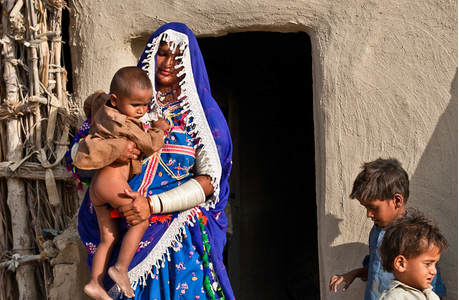
UNICEF Pakistan website, March 30 2022. Image credit: © UNICEF/Pakistan/Samar Deen
- Log in to post comments