










































Documentation of REC in Malawi
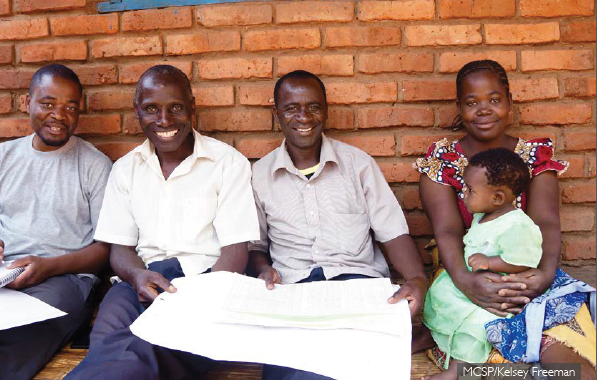
"Mini-surveys conducted by district supervisors indicated over 98% of infants were reached with immunization services. In addition, the contacts were used to counsel postpartum women for FP [family planning] services, for which utilization has improved significantly."
The Reaching Every Child (REC) approach aims to fully immunise every infant with all vaccines in the national immunisation schedule. From October 2015 to February 2018, the United States Agency for International Development (USAID)'s Maternal and Child Survival Program (MCSP) assisted the district health services to implement REC in two low-coverage districts (Ntchisi and Dowa) of Malawi, which were selected from among seven districts with Pentavalent 3 coverage under 80%. After implementing REC and infant tracking and monitoring for over one year in focus districts, MCSP decided to conduct an internal review and documentation of the results. The broad objective of the review, developed in consultation with the national Ministry of Health/Expanded Program on Immunization (MOH/EPI) team and USAID/Malawi, was to identify strengths, weakness, and lessons in order to strengthen immunisation REC approaches and implementation in the country. This report discusses the findings of the internal review and documentation of the results of REC.
The methodology of the review was primarily qualitative, and included semi-structured interviews with stakeholders ranging from national officials to community members (e.g., traditional village heads (VHs), volunteers, and mothers). Near the end of documentation, the team debriefed USAID and presented findings at an Immunization Technical Working Group meeting chaired by the EPI Manager with the MOH and partners.
About 90% of villages in the two districts, under the leadership of local VHs and volunteers, actively track the immunisation status of infants using the My Village My Home (MVMH) tool introduced by MCSP in January 2016. (See Related Summaries, below.) In 2016, the quality of immunisation services improved: The proportion of health facilities (HFs) with no stock-outs of vaccines increased from 31% to 80%; the proportion of HFs using monitoring charts increased from 46% to 85%. In general, a number of process indicators show that MCSP support has strengthened the competence and ability of the two district's health services, both to deliver vaccination services and to achieve high coverage. The infant tracking initiative and quarterly review meetings were considered the most useful among many valuable interventions. However, administrative coverage is not showing improvement in both districts; reasons are discussed in the report.
REC involves five components, and the bulk of the remainder of the report is organised accordingly:
- Planning and management of resources - Sample finding: Respondents felt quarterly review meetings were useful for building staff appreciation and use of data, as well as for establishing a sense of teamwork and common purpose among community representatives and formal health staff. Sample suggestion: Facilitate the participation of more local civil society organisations (CSOs) in microplanning and encourage them to help sustain monitoring and mobilisation activities in focus communities, as MCSP scales down support.
- Reaching the intended population - Sample finding: Immunisation coverage appears to be nearly 100% in communities where infant tracking and monitoring using the MVMH tool is well implemented (an estimated 60 to 90% of communities). Sample suggestion: Evaluate and respond to the request of most VHs and volunteers for additional incentives.
- Monitoring and use of data for action - Sample finding: Return dates and other information are rarely written in child health passports. Sample suggestion: Support continued capacity-building via quarterly review meetings, supportive supervision (mentoring), training of health workers (HWs), and exchange visits (among HWs and VHs and volunteers).
- Community engagement - Sample findings: Most VHs leverage their prestige and authority to convince families to have children vaccinated. Many VHs and volunteers educate about vaccination, and answer questions in outreach sessions and home visits; many mothers are well-informed about vaccination and vaccine-preventable diseases. Mothers claim that most fathers both encourage and remind about vaccination; some husbands purchase beauty aids for their wives when attending outreach sessions. Sample suggestions: Ask district health management teams (DHMTs) to encourage and support health surveillance assistants (HSAs) to go into each of their communities at least quarterly to encourage the VHs and volunteers, and to speak with families. Follow through on MCSP's proposal to make a video of the entire community tracking process for other districts and countries.
- Supportive supervision (SS) - Sample finding: At the national level, MCSP worked with the United Nations Children's Fund (UNICEF) and other national partners to develop a supportive supervision checklist. Sample suggestion: Encourage DHMTs to analyse SS findings sooner and more thoroughly at the district level, and use findings to target weak areas through mentoring, job aids, or even staffing changes.
With regard to immunisation/family planning (FP) integration, one finding is that the training of many HSAs in FP has had a positive impact; they offer immunisation and some FP methods in outreaches and refer for other methods that need higher-level skills. It is suggested here that MCSP continue training, supervision, and reporting of this initiative.
Problems and challenges remain: There is a shortage of HSAs; poor data recording, mainly due to the complicated under-2 register; a desire for more incentives for VHs and volunteers; and the need to improve the quality of infant tracking in some communities. Nevertheless, this documentation exercise revealed that the immunisation system is strong in the two districts. Almost all villages have trained and empowered VHs and volunteers to track and monitor every infant's vaccinations. The national EPI manager asked MCSP to consider expanding the tracking activity to additional districts.
MCSP website, March 16 2018; and emails from Michael Favin and Asnakew Tsega to The Communication Initiative on March 16 2018 and March 20 2018, respectively. Image credit: MCSP/Kelsey Freeman
- Log in to post comments