











































Keeping the Customer Satisfied: Applying a Kano Model to Improve Vaccine Promotion in the Philippines
Heidelberg Institute of Global Health (Wachinger, Reñosa, Chase, McMahon); Research Institute for Tropical Medicine - Department of Health (Reñosa, Guevarra, Landicho-Guevarra, Demonteverde, Silvestre, Endoma, Landicho, Aligato, Bravo); The Ohio State University College of Medicine (Chase); Johns Hopkins University Bloomberg School of Public Health (McMahon)
"The success of global health interventions heavily relies on reaching populations in a way that aligns with their priorities and needs."
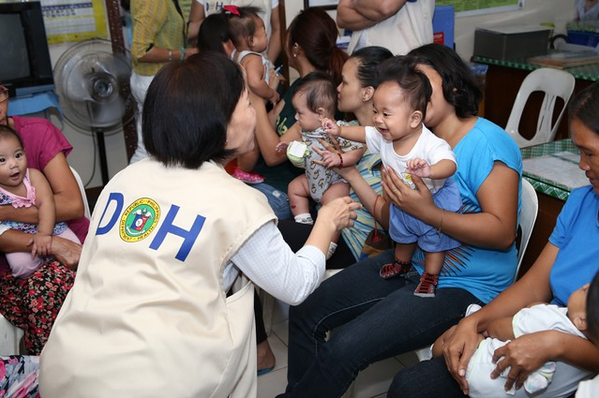
In The Philippines, a highly publicised 2017 vaccine controversy involving a novel dengue vaccine resulted in plummeting vaccination rates and a rapid decline in vaccine confidence across the country. In response, a group of researchers undertook a project that draws on human-centred design to codevelop an empathy-based vaccine confidence intervention together with end users in the Philippines. (See Related Summaries, below.) The present study applies Kano methodology - originally designed to understand how product attributes nonlinearly influence customer satisfaction - to inform design decisions regarding a video-based vaccine intervention carried out as part of the project.
The Kano method has been used in the private sector to facilitate the identification and prioritisation of different "quality attributes" of a product and their impact on client satisfaction. In contrast to the assumption of a linear relationship between a product's given quality attribute and end-user satisfaction (i.e., the more any attribute is present, the more satisfied a product's end users are), the Kano model proposes that most attribute types influence end-user satisfaction nonlinearly. These attribute types are called must-be (M), attractive (A), one-dimensional (O), reverse (R), and indifferent (I). In addition, classifications can fall in the questionable (Q) category. The authors use the terms "presence" versus "absence" to distinguish between levels of attribute performance while acknowledging that the level of perceived attribute presence might be shaped by an end user's perception of attribute performance.
To identify the quality attributes of vaccine confidence messaging relevant to this study, the researchers drew on qualitative data collected in previous phases of the overarching project, as well as on health communication literature. Based on iterative discussion within the study team, 14 attributes were ultimately selected. The researchers developed a questionnaire following the Kano approach and administered it to 205 caregivers of children aged younger than 5 years in 2 rural and 2 urban barangays (the smallest administrative unit in the Philippines) between September 2021 and April 2022. Data were analysed following routine Kano approaches, supplemented by cultural consensus analysis (CCA), which is an approach used largely in anthropology to identify distinct cultural groups and competencies.
The results indicate that including national and international logos, summarising key messages, and including fact- or story-based communication were attributes that would influence respondent satisfaction one-dimensionally. It was found that involving trusted messengers and including text-based information were required to avoid dissatisfaction. Interacting with someone after viewing the product and creating opportunities to share the promotional material via social media were attractive attributes whose presence would increase satisfaction but would not spark severe dissatisfaction if omitted. Other attributes (short duration, video- or animation-based intervention, delivering the intervention at health centres or in group settings) played a limited role in respondent satisfaction.
The researchers note that, in global health practice, some attributes might be combined rather easily in a final product, but others are mutually exclusive. In their setting, potential avenues for delivering the intervention (e.g., video screened at both the health centre and in other settings) or certain content characteristics (e.g., including logos of both national and international organisations) might coexist. At the same time, heavily basing an intervention on both communicating scientific facts and on the lived experiences of individuals can be challenging. Therefore, they encourage public health intervention developers to base their attribute prioritization decisions not only on the overall classification of the respective attribute but also on their assessment of how the individual attribute relates to other intervention characteristics in their particular context.
In conclusion, the researchers suggest that applying Kano and CCA methodologies allowed them to make informed design decisions in terms of optimising "accessibility and credibility of an intervention that ultimately proved successful in bolstering vaccine intentions". They "encourage researchers and other stakeholders to consider these findings in their design and implementation efforts, both regarding the Filipino setting and when exploring pathways to acknowledge client feedback on the relevance of certain attributes of other interventions in different contexts."
Global Health: Science and Practice 2023;11(6):e2300199. https://doi.org/10.9745/GHSP-D-23-00199. Image credit: Copyright Sanofi Pasteur / DV Photography via Flickr (CC BY-NC-ND 2.0 Deed)
- Log in to post comments