










































'PRiME'ing Communities for OPV
"While social data collection has been a growing part of the GPEI [Global Polio Eradication Initiative]'s efforts over the past year, translating this data into action at community level is where many programmes still struggle."
This article describes a communication-centred approach to evaluation in the context of the effort to eradicate polio in Pakistan via the oral polio Vaccine (OPV): the Planning, Reporting, Implementation, Monitoring and Evaluation (PRIME) system. Developed by the United Nations Children's Fund (UNICEF), PRIME assesses communication field performance by combining epidemiological, missed children-related, and social data into one profile that is designed to enable managers to quickly zero in on areas that require attention.
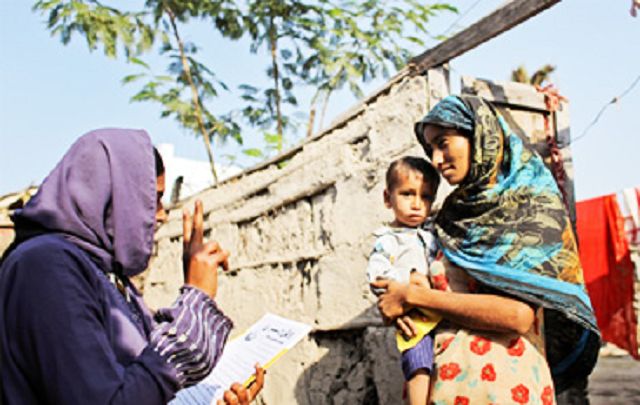
The context of PRIME's development is this: UNICEF has deployed a field network of over 800 social mobilisation staff at the grassroots level. This Communication Network (COMNet) works in the highest risk areas to mobilise social commitment for polio eradication and community demand for OPV. To improve the network's ability to focus their efforts, as well as the programme's efforts, most strategically, PRIME:
- is based on a system of performance monitoring, compiling Union Council and district communication data into a two-page "performance card" at each administrative level;
- sets targets for each indicator, clearly denoting which targets have not been met each month and providing a brief qualitative explanation of why;
- assesses performance holistically by a series of input, outcome, and impact indicators;
- uses the rate at which refusals are converted to vaccinations as the basis for COMNet mobiliser performance assessment; and
- is automated, compiling post-campaign data into performance cards no later than two weeks after each vaccination round and ultimately posting the information online.
According to the article, initial impact of PRIME is "very encouraging", with "significant rises in the number of refusals converted by COMNet staff in the Quetta Block each month."
PRIME is based on an Indian model, and there are also hopes of replicating it in Afghanistan and Nigeria and of using the same system as a performance management tool for the broader GPEI programme.
PolioInfo newsletter, June 2012. Image credit: UNICEF/2011/A. Azai