


































Rapid Review: Vaccine Hesitancy and Building Confidence in COVID-19 Vaccination
Institute of Development Studies
"[V]accine hesitancy is shaped by additional and complex dimensions beyond information alone. Consideration of the communities and contexts in which vaccination occurs, and what motivates people to participate, will be important considerations for COVID-19 vaccines."
Evidence suggests that vaccine hesitancy, a delay in acceptance or refusal of an available vaccine, threatens to undermine the public health benefits of COVID-19 vaccination. This Social Science in Humanitarian Action Platform (SSHAP) brief draws on social science literature and informal interviews with experts to illustrate that vaccine hesitancy is complex and context-specific, and often reflects diverse, everyday anxieties - not just, or even primarily, exposure to misinformation or anti-vaccine campaigners. Based on this analysis, the brief proposes strategies to guide those involved in vaccine development, communication, and deployment to boost confidence in COVID-19 vaccines.
After providing background information on vaccine hesitancy, vaccine confidence, misinformation, disinformation, and conspiracy theories, the brief shares social science lessons on vaccine hesitancy. In brief:
- Individual and group influences
- Information and knowledge: Different forms of information emerge and thrive not in vacuums but, rather, from ecosystems. People are diverse, with individual health, social, and political experiences that influence the way they feel about vaccination.
- Social and cultural notions of the body, immunity, and strength: Different social groups have varying notions of immunity and strength, which influence how they relate to vaccination.
- Community dimensions of trust: Local healthcare providers are often best placed to deliver vaccinations in ways that build confidence. Also, where religious leaders and traditional healers have been involved in vaccination programmes from their inception, they have gone on to be positive advocates for vaccination in their communities. In contrast, mass vaccination campaigns led by unfamiliar, external actors have resulted in fear and reticence - as occurred, for example, during polio vaccinations in Nigeria and Ebola vaccine trials in the Democratic Republic of the Congo (DRC).
- Contexual influences: Political economy and trust - Vaccine hesitancy is more likely to develop in contexts with high inequality and lack of citizen participation in government and health systems, as well as those with political or social divides, militarisation of vaccine campaigns, and/or mandatory vaccination. People in such contexts may perceive the state (and its partners) to have ulterior (and harmful) motives for vaccination.
- Vaccines and vaccination
- Accessibility: Work or caregiving responsibilities, lack of physical access to vaccination posts, inadequate logistics, resource limitations, and/or conflict or insecurity may be behind what may seem to be a lack of demand for vaccination.
- Perceptions of disease and vaccine risk: In conditions of uncertainty, individuals often make choices based on perceived risk of a disease itself versus the risks of vaccination. The dynamics of a disease outbreak (e.g., real and perceived exposure and transmission rates) differ across contexts and shape people's risk assessments.
- Perceptions of vaccine roll-out: Issues such as who is eligible and prioritised to receive vaccines and the coexistence of several vaccines in the same context have led to mistrust.
Turning to the COVID-19 vaccine in particular, the brief reviews evidence of COVID-19 hesitancy and challenges for COVID-19 vaccine confidence, including:
- Expedited development and novelty of COVID-19 vaccines - e.g., lack of transparency on vaccine development and trials.
- Information and communication environments and efforts - e.g., social media and exposure to false information.
- The politicisation of COVID-19 vaccine development and deployment - e.g., lower confidence among marginalised communities (e.g., ethnic or religious minorities) who have experienced neglect or abuse by the state or health system.
Stressing that multi-pronged approaches, tailored to socio-political contexts, specific social groups, and even individuals, are likely to yield the best results, the authors of the brief offer strategies for building COVID-19 vaccine confidence in the areas of:
- Development and approval - e.g., make pledges to vaccine safety.
- Creative communication and honest dialogue
- Be imaginative and compelling with communications, including story-telling.
- Use a wide range of platforms, both off and online.
- Build on local terminologies and understandings of vitality, strength, and immunity.
- Remind the public to act responsibly and think about accuracy prior to posting or sharing information verbally or online social media.
- Field questions and address anxieties from people and to listen to their concern and priorities.
- Be honest about uncertainties, and do not assume the public can only deal with simple information.
- Use patient-centred motivational techniques in patient-healthcare worker encounters.
- Acting together - e.g., work with trusted influencers, and co-design and discuss vaccination strategies with citizens.
- Monitoring vaccine confidence - e.g., track (and address) dis-and misinformation on and offline.
- Vaccine deployment
- Rapidly increase communication, dialogue, and planning with communities as soon as possible.
- Manage expectations (e.g., of likely vaccine effectiveness).
- Avoid coercive strategies, which can backfire.
- Ensure vaccines are administered by trusted actors.
- Ensure that all people who need the vaccine (e.g., refugees and migrants) are included in vaccination plans.
- Take vaccination to places people are comfortable, especially in minority communities who might be reluctant to visit health facilities.
- Ensure surveillance systems for adverse medical events, and establish clear communication protocols for communicating with the public about these events.
The brief concludes with a list of, and links to, related resources.
Click here for the 18-page report in English in PDF format.
Click here for the 15-page report in Arabic in PDF format.
Click here for the 22-page report in French in PDF format.
Click here for the 19-page report in Spanish in PDF format.
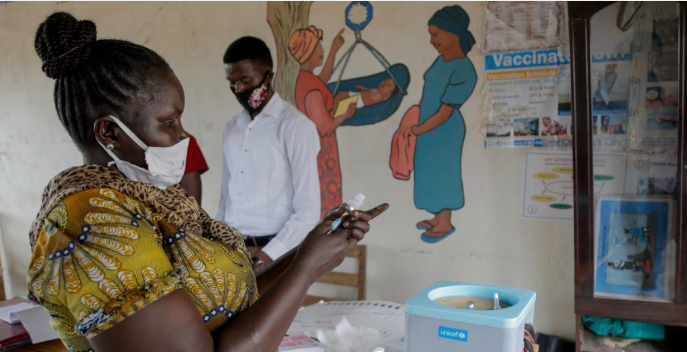
Global Outbreak Alert and Response Network (GOARN), accessed on December 14 2020, and SSHAP website, accessed on December 14 2020 and February 16 2021. Image credit: UNICEF/Obel