










































Report on the Meeting of the Technical Advisory Group for the Eradication of Poliomyelitis in Afghanistan [2020, June]
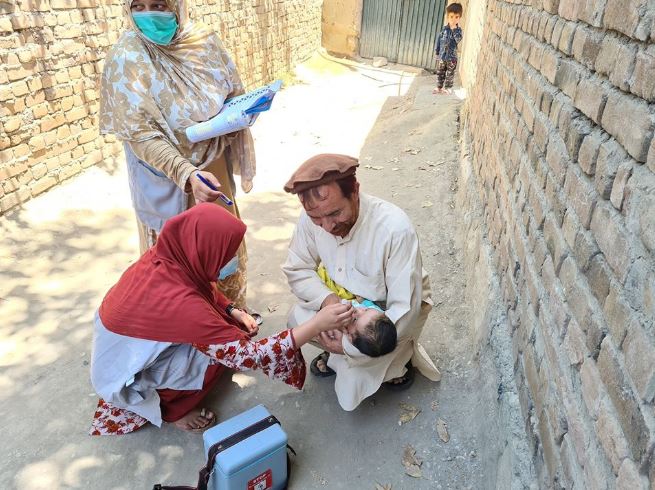
"Does the TAG support the restart of polio campaigns in early July in the midst of the COVID-19 outbreak in Afghanistan?....What operational and planning adjustments are needed so that local transmission of COVID-19 is not amplified, health workers and communities are protected, and everyone feels safe?"
A virtual meeting of the Technical Advisory Group (TAG) was held in the context of the COVID-19 pandemic, during which time the Polio Eradication Initiative (PEI) in Afghanistan was facing extraordinary circumstances challenging its ability to reach the goal of stopping all poliovirus transmission: co-circulation of both both Wild Poliovirus type-1 (WPV1) and circulating Vaccine-Derived Poliovirus type-2 (cVDPV2) in the context of the continued ban on mass vaccination by anti-government elements (AGE) amidst a complex and fluid political climate, as well as a new government and the associated change of senior leadership in Ministry of Public Health. This report provides details about and recommendations on these challenges; the below summary focuses on the communication elements of the questions submitted prior to the meeting. (The virtual TAG meeting was conducted in 2 sessions: a full day on 22 June 2020 for country team (national and regional) presentations and focused discussions, followed by a feedback session on June 25 2020.)
As the report explains, Supplementary Immunisation Activities (SIAs) are suspended due to COVID-19, increasing not only the risk of further cVDPV2 spread within Afghanistan, but also further expansion internationally. The TAG is also concerned about the extent to which COVID-19 is impacting on the country polio team, with many staff at all levels infected and others working remotely. Furthermore, given the ongoing ban on polio vaccination by AGE, there has been a dramatic increase in WPV1 cases in 2020; as of June 26 2020, Afghanistan has reported 26 cases from 12 provinces, compared to 13 cases from 3 provinces at the same point in time in 2019. Despite these findings, the TAG believes the programme can interrupt WPV transmission, as it has done at least twice in the past decade, with restoration of access and sustained improvements in the quality of SIAs.
Modeling by the Institute for Disease Modeling (IDM) shows that SIAs are likely to result in only temporary, small (<2%) increases in COVID-19, assuming risk mitigation measures are implemented and the following conditions are met:
- Political commitment at all levels, in all areas;
- Careful assessment of health and availability of health workers and polio volunteer workforce;
- Adaptations to SIA operations to reduce COVID-19 risk;
- SIA plan informed by clear understanding of community perceptions and attitudes, and rationale for SIAs credibly communicated to workers and communities; and
- Consideration given to using SIAs to assist COVID-19 response and recovery efforts.
TAG recommendations on improving SIA quality include:
- Recruit women for at least 80% of vaccine teams to increase to 100% (at least one female member in 100% of the teams before end 2020), as well as female senior positions and female recruiters/selectors - target 100%.
- Further reduce interference with recruitment: exclusively local vaccinators and social mobilisers for community acceptance and COVID-19 risk reduction.
- Monitor and evaluate frontline worker (FLW) training (including COVID-19 vaccination standards of practice, or SOPs).
- Enhance supervision and monitoring, and sanction non-performance.
- Achieve functionality and efficiency of payment systems of FLW, and monitor timeliness.
- Systematically investigate the recent improvement in household acceptance of OPV to identify factors associated with the improvement, applying lessons to reverse entrenched refusals.
All this said, "The TAG considers the lack of access for polio campaigns in many parts of the country due to constraints imposed by AGE to be the main obstacle to polio eradication in Afghanistan." In response, the PEI has broadened and intensified negotiations at all levels, but no breakthrough has been achieved. The COVID-19 response support presents an opportunity to build trust and pave the way for delivery of routine and supplementary immunisations and potentially open the door to house to house (H2H) in accessible areas or site-to-site (S2S) campaigns in inaccessible ones.
In addition, communication challenges continue to be a major obstacle to eradication, particularly in the South and Southeast, where refusals and access remain significant issues. There has been progress in communication planning and strategy, and the TAG notes a range of revised or expanded communication, social mobilisation, and community engagement activities designed to improve communication impact. However, full implementation of this plan was disrupted by the unexpected ICN scale-down during the first half of 2020 and the impact of shifting resources from SIAs to COVID-19 support. PEI support to COVID-19 activities (e.g., hygiene kits, soap) may constitute an opening for a renewed local access negotiation, but this needs to be robustly assessed. In order to take advantage of these opportunities and mitigate risks, the PEI will need to: rapidly assess community perceptions and attitudes in the lead-up to resumption of SIAs, bring greater focus to its interventions, and pay more attention to evaluating them against core SIA objectives of coverage and reducing missed children.
Specifically, in terms of communication, the TAG identified 3 main areas for immediate attention:
- Immunization Communications Network (ICN): Especially in the East, the ICN has demonstrated its ability to increase female recruitment and to support multiple activities, such as partnerships with Wakil-i-Guzar and the Islamic Advisory Group (IAG), interactive media through radio, roundtables and local participation, and increased community accountability. However, in accessible areas like Kandahar City where ICN has been in place for a significant period, there are stagnant or worsening rates of refusal and "remaining refusal". The impact of the ICN, through positive community engagement, on SIA vaccination acceptance remains unclear. ICN's role in communicating and facilitating referral and uptake of integrated services among communities is poorly defined, with limited evidence of positive effect. Reflecting on the ICN's work, the TAG notes that communication and engagement strategies need to be quickly developed, especially in the Southeast to ensure the PEI is able to vaccinate adequately high-risk communities.
- Mass and social media: The media strategy has been strengthened under the 2020 action plan through: revised media mapping for the South, Southeast, East, and West regions; partnerships with national and local media; the development of new messages and materials; edutainment programmes; and journalist training. The social media strategy continues to evolve, but social media can be unpredictable, so care must be taken to avoid amplifying and/or giving legitimacy to negative messages. The TAG recommends, among other actions, that the PEI leverage the Pakistan programme's social media techniques and strategies, as well as coordinating work with common platforms like Facebook.
- Measuring impact: Some suggestions:
- Evaluate ICN performance in accessible areas like Kandahar City against core SIA outcomes (coverage, missed children, refusals, change in acceptance).
- In order to inform wider interventions on refusal clusters, identify households/communities that have converted from refusal to oral polio vaccine (OPV) acceptance, and assess the reasons they give for this change.
- Develop operational measures to assess community trust in the programme.
- Assess impact of media/social media messages on household perceptions.
Global Polio Eradication Initiative website, July 23 2020. Image credit: Polio-Free Afghanistan via Facebook