










































Report on the Meeting of the Technical Advisory Group for the Eradication of Poliomyelitis in Afghanistan [April 2017]
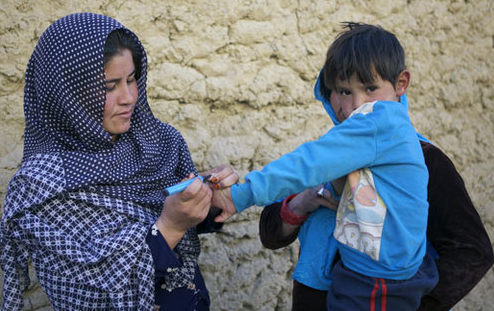
"The TAG acknowledges the comprehensive and evidence-based communication strategy which includes household and community engagement supplemented by other communication platforms and partnerships."
This report summarises the discussions of the Technical Advisory Group (TAG) on Poliomyelitis Eradication in Afghanistan, April 4-5 2017 in Kabul. The objectives of the meeting were to review progress in polio eradication in Afghanistan, focusing on common reservoirs, since the last TAG held in July 2016 and to review progress against the National Emergency Action Plan for Polio Eradication (NEAP) 2016–2017, making recommendations to achieve its objectives. This summary focuses on the communication-related elements that are included in the TAG report.
In brief: Most of the recommendations made during the July 2016 TAG meeting have been fully implemented, and the TAG appreciates the steady progress in implementation of the NEAP 2016-2017, resulting in reduced number of infected districts, reduced virus load in the country, and improved vaccine reach. The country has been able to interrupt the transmission of 2015 in the south and east; new transmission during 2016/2017 has so far been temporally and geographically restricted. There is strong political commitment and partnership between the government, the United Nations Children's Fund (UNICEF), the World Health Organization (WHO), and other partners. Collaboration within the common reservoir shared by Afghanistan and Pakistan remains a priority for both countries. The participation of Pakistan National Emergency Operation Centre (EOC) representatives in the Afghanistan TAG meeting is expected to facilitate joint risk analysis and outbreak response, as well as coordinated strategies for reaching high-risk mobile populations (HRMP).
Despite improvements in vaccine campaign quality, the outbreaks of 2016 underline how essential it is to identify and immunise all remaining clusters of missed children, particularly in the southern region. The expansion of the full-time immunisation communications network (ICN) into the very high-risk districts (VHRDs) gives the programme further insight into reasons for missed children, including clustering of chronic refusals, and has a well-developed package of solutions to overcome these challenges. Along with improved campaign quality and increased reach to children, there has been strong focus on expanding community and household engagement at various levels following the country's comprehensive and evidence-based communication strategy. The TAG appreciates the efforts to ensure that communication approaches are fully integrated with operations, including microplanning, tracking of high-risk mobile populations, training, and district specific plans.
According to the TAG, increased emphasis now needs to be placed on strengthening capacity, supervision and monitoring of the ICN to ensure they are fully integrated and accountable for reaching all children. In particular, TAG acknowledges the rationale for combining ICN mobiliser and vaccinator in a single team structure and encourages the programme to proceed with this consolidation, but to ensure transparent planning and assessment of effectiveness in terms of campaign coverage and rates of missed/persistently missed children. Specific suggestions include:
- Further tailor the media approaches for each region based on their specific contexts.
- Explore different approaches/strategies as alternatives to full-time social mobilisers in areas where ICN network is not feasible and assess the impact.
- Further strengthen the ICN network through continued capacity-building, supervision and monitoring. Special emphasis to be placed on ensuring full alignment with the operations teams. Proceed with consolidation of ICN social mobiliser and vaccinator as a 2-person team structure, starting with one district each in the south and in the east to understand possible challenges. Ensure documentation of the ICN vaccinator consolidation strategy (including terms of reference, ICN and vaccinator roles, process for consolidation of coverage data (register and tally sheets), and a team-based single line of oversight, supervision, and accountability), and robust evaluation of impact in pilot districts to ensure efficacy of the new 2-person structure.
- Conduct further qualitative analysis to enhance understanding of reasons for missed children.
Among the other types of recommendations offered in the TAG report: Compile information on HRMP at the national level and standardise detailed analysis of data to establish a country-wide overview of HRMP and their movements by June 2017. Coordinate closely between regions, provinces, and districts within Afghanistan, and with the Pakistan programme, on joint mapping and full implementation of the HRMP strategy. The country has various strategies in place to identify and vaccinate HRMP groups, and the coordination with the Office of the United Nations High Commissioner for Refugees, International Organization for Migration, and United Nations Office for the Coordination of Humanitarian Affairs is appreciated.
Email from Fatma Moussa to The Communication Initiative on May 25 2017. Image credit: Credit: WHO Afghanistan/R.Akbar
- Log in to post comments