











































Routine Immunization for Children during the COVID-19 Pandemic in Indonesia: Perceptions of Parents and Caregivers
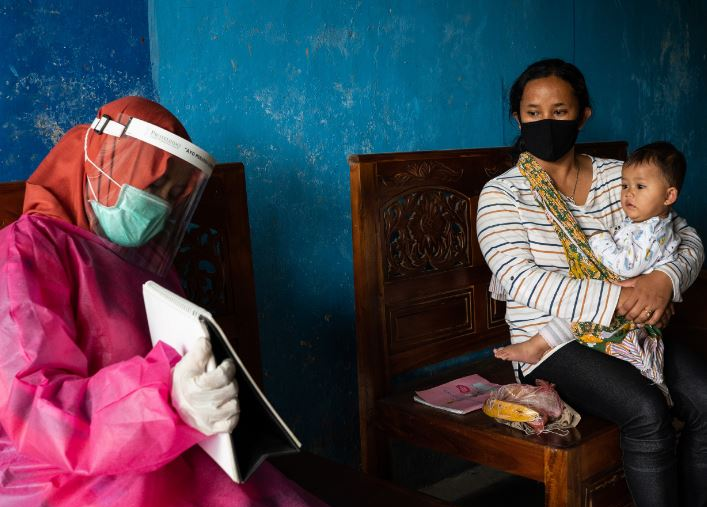
"[I]t is critically important to understand community perceptions of immunization services during the COVID-19 pandemic, aimed at guiding...appropriate communication approaches that address key concerns."
Since Indonesia reported the first COVID-19 case in March 2020, coverage of routine immunisation to prevent childhood diseases such as measles, rubella, and diphtheria has been declining. Among the challenges: Access barriers from service suspensions were compounded by reduced demand from fear of contracting COVID-19. In an attempt to inform development of communication strategies to address these challenges, the Ministry of Health (MOH), with support from the United Nations Children's Fund (UNICEF), conducted an online survey from July 4-13 2020 among parents and caregivers of children under the age of 2 years. This report shares data and offers recommendations based on that research.
Examples of actions the MOH has already taken to offset the effects of the COVID-19 pandemic on immunisation include: developing and socialising a series of guidelines, standard operating procedures (SoPs), and information, education, and communication (IEC) materials; advocating at national and sub-national levels for strengthening the immunisation programme during COVID-19; and undertaking contextual social mobilisation approaches to regain communities' trust in the health system.
To guide further steps forward, based on the request from MOH, the Indonesia COVID-19 taskforce (Gugus Tugas) sent an SMS (text message) blast through all telecom providers in Indonesia. The survey link was also shared with provincial health offices (PHOs), district health offices (DHOs), health centres (puskesmas), professional organisations, UNICEF field offices, and through other networks such as professional associations. It was also posted on the Gugus Tugas website for a day.
More than half (51%) of the 7,558 respondents reported they recently (in the past one-two months) attended immunisation sessions during the COVID-19 pandemic to vaccinate the child(ren). More than 78% of respondents reported being aware of the MOH's recommendation of continuing safe immunisation services during the COVID-19 pandemic; 82% reported the need to receive accurate information from the government about the provision of safe immunisation services. The study found that those parents and caregivers who are aware of safe immunisation and health guidelines were more willing to bring their children for vaccination.
Approximately 60% of respondents stated that health workers and cadres are the primary sources of information about MOH's protocol for safe immunisation services. Social media is the most common channel (58%) for disseminating such information: WhatsApp (WA 42%), Instagram (IG 22%), and Facebook/Messenger (14%) are predominately used for outreach. In the absence of face-to-face interactions with health workers and cadres, more than 83% of respondents indicated a preference to be reached via WA, followed by telephone (8%) and SMS (5%).
Some respondents indicated being reluctant to visit puskesmas (health centres) due to fear of contracting COVID-19; there is a high demand for resumption of immunisation services at posyandu (health post) and community levels, as well as for home-to-home visits for screening and vaccination.
As reported here, vaccination of children is a widely held social norm in Indonesia. However, some persistent issues, such as vaccine haram-halal issues, mistrust, and fear of multiple injections, have shaken public confidence in vaccines. This situation has been further challenged by vaccine hesitancy around COVID-19: 23% of the respondents decided not to bring their children for vaccination during the pandemic, considered "active refusal", and more than 13% of parents and caregivers have yet to decide and could be categorized as "hesitant". These findings indicate the need for targeted and contextual communication strategies designed to reach different categories of parents and caregivers.
The survey revealed that multiple factors contribute to decisions of whether parents and caregivers will seek immunisation services during the COVID-19 pandemic. While the level of understanding of the benefits of vaccines was found to be most critical, it is notable that 84% of respondents perceived that their trust in vaccinators, especially midwives, was critical. Physical and financial accessibility issues played less of a role in the decision to seek immunisation services.
Respondents made a series of recommendations to address barriers to immunisation services, summarised in a chart on page 10 of the report. For example, it is important for vaccinators to be friendly and skilled. In addition, two-thirds of respondents stated that reminders from their health facility about the next scheduled vaccination session and place of service would be useful.
Based on the findings of the survey, the MOH, the National Immunization Technical Advisory Group (NITAG), the World Health Organization (WHO), and UNICEF identified various strategies to increase the utilisation of immunisation services during the COVID-19 pandemic, as outlined on pages 11-12 of the report. For example: Implement remote capacity-building initiatives for vaccinators and cadres, with a particular emphasis on counseling and communication skills.
UNICEF Indonesia website, September 2 2020. Image credit: © UNICEF/2020/Fauzan
- Log in to post comments