











































Successful Proof of Concept of Family Planning and Immunization Integration in Liberia
Jhpiego (Cooper, Taylor, Pfitzer) John Snow, Inc. (Fields), Independent Consultant (Mazzeo), Ministry of Health and Social Welfare, Monrovia (Momolu, Jabbeh-Howe)
"Mobilizing vaccinators to provide mothers key family planning information and referrals to co-located, same-day family planning services was feasible in resource-limited areas of Liberia, leading to substantial increases in contraceptive use. Conversely, impact on immunization rates was less clear, but at a minimum there was no decrease in doses administered."
Noting that, given overlapping time frames, integrating postpartum family planning (FP) and immunisation services provides an opportunity to leverage existing health visits to offer women more comprehensive services, from March through November 2012, Liberia's government, with support from the Maternal and Child Health Integrated Program (MCHIP), piloted a model at 10 health facilities in Bong and Lofa counties. The purpose of this article is to present the results of 9 months of implementation of a contextualised model for integrating FP and the Expanded Programme on Immunization (EPI) in Liberia as a means of increasing contraceptive use among postpartum women. The article also describes factors that enabled or hindered integrated service delivery and presents implications for integrating these services in other settings.
Preceding the pilot study, in 2011, researchers conducted a formative assessment in 4 of the intervention health facilities to inform development of the integration model, messages, and communication materials. The assessment consisted of focus group discussions (FGDs) with mothers of infants under 1 year of age and interviews with vaccinators, FP providers, and health facility officers in charge. The assessment revealed that stigma about returning to sexual activity and using FP before the baby walks or turns 1 year of age acted as a major barrier to using postpartum FP services. Many respondents also believed that premature return to sexual activity and contraceptive use could "spoil" the breast milk and harm the baby. FP providers and vaccinators highlighted the importance of privacy and one-on-one communication as factors that could affect women's willingness to seek FP services. Vaccinators, FP providers, and clients all expressed support for the idea of linking FP and immunisation services.
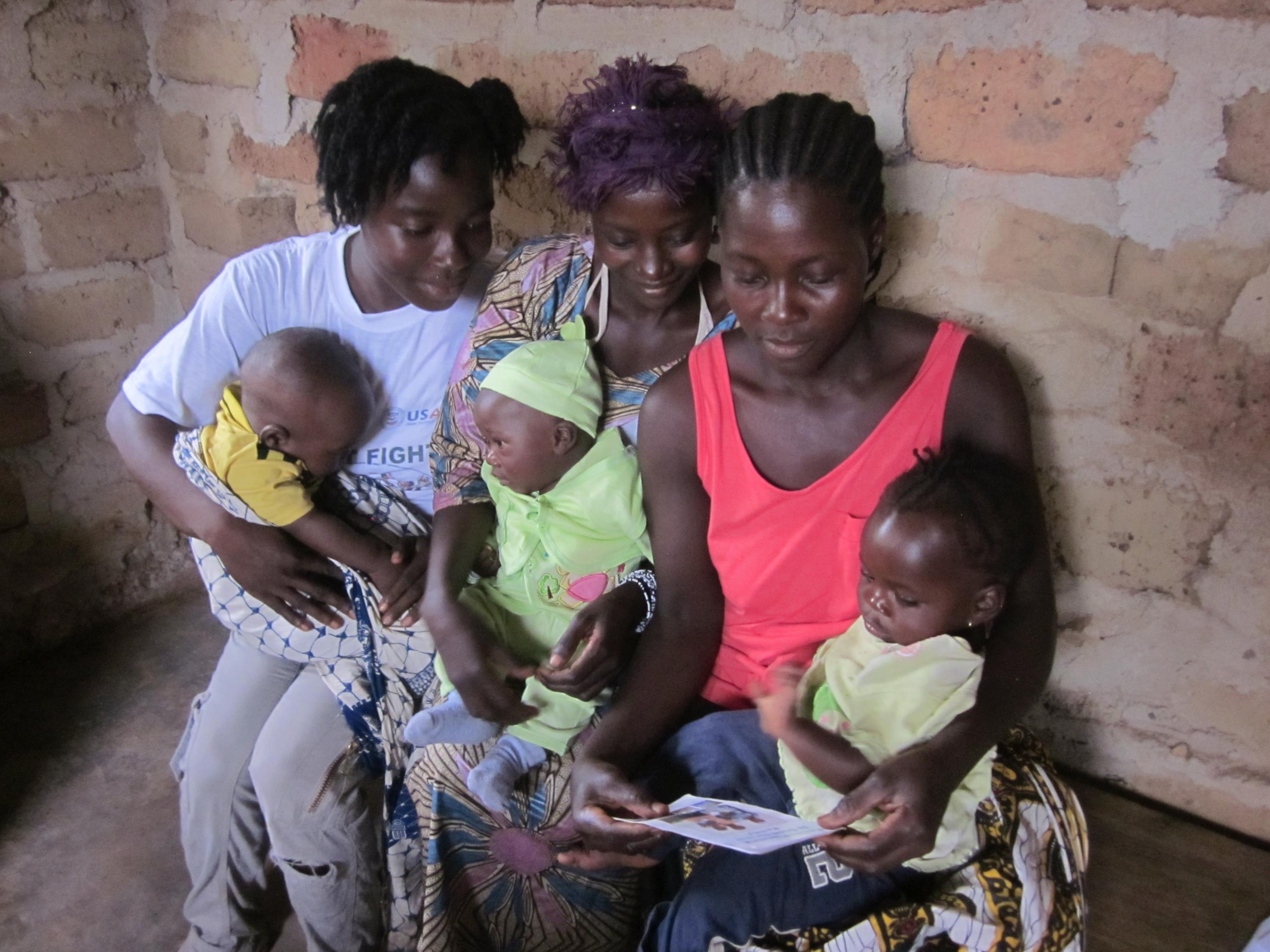
Organisers then developed strategically designed behaviour change communication (BCC) materials, including a job aid, poster, and brochure, to help standardise communication by vaccinators and reinforce key messages provided to mothers. The messages emphasised that FP is safe for use by women with young babies and that it is acceptable for women to use FP even before the baby walks. The job aid was designed to be simple and user-friendly, with clear step-by-step directions for vaccinators. The poster included a photo of a breastfeeding woman seeking FP services, along with messages that "family planning is good for baby ma" and that encouraged women to "Go for family planning today!" The job aid guided vaccinators to reference the poster during the immunisation contact. Women who declined to go for FP services on the same day received a brochure as a take-home reference, highlighting information about the benefits of FP for the mother, father, baby, and for general family well-being. Clients were encouraged to share the brochure with their spouses, other family members, and friends in order to spark discussion about FP.
As part of the 9-month pilot, vaccinators provided mothers bringing infants for routine immunisation (RI) with targeted FP and immunisation messages and same-day referrals to co-located FP services. Specifically, at the completion of each vaccination contact, vaccinators were directed to use a simple job aid to share targeted messages one-on-one (not through group health talks) with each mother and to then offer her a referral to a co-located FP room for more in-depth FP counseling and services. A midterm assessment and ongoing supervision led to adjustments such as introducing privacy screens at facilities where vaccinations were conducted in public areas of the facility - screen that "provided visual privacy for clients and a quieter space for child vaccination, and they reduced the likelihood of others watching or listening to clients' conversations with the vaccinator."
In February 2013, the researchers who authored this study compared service statistics for FP and immunisation during the pilot against the previous year's statistics. They also conducted in-depth interviews with service providers and other personnel and FGDs with clients.
Results showed that referral acceptance across the facilities varied from 10% to 45% per month, on average. Over 80% of referral acceptors completed the FP visit that day, of whom over 90% accepted a contraceptive method that day. The total number of new contraceptive users at participating facilities increased by 73% in Bong and by 90% in Lofa. Women referred from immunisation who accepted FP that day accounted for 44% and 34% of total new contraceptive users in Bong and Lofa, respectively. In Lofa, pilot sites administered 35% more Penta 1 and 21% more Penta 3 doses during the pilot period compared with the same period of the previous year, while Penta 1 (a vaccine used in children to prevent 5 diseases: diphtheria, tetanus (lockjaw), pertussis (whooping cough), hepatitis B and poliomyelitis, or polio) and Penta 3 administration decreased in non-pilot facilities. In Bong, there was little difference in the number of Penta 1 and Penta 3 doses administered between pilot and non-pilot facilities. In both counties, Penta 1 to Penta 3 dropout rates increased at pilot sites but not in non-pilot facilities, possibly due to higher than average background dropout rates at pilot sites prior to the intervention in Lofa and the disproportionate effect of data from 1 large facility in Bong.
Sample specific finding: "For women who accepted a referral [from the EPI] but did not accept a contraceptive method that day, common reasons included wanting to discuss the decision with their partner first, wanting to wait until the baby was older, and dissuasion by the family planning provider from using a contraceptive method before reaching a particular time postpartum (for example, waiting until 6 weeks after childbirth). All respondents (clients, service providers, supervisors, and partner organizations) expressed a desire for the integrated service delivery approach to continue."
"In this proof of concept, integrating immunization and family planning services, using a referral model with co-located services designed for Liberia's health system and sociocultural environment, was feasible....While continuous monitoring of immunization outcomes is needed, scaling-up this model could potentially contribute to large increases in postpartum contraceptive uptake, leading to longer birth intervals and, ultimately, to improved health outcomes for children and mothers and to other socioeconomic benefits for families."
Global Health: Science and Practice, March 1 2015, Vol. 3, No. 1, Pages 117-125. Image caption/credit: Chelsea Cooper/MCHIP
- Log in to post comments