










































Underlying Issues Are Key to Dispelling Vaccine Doubts
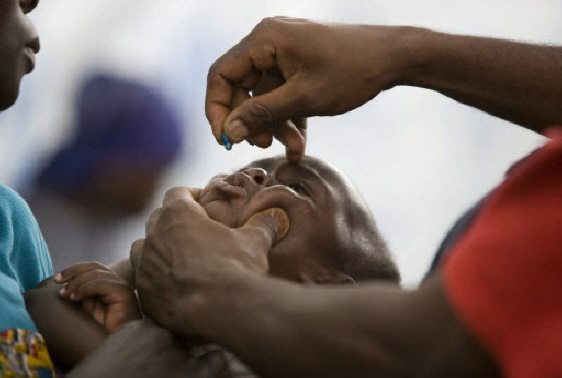
"Why is the same vaccine accepted in one part of the world and rejected in another? Heidi Larson tells Fiona Fleck why communicating the benefits versus the risks of vaccination is just part of the battle to gain public confidence in vaccines."
In this interview, anthropologist Heidi Larson responds to questions about her work, which focuses on bridging the gap between health providers and the public. In the last decade, her work has focused on increasing public confidence in vaccines through her leadership of the Vaccine Confidence Project at the London School of Hygiene & Tropical Medicine. She is also a member of the Vaccine Hesitancy Working Group of the Strategic Advisory Group of Experts (SAGE) on Immunization and Associate Professor in the Department of Global Health at the University of Washington, Seattle, United States.
Larson describes the origin of her interest in public response to vaccines, tracing it back to the boycott of the polio vaccine in northern Nigeria 10 years ago, "but there were other instances never reported by the media in which communities - and even governments - questioned certain vaccines. As an anthropologist, my job is to understand the social, cultural or political drivers of health behaviours - such as vaccine reluctance or rejection surrounding vaccination - and then to sit down with local vaccination teams and representatives from health ministries to discuss how best to communicate the need for the vaccine and, where necessary, strategies to prevent too much of a drop in vaccine acceptance."
Larson says that, sometimes, lack of confidence in vaccines is "not just about communicating more effectively, but about delivery issues or different belief systems or, for example in the case of polio, needing security and diplomacy strategies..." She reflects on her work as an anthropologist using "participant observation" - that is, embedding oneself in the community during the course of field work and paying attention to small details that can reveal the underlying issues that are generating concerns. When she sat down and talked with women from communities in Uttar Pradesh in northern India who were resistant to the oral polio vaccine (OPV), she found that the issue was not that rumours were circulating that vaccines sterilise recipients. Instead, she found that they did not want their children to be vaccinated by people from Delhi or other places outside their region, because if there was a problem they would not know whom to turn to, and they did not want their children vaccinated by men. "You can have all the communications in the world about the vaccine safety, but these will never change such concerns and, ultimately, people's behaviour. When you launch a vaccination campaign, communities already have their own approach to health care and we need to understand this because, in a sense, we are trying to displace it."
Larson next describes the purpose behind, and work undertaken by, the SAGE Working Group on Vaccine Hesitancy. It was formed in 2012 based on the observation that "recently more people have started to mistrust vaccines. We are seeing increasing reluctance to be vaccinated and some of these people are tipping over into becoming outright vaccine refusers." According to SAGE, the 3 main groups of vaccine hesitancy and refusal are related to: (i) individual reasons related to personal belief systems or community-level belief systems (e.g., religious notions); (ii) contextual factors, such as wars, conflicts, and other external circumstances that make vaccine refusal more likely; and (iii), vaccine-specific issues - for example, public concerns about an adverse event or a piece of research or about research that has been misunderstood. For example: "In the 1980s, a research article on a contraceptive vaccine containing tetanus toxoid as a protein carrier was misinterpreted by a Catholic pro-life network, which sent a message to Catholic communities in 60 countries telling them that the tetanus vaccine sterilized its recipients. Tetanus vaccine coverage fell around the world from Mexico and the United Republic of Tanzania to the Philippines, where the mayor of Manila halted tetanus vaccination - a move that led to a 45% drop in coverage. WHO [World Health Organization] officials even held a meeting at the Vatican to set the record straight and engage leaders of the Catholic Church to help dispel the rumours."
Amongst other questions, Larson addresses the issue of whether the internet has become a determinant for vaccine refusal. She notes "the speed with which rumours travel and the potential for worldwide dissemination."
Finally, Larson describes the contribution of communication to the fact that August 2014 will mark one decade since the 2003-2004 boycott ended in Kano State. In addition to communication, she cites a mix of political commitment, local engagement, identification of coverage gaps, and strengthened local vaccination programmes.
Bulletin of the World Health Organization, Volume 92, Number 2, February 2014, pages 84-85 - sourced from: WHO World Immunization Week 2014 website, accessed April 28 2014. Image credit: WHO
- Log in to post comments