










































Unveiling and Addressing Implementation Barriers to Routine Immunization in the Peri-Urban Slums of Karachi, Pakistan: A Mixed-Methods Study
VITAL Pakistan Trust (Yazdani, Muhammad, Khan, Shafiq); Aga Khan University (Yazdani, Nisar, Shafiq)
"[I]mmunization services for slums should be designed in accordance with the local context and provided in consultation with slum residents, along with the minimizing of barriers to access, such as geographic and social distance; these are factors that the implementation framework has tried to incorporate."
Great disparities in immunisation coverage exist in Pakistan between urban and rural areas. However, coverage estimates for large peri-urban slums in Sindh are largely unknown, and implementation challenges remain unexplored. This study assesses immunisation coverage in four peri-urban slums (Rehri Goth, Ibrahim Hyderi, Ali Akbar Shah Goth, and Bhains Colony) along Karachi, Pakistan's coastal belt, examines key supply- and demand-side immunisation barriers there, and explores strategies to address them.
This mixed-methods study consisted of a survey administered from June to September 2017 to a representative sample of 840 caregivers of children aged 12-23 months to document the vaccination coverage status. The researchers also held 155 in-depth interviews (IDIs) through purposive sampling of respondents (caregivers, community influencers, and immunisation staff). After identifying the barriers, they conducted a further six IDIs with immunisation policymakers and policy influencers to determine strategies to address these barriers.
The survey revealed that 49% of children were fully vaccinated, 43% were partially vaccinated, and 8% were unvaccinated. The survey also revealed that only 51% of respondents who received any vaccine dose reported retention of the Expanded Programme on Immunization (EPI) card.
Demand-side immunisation barriers included: household barriers (e.g., permission for immunisation withheld by the child's father or a family elder); lack of knowledge and awareness about vaccine-preventable diseases and the benefits of vaccination; misconceptions and fears regarding vaccines (e.g., beliefs that immunisation caused sterility), and social and religious barriers. Supply-side barriers included underperformance of staff (e.g., forceful or dismissive behaviour of staff members towards caregivers), inefficient allocation and utilisation of funds, unreliable immunisation and household data, and interference of polio campaigns with immunisation (e.g., due to fatigue).
The implementation framework's policy recommendations to address these barriers include: (i) improved human resource management; (ii) staff training on counselling using social and behaviour change (SBCC) materials; (iii) re-allocation of funds towards incentives, outreach, salaries, and infrastructure; (iv) establishment of a digital platform integrating birth registry and vaccination tracking systems for monitoring and reporting by frontline staff; (v) use of that digital platform for accurate setting of immunisation targets and generating dose reminders; and (vi) mutual sharing of resources and data between the EPI, lady health worker (LHW), and polio programmes for improved coverage.
In discussing the challenges that remain, the resarchers note that slum populations are characterised by diverse social behaviours, religious beliefs, cultural boundaries, and languages. In such contexts, it is challenging for health providers to create awareness or effect change in the community. Moreover, beliefs, myths, and fears related to vaccines are varied across ethnic groups. In urban slum areas, the population mix also leads to proliferation of conservative belief systems, and strategies that are effective for one ethnic group may not work for another.
While it is not the primary focus of the study to analyse the execution of the implementation framework, the researchers anticipate some challenges and propose some strategies for addressing them, including:
- Develop a policy brief with actionable recommendations, and share this brief with policymakers and influencers within the government and EPI programmes, as well as with civil society organisations (CSOs), international non-governmental organisations (NGOs), and donor organisations. Also hold dissemination meetings to support advocacy of the framework.
- Foster public- and private-sector partnerships that facilitate app development and technical support for the digital platform, including training and professional development support for staff on how, for example, to share health service tracking data.
- Set up cross-cutting working groups that involve all major stakeholders to help in streamlining processes and cutting down parallel efforts and duplication of interventions with increased resource sharing and transparency.
In conclusion: "Instead of replicating ineffective models that do not address the particular needs of slums, the policy recommendations embedded within the framework have been driven from the ground up. They encompass the perspectives of the community and frontline staff, as well as the expertise of programme implementers. This framework can be used by implementers in Pakistan and other developing countries to improve the execution and impact of immunization programmes in the limited-resource context of slums, with a possibility for application at a larger scale."
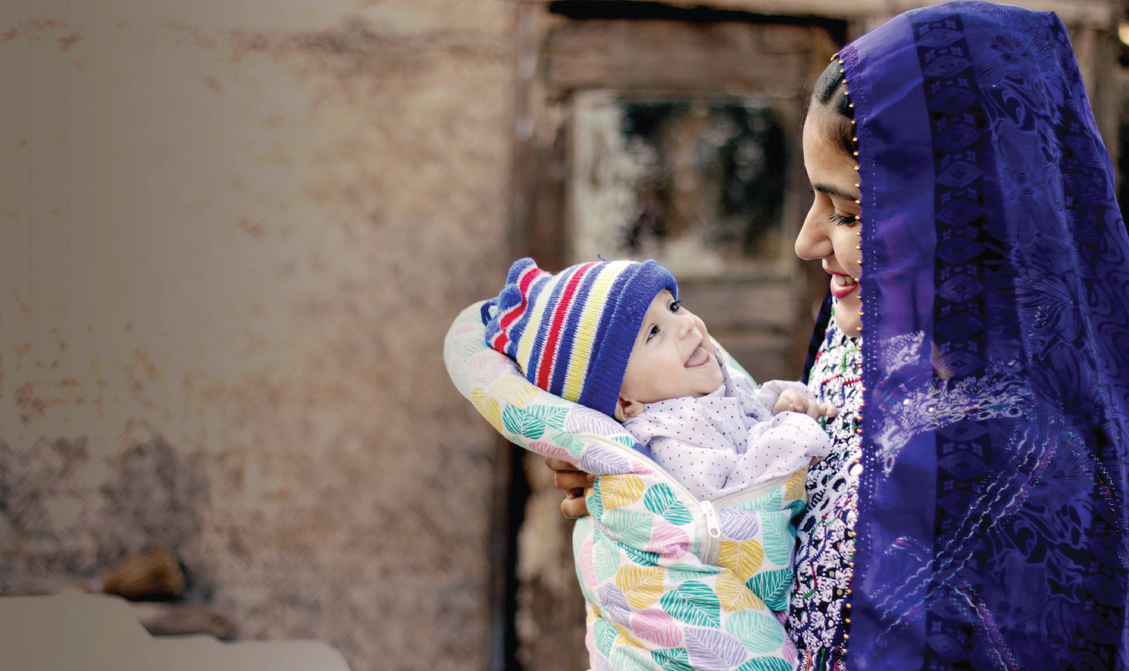
Health Research and Policy Systems 2021, 19(Suppl 2):55. https://doi.org/10.1186/s12961-021-00691-4. Image credit: VITAL Pakistan Trust
- Log in to post comments