











































The Impact of an mHealth Voice Message Service (mMitra) on Infant Care Knowledge, and Practices Among Low-Income Women in India: Findings from a Pseudo-Randomized Controlled Trial
Foundation for Research in Health Systems (Murthy, Prakash); National Institutes of Health (Chandrasekharan); HealthEnabled (Kaonga, Mechael); Tufts University School of Medicine (Kaonga); Johnson & Johnson (Peter); consultant (Ganju)
"This study provides robust evidence that tailored mobile voice messages can significantly improve infant care practices and maternal knowledge that can positively impact infant child health."
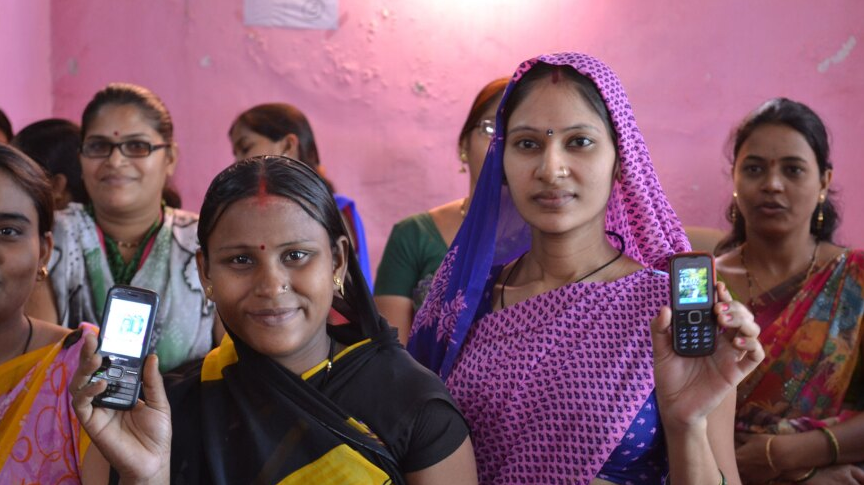
Mobile health (mHealth), or the use of mobile technology in health care, is a mechanism for improving maternal, neonatal, and child health (MNCH). This paper reports on a pseudo-randomised controlled trial (RCT) of the 4-year global initiative Mobile Alliance for Maternal Action (MAMA)'s implementation in India, called mMitra. mMitra is a digital behaviour change communication initiative that sought to improve self-care and uptake of effective MNCH and clinical services by pregnant women living in urban slums in Mumbai, India. The objective of the study is to determine if an age- and stage-based mobile phone voice messaging initiative for women can reduce low birth weight and child malnutrition and improve women's infant care knowledge and practices.
The programme was built on the premise that, if women receive educational messages on their phone that are interesting, easy to understand, and aligned with the physiological stage of pregnancy or infant development, they will be motivated to engage in recommended self-care and seek recommended health services.
Participants were pregnant women from urban slum areas of Mumbai who speak Hindi or Marathi language. Women in the intervention group (n=1,516) received mMitra voice messages, of which there were 145 in total, 2 times per week throughout their pregnancy and until their infant turned 1 year of age. Messages were recorded in a female voice designed to represent an educated but approachable female relative; translations were tested for appropriateness and cultural nuances with local health experts and community focus groups. mMitra also provided a free call-back service within 2 days after the original call was received in case women wanted to hear the messages they missed or listen to messages again.
The control group (n=500) did not receive any messages.
The study observed a trend for increased odds of a baby being born at or above the ideal birth weight of 2.5 kg in the intervention group compared to controls (odds ratio (OR) 1.334, 95% confidence interval (CI) 0.983–1.839, p = 0.064). The intervention group performed significantly better on 2 infant care practice indicators: giving the infant supplementary feeding at 6 months of age (OR 1.4, 95% CI 1.08-1.82, p = 0.009) and fully immunising the infant as prescribed under the Government of India's child immunisation programme (OR 1.531, 95% CI 1.141-2.055, p = 0.005). Women in the intervention group had increased odds of knowing that the baby should be given solid food by 6 months (OR 1.89, 95% CI 1.371-2.605, p < 0.01), that the baby needs to be given vaccines (OR 1.567, 95% CI 1.047-2.345, p = 0.028), and that the ideal birth weight is > 2.5 kg (OR 2.279, 95% CI 1.617-3.213, p < 0.01).
Further research is recommended to assess the relationship between changes in knowledge and behaviour. Additional studies could also compare voice versus text message interventions on MNCH outcomes. Such research could also systematically explore the differential impacts of tailored voice messages compared to text messages and align them with the specific behaviour/practice changes of interest.
In conclusion: "This study adds to the growing body of evidence on the impact of mHealth interventions with statistically significant differences in several infant care practices and a dose response effect on knowledge and behaviors known to improve neonatal and infant health outcomes."
Maternal and Child Health Journal (2019) 23:1658-69. https://doi.org/10.1007/s10995-019-02805-5. Image credit: Johnson & Johnson
- Log in to post comments