
























Polio eradication action with informed and engaged societies

After nearly 28 years, The Communication Initiative (The CI) Global is entering a new chapter. 

Following a period of transition, the global website has been transferred to the University of the Witwatersrand (Wits) in South Africa, where it will be administered by the Social and Behaviour Change Communication Division. Wits' commitment to social change and justice makes it a trusted steward for The CI's legacy and future. 

On the transfer, co-founder Victoria Martin expressed her pleasure to see this work continue under Wits' leadership, knowing that co-founder Warren Feek (1953–2024) would have felt deep pride in The CI Global's Africa-led direction. 

As Wits, we honour the team and partners who sustained The CI for decades and look forward building from that strong base. This includes co-founders Warren Feek (1953-2024) and Victoria Martin as well as La Iniciativa de Comunicación (CILA), which continues independently at lainiciativadecomunicacion.com with links to The CI Global site. We are also eager to forge new partnerships and entertain new ideas as we consider how best to contribute to social and behaviour change in our rapidly evolving environment.

If you are joining the International Social and Behaviour Change Communication (SBCC) Summit in Panama, please join Wits and CILA on Monday, 22 June, to share your thoughts and suggestion for the relaunch of the Communication Initiative. We will be in Pacifica 5 from 12-1:25 for the Refuel, Reflect, and Renew Lunch Series: The Communication Initiative: celebrating a driving force for Communication for Social Change and the way forward. We will reflect on the legacy of Warren Feek and family in creating the Communication Initiative, consider the contributions of CI over the years and then turn our attention towards the future in this dynamic session. 

If you are unable to join us in Panama, we still want to hear from you. Please contribute your thoughts by following this link: https://redcap.link/CommunicationInitiative2026 or reaching out to ci_surveys@commint.com

You can also follow the QR Code:

 https://redcap.link/CommunicationInitiative2026

Time to read
1 minute
Read so far

In Fighting Polio, Information Is Half the Battle
0 comments
Date
Summary

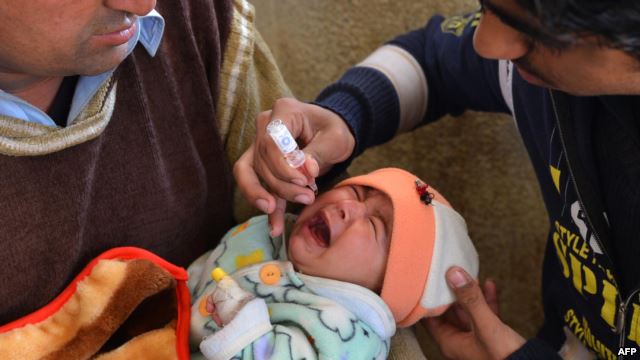
This article explores the strategies of Radio Mashaal, which is working in Pakistan's Federally Administered Tribal Areas (FATA) to counter the propaganda put forth by militant groups that is described here as interfering with efforts to eradicate polio in that country and, hence, around the world. Polio workers in Pakistan, who are often women, operate in a hostile environment under threats of violence - too often turning deadly. The Islamic militant group Jundullah claimed responsibility for the attacks, telling Radio Mashaal that polio vaccination is forbidden in Islam. Militants have also claimed that the vaccines are part of a plot to make Muslim children infertile.

In that context, Radio Free Europe/Radio Liberty (RFE/RL)'s Pashto language service seeks to provide accurate information and connect aid workers with communities. As reported here, Radio Mashaal regularly engages the public through call-in shows, often inviting doctors to answer questions directly from listeners and raise awareness as to when polio vaccination campaigns commence. Women figure prominently among those who call in, often seeking reassurance that the polio drops pose no threat to their children. In addition to doctors, Radio Mashaal has invited mullahs to participate in programmes to explain to audiences that the polio vaccines do not violate Islamic doctrine.

The article notes that Radio Mashaal "frequently receives grateful emails and phone calls from listeners..." Furthermore, in an interview, one doctor claimed that since Radio Mashaal highlighted the issue of polio drops in its programme, the number of parents who refused to have polio drops administered to their children dropped by nearly 50%. Another doctor opened a free, one-day health camp for the people of the tribal regions "solely because of the amount of calls he received on Radio Mashaal's call-in program".