
























Polio eradication action with informed and engaged societies

After nearly 28 years, The Communication Initiative (The CI) Global is entering a new chapter. 

Following a period of transition, the global website has been transferred to the University of the Witwatersrand (Wits) in South Africa, where it will be administered by the Social and Behaviour Change Communication Division. Wits' commitment to social change and justice makes it a trusted steward for The CI's legacy and future. 

On the transfer, co-founder Victoria Martin expressed her pleasure to see this work continue under Wits' leadership, knowing that co-founder Warren Feek (1953–2024) would have felt deep pride in The CI Global's Africa-led direction. 

As Wits, we honour the team and partners who sustained The CI for decades and look forward building from that strong base. This includes co-founders Warren Feek (1953-2024) and Victoria Martin as well as La Iniciativa de Comunicación (CILA), which continues independently at lainiciativadecomunicacion.com with links to The CI Global site. We are also eager to forge new partnerships and entertain new ideas as we consider how best to contribute to social and behaviour change in our rapidly evolving environment.

If you are joining the International Social and Behaviour Change Communication (SBCC) Summit in Panama, please join Wits and CILA on Monday, 22 June, to share your thoughts and suggestion for the relaunch of the Communication Initiative. We will be in Pacifica 5 from 12-1:25 for the Refuel, Reflect, and Renew Lunch Series: The Communication Initiative: celebrating a driving force for Communication for Social Change and the way forward. We will reflect on the legacy of Warren Feek and family in creating the Communication Initiative, consider the contributions of CI over the years and then turn our attention towards the future in this dynamic session. 

If you are unable to join us in Panama, we still want to hear from you. Please contribute your thoughts by following this link: https://redcap.link/CommunicationInitiative2026 or reaching out to ci_surveys@commint.com

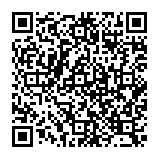
You can also follow the QR Code:

 https://redcap.link/CommunicationInitiative2026

Time to read
1 minute
Read so far

Communication Network Reduces Resistance to Polio Drops in Lahore

0 comments
Date
Summary

"'Have you given polio drops to my children', shouts the Pathan in Pashto language as the cart slows down before entering a slum, which has been the hub of Afghan and Pashtu speaking migrants..."

This news piece describes the communication strategies of a polio team consisting of health workers and Communication Network (COMNet) social mobilisers during a sub-national immunisation drive in Pakistan, one of the remaining polio-endemic countries. Trained in interactive communication, over 1,400 ComNet staff go house to house for social mobilisation activities and listen to parental concerns. They engage with influencers and leaders in an effort to establish trust and spark community support, as well as to try to create an enabling environment in which vaccination teams can operate.

As detailed here, two COMNet staff members embedded themselves with the polio team going house to house in Lahore's Union Council (UC)-84 to vaccinate children because it (the team) is new and has limited knowledge about the area. A substantial portion of UC-84's population belongs to the Pashtu-speaking community, which is a priority population for polio eradication due to the fact that 17 out of 21 children paralysed by polio as of July 23 2013 were Pashtuns.

Due to such communication efforts, since COMNet's deployment in January 2012, the refusal conversion rate has increased steadily and is now gradually approaching 70%. In other words, nearly two-thirds of refusals reported during campaigns are covered by social mobilisers and vaccination teams. One official cited in the article attributes this success to the fact that COMNet staff members have built excellent rapport with the Afghan and Pathan families.

Source