










































Choosing the Perfect Shot - The Loaded Narrative of Imagery in Online News Coverage of Vaccines
University of Minnesota Masonic Children's Hospital (Wu, Shah, Pitt); Core Topic Leader of Medical Studies, "Covering Health" (Haelle); University of Minnesota (Lunos)
"[T]here still exists a great need for images that communicate encouraging information about vaccines and the protection it provides for our children..."
The researchers who designed this study point out that various mechanisms can allow visual material to sway public opinion in a way that text often cannot, which can make their use in public health communication so powerful. The images chosen by writers and editors to accompany vaccine news coverage, for example, have the potential to subtly convey positive or negative sentiments about vaccines that may support or undermine these public health initiatives. By developing a coding tool and quantifying the prevalence of these images through this study, the researchers hope to inform writers and editors of vaccine-related news stories of the importance of carefully selecting images accompanying their articles. This investigation is timely, in the researchers' eyes, in light of the fact that the rise of vaccine hesitancy has occurred as the public is increasingly turning to online search engines to inform their healthcare decisions.
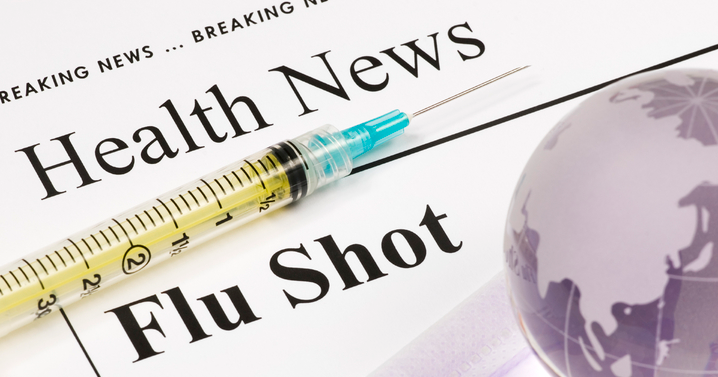
To begin, the researchers searched the "News Archives" section of Google using the Incognito feature of the Google Chrome browser. In order to capture a range of types of news coverage, they chose the search terms "autism and vaccine" with the hopes of capturing news coverage of the anti-vaccine movement, "flu and vaccine" to capture a periodic news cycle linked to a public health initiative for both children and adults, and "measles and Disneyland" in order to capture coverage of a single event (an outbreak in California, United States (US) in 2015) related to consequences of under-vaccination. Using multiple iterations of a modified Delphi process, they developed a coding tool that classifies features found in vaccine imagery as: negative (visibly distressed child (either due to the needle or to a vaccine-preventable disease) and/or parent, needle as the focal point by taking up 50% or more of the image, multiple needles); positive (visually happy or calm child and/or parent, depictions of a conversation with health provider); neutral (vaccine supplies only or vaccine being administered without any faces depicted); or irrelevant (containing no imagery directly related to vaccines or vaccine administration). Images were coded as negative if at least one negative feature was present even if positive features were also present.
A total of 734 images accompanying the news media were obtained across all search terms, with a similar number of pictures obtained per search term (230 images for the autism/vaccine search (31.3%), 232 for flu/vaccine search (31.6%), and 272 for the measles/Disneyland search (37.1%). Of the total 734 images, 36 were duplicates. After removing the irrelevant images from the analysis, 42.5% were neutral, 29.8% contained positive features, and 27.6% contained negative features. When considering only pictures which had a potential vaccine bias (i.e., coded as negative or positive), there was no statistically significant difference between the proportions of negative and positive imagery for each search term.
In discussing these results, the researchers stress that nearly 1 in 8 photos were coded as negative, containing features that may undermine the public health message or the accurate information about vaccines in the article's content itself. They examine this phenomenon, including images' ability to increase information recall compared to text. If a parent more easily remembers the image of multiple needles or a screaming child than the statistics portrayed in an article that highlight the value of vaccination in protection from, say, the reemerging threat of measles, the parent may perceive the screaming child as more memorable, and ultimately more relevant.
They explain: "Images that convey negative sentiments by making the needle the focal point, showing multiple needles, or highlighting the pain can...potentially evoke related fears. In contrast, images that provide reconciliation for these fears could evoke positive sentiment from the viewer and potentially promote behaviors that support public health endeavors. For example, pictures of provider-patient dialogue or children smiling during the vaccination or afterwards with a bandage on can counter the mistrust of the health care system or needle phobia. Being aware of these commonly cited fears of vaccines may better equips journalists and editors to avoid or counter stoking those fears through imagery choice, especially when the goal of the editorial content is to provide the most accurate information about vaccinations."
There are counterarguments against avoiding negative imagery in vaccination stories, one of which focuses on the need for independence in the press. That is, since a primary goal in health journalism is to convey accurate, balanced information without appearing to have bias or to venture into advocacy, those who create media for the public may argue that showing a child screaming while receiving an injection is simply an accurate portrayal of vaccination. However, there is more to the "reality" of vaccination. "Images about birth, for example, may show the result of birth - holding a baby - as opposed to the actual act of the birth itself, and a corollary for vaccination images would be showing the bandage afterward, or the conversation before, as opposed to the act of the injection itself. Even showing the act of the injection...need not appear with negative affect. The breadth of stock and news imagery available for vaccines shows what doctors already know: not every child who receives a vaccine grimaces and screams."
In conclusion: "Our hope is that promoting awareness of the potential public health impact may lead to more deliberate photo selections that still 'show' the act of vaccination without explicitly including the negative affect. Ongoing concerns about public trust surrounding vaccination suggest that greater care and creativity may be worth considering for vaccine stories among those choosing images to accompany news articles."
PLoS ONE 13(6): e0199870. https://doi.org/10.1371/journal.pone.0199870. Image credit: Huffington Post