










































Knowledge, Attitudes and Practices in Relation to Immunisation of Children in Serbia
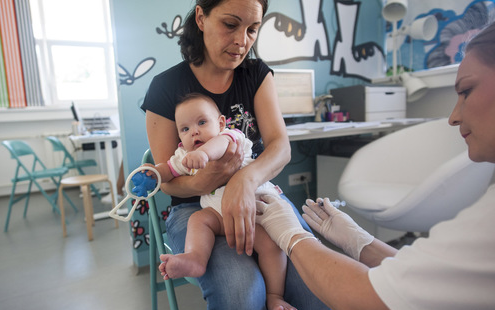
"A proactive approach to communication can help alleviate the negative impact of rumours and misinformation on the implementation of immunization."
According to applicable law in the Republic of Serbia, from the birth of a child to the age of 7 years, 10 vaccines are mandatory, and an additional 3 are recommended. Data from the Institute of Public Health indicate that the coverage for almost all obligatory vaccines is decreasing and is the lowest in the 10-year monitoring period. Some of the barriers to vaccination have been described in the international literature, but their true influence on the population in Serbia has never been thoroughly researched, according to the United Nations Children's Fund (UNICEF). The availability of such information could be a key pre-requisite for initiation of a dialogue between the health system and its users - the wider community - on removing myths and distrust over the necessity and safety of vaccination.
In that context, UNICEF Serbia carried out this knowledge, attitudes, and practices (KAP) research in 2017 to generate and document evidence of existing immunisation-related attitudes and practices among caregivers/parents from the general population and those coming from vulnerable groups (e.g., Roma communities), which will form the basis for the development of messages and materials for public advocacy campaigns and social mobilisation to support immunisation in the country.
The research entailed both qualitative and quantitative methods, developed through a comprehensive analysis of existing global and local documents, studies, and reports, as well as in-depth interviews with 24 medical workers and key informants. In addition, 20 focus groups with parents of children aged 0-7 from the general population and population living in Roma settlements explored parents' in-depth motivations for accepting/refusing vaccinations and provided additional material for structuring the quantitative survey. The KAP survey sample included 824 households from the general population (635 "face-to-face" Computer Assisted Personal Interviewing, or CAPI, and 189 Computer Assisted Web Interviewing, or CAWI); an additional (boosted) sample consisted of 213 CAPI interviews with Roma population in their settlements.
In general, the KAP survey, complemented by qualitative data, found that the majority of parents claim they have taken their children to be vaccinated following the immunisation calendar (92%); 4% hesitated but took them, and 3% refused some vaccines. Less than 1% of parents refused vaccination completely. As for the future behaviour of parents regarding vaccination of children, the situation is not very encouraging: Although the majority of parents still face no dilemma and claim they will surely adhere to the calendar (81%), quite a few of them state they will delay some but probably do it (14%), and 4% will skip some vaccines. The number of absolute opponents of vaccination is still small (1%). Thus, it appears that, although the number of parents who absolutely refuse vaccination is not rising, the number of hesitant parents is (those who would postpone vaccination, or skip some vaccines). UNICEF Serbia stresses that, if the fears of this group of parents are not adequately addressed, they may become "radicalised", so it would be good to tailor future interventions to this group.
Unpacking these findings:
Vaccine-related experiences with public health system
- Most parents stated they were informed about: the next vaccination (86%), diseases that are prevented by the administered vaccine (76%), and side effects (79%) and how to deal with them if they appear (82%). Some parents (17%) did not receive answers to their questions about vaccination; this percentage is higher among parents from Belgrade (25%).
- About 17% were invited by phone or written notification from the health facility to bring their child for vaccination; it seems that this practice is more common in rural areas (22%). In rural areas, parents experienced less waiting for vaccination in the health centre (16%), indicating that health centres in urban areas are more crowded (25%).
- Hesitant parents are more likely than supporters to mention their negative experiences when communicating with paediatricians (they didn't answer parents' questions, or they didn't provide information about adverse effects or about managing them), to state that vaccines weren't available or that they had to wait too long, and to report that adverse effects occurred.
- However, the results do not suggest that the overall experience was negative in either of the two groups. When they were asked to give a general assessment, they mainly described their experience as positive (96% of supporters and even 84% of hesitant parents).
Vaccination-related knowledge
- Knowledge about the principles of vaccination is generally very poor in all tested groups: More than 10% of parents did not answer a single question correctly, while only 1% responded correctly to all questions. More than half of parents (52%) answered two or fewer than two questions accurately. The researchers detected no differences in knowledge between the groups of parents who support and don't support vaccination.
- In focus groups, parents with positive attitudes towards vaccination considered themselves informed to an average degree; at the same time, they believed that parents in Serbia were generally uninformed. Parents from the Roma population perceive themselves as even less informed about these topics, while parents with extremely negative attitudes considered themselves better informed than the rest of the population.
Assessment of the risk of (non)vaccination
- 84% of the general population stated that vaccination is useful, and 77% are worried that their child will get a disease if not vaccinated. Most (72%) said vaccination should be mandatory, and 40% stated that there should be consequences for parents who refuse to vaccinate children.
- However, almost half of the general population (49%) agree (completely or somewhat) that they are worried about the side effects of the vaccines, 44% were worried that vaccines can trigger other diseases, 34% stated that they were worried about multiple vaccines in one take, and 47% were worried about the quality of the vaccines.
- Opponents of vaccination usually consider vaccine-preventable diseases (VPDs) to be "mild" or "diseases that strengthen immunity". Hesitant parents, however, detect risks on both sides, and they seem to find it hard to "rank risks", or to estimate what is more dangerous for a child. In the qualitative portion of the research, parents with positive attitudes towards vaccination spontaneously mentioned numerous advantages of vaccination; Roma parents were less fluent about the advantages of vaccination, but they were generally aware of vaccines' role in disease prevention. Parents with positive attitudes towards vaccination were aware of the negative propaganda against vaccination, and they complained that health professionals do not confront it enough. Parents with extremely negative attitudes saw no benefits in vaccination. Their main complaint was that vaccination was mandatory by Serbian law and that parents were not allowed to decide for their children.
Myths and conspiracy theories about vaccines
- Almost one-third of parents believe that imported vaccines are of poor quality (32%) and that their quality is not properly controlled (33%). A similar percentage of parents believes that too many vaccines hampers children's immunity (26%), that it would be better if children were older when vaccinated (27%), and that medicine today can cure diseases addressed by vaccines more successfully than side effects of immunisation (30%). Only a small percentage of parents agree that the measles, mumps, and rubella (MMR) vaccine causes autism (15%) and that vaccine preservatives are toxic (16%).
- Myths about vaccination are not widely accepted either by supporters or by hesitant parents, but hesitant parents seem to trust them more. The most widely accepted are the myths about control of quality and the process (dynamics) of administering vaccines. The least accepted myths are those that minimise the danger of VPDs. Hesitant parents were more likely to believe in conspiracy theories than supporters of vaccination, suggesting that the authorities and pharmaceutical industry hide data about the dangers of vaccination. The results, however, don't indicate that hesitant parents accept such statements without reserve, but, rather, that they are indecisive, while supporters of vaccination reject them strongly.
Vaccine-related decision making; support for vaccination in the social environment
- The majority of parents (90%) see health providers as the greatest supporters of immunisation, but they also state that their family (80%) and close friends (70%) support it. Less than half of parents and only one-third in Central Serbia recognised the media as supportive of immunisation (46%) - probably because of the anti-vaccination content that the public has been exposed to over recent years. Supporters of vaccination assess that all stakeholders in their surroundings support vaccination (especially family and close friends), while hesitant parents are more likely to perceive the surroundings as undecided. There is perception among parents that a much smaller percentage of other parents support vaccination (58%), while the data shows that over 80% are supporters and even 92% vaccinate their children according to the calendar.
- In qualitative research, numerous parents (even strong vaccine supporters), reported some instances of doubt. Some mentioned consulting their paediatrician - while some paediatricians supported vaccination openly, others had a more neutral stance and stated that parents have the right to decide whether they will vaccinate their children or not.
- When parents (especially anti-vaccination parents) are presented with anecdotal examples of positive and negative experiences with vaccination, some regularities are detected in their thinking: (i) they tend to interpret correlations causally; (ii) there is no time limit between events related in this way (all unwanted effects that happen months after vaccination are attributed to vaccination); and (iii) they fail to perceive differences between mild and serious adverse effects - they perceive both as serious risk of vaccination.
Trust in medical authorities and in science
- 82% of parents trust their paediatricians (89% of supporters, and 61% of hesitant) and official medicine (79%). More supporters (84%) trust official medicine compared to hesitant parents (62%).
- Confidence in institutions connected with production (43%) and quality control of drugs (47%) is somewhat lower, particularly among hesitant parents (36% have confidence in the national agency for quality control, and only 27% in pharmaceutical industry).
- Both vaccine supporters and hesitant parents report they strongly trust science, although the hesitant group was more likely to suspect the motives of scientists and scientific method as the only reliable way to find out the truth about the world.
Media consumption
- The majority of parents (67%) receive information about vaccination from health providers. About 22% use TV, internet sites (26%), or social media (19%) to inform themselves about vaccination. About 12% use printed media and forums and blogs (18%), while only 3% use radio.
- Parents with low education levels use all media to a lower extent, while a significantly larger percentage of parents with high education use the internet and forums/blogs. Parents who are hesitant regarding vaccination are more likely to use all types of media than supporters of vaccination, but this difference is particularly visible in case of the internet - they use both official and informal websites (forums, blogs and social networks). Supporters of vaccination seem to consult medical workers more. This may mean that hesitant parents are more proactive and independent in seeking information, while supporters of vaccination predominantly rely on official authorities.
- Hesitant parents trust most of the available sources less than supporters of vaccination. This is most striking in case of traditional media (TV, print).
Preferred communication channels: Parents claim they need more information about vaccination through all available channels. Supporters of vaccination seem to prefer written material available in health institutions (brochures, posters), while hesitant parents prefer interactive materials (parent forums, websites where they can ask questions). Both groups would like to have more time to speak to their paediatrician.
Determinants of future vaccination-related behaviour
- Correlation matrices and regression analysis suggest greater importance of psychological measures than of sociodemographic characteristics in predicting future behaviour regarding vaccination. The strongest barriers to vaccination are assessment of the risk of vaccination and trust in myths and conspiracy theories about vaccines. Protective factors are mainly confidence in the official medical authorities and science, as well as perceived support of immediate and broader surroundings.
- Knowledge about vaccines is not related to future behaviour - being aware of accurate information doesn't positively relate to the intention to vaccinate, but believing in inaccuracies (myths and conspiracy theories) undermines it to a great extent.
Roma parents' specific experiences with the health system
- Roma parents reported positive experiences with vaccination, like those from general population. They are somewhat less likely to take their children for vaccination to health centres and more likely to be reminded by the relevant institutions. Despite highly positive experiences, only 72% of Roma parents took a child to vaccination on their own following immunisation calendar (compared with 88% in the general population). One-third of Roma parents are under the impression that they were left to wait longer in health centres than general population, and that they were treated impolitely.
- As the main barriers to vaccination, Roma parents specify insufficient information and inadequate time management. Roma parents did not complain that the health centres were too remote or hard to reach.
- In the communities where health mediators are active and visible, their activities are evaluated extremely positively. They visit families in Roma communities regularly, reminding them of the immunisation calendar and aiding with vaccination.
- Roma parents report fewer risks and more benefits of vaccination in comparison to general population. They claim they accept official medical recommendations as necessary and don't question them much. They report having strong confidence in medical workers and scientific achievements. Myths and conspiracy theories are less widespread among Roma parents. They are also more likely to believe that their surrounding community supports vaccination, especially religious leaders. They typically perceive non-vaccination to be an irresponsible parental practice.
- Roma parents are less likely to read newspapers and a lot less likely to use the internet, but they trust all sources of information more than general population. Their average score on the knowledge scale is significantly lower than average of general population. They are also less advanced media users - they neither question the sources of information nor seek additional information. As for collecting information about vaccination, Roma parents would like to talk to their doctor more, and they would also support vaccination that takes place directly in their communities.
Recommended communication strategies: The goal of the communication is to empower parents who doubt, worry, and hesitate to vaccinate their children to do this, without sensitising the majority of population who vaccinate their children to anti-vaccination content. UNICEF Serbia does not insist on communication with extreme opponents of vaccination, since research suggests that, when faced with arguments in favour of vaccination, their opinion is either radicalised or remains the same. According to the organisation, it is important to adopt different communication strategies for broad public and with hesitant parents:
- When communicating with the public, focus on the dangers of VPDs, as well as on extensive immunisation coverage in the European Union (EU) countries and support that vaccination has in Serbia (according to the results of this research).
- Specific concerns of hesitant parents should be addressed in direct communication between doctors and parents.
- Vaccination should be presented as the best way to protect one's own and other children, as a tool at parents' disposal that wasn't available to parents in the past (it is highly efficient to tell anecdotes or show photos of parents waiting for vaccines against polio or pertussis).
UNICEF Serbia suggests that communication with the public should rely on two types of appeals: emotional and rational:
- The rational appeal includes informing parents, using adequate wording that is fair and transparent, and assisting with decision-making, especially regarding risk assessment. Keeping parents informed about extensive vaccination coverage and public support of vaccination can facilitate so-called descriptive norms (the idea of what the majority of people are doing), which tend to be more efficient in changing behaviour than so-called prescriptive (what should be done).
- The emotional appeal includes two components: (i) illustrating the consequences of VPDs, and (ii) empathising with parents and empowering them to make the decision.
As for the approaches related to the training of medical workers, suggestions include:
- Improve its quality and prevent its transformation to forums for spreading of myths and doubts.
- Engage medical schools and faculties, as well as experts for communication. Questions about vaccination may be included in tests for pupils, students, and post-graduates.
- Insist on the fact that communication with parents about vaccination is the doctor's responsibility - that this is not a private and personal decision of each individual but, rather, a decision about public health.
- Empower doctors by training them to communicate successfully, supplying them with adequate materials, and informing them of relevant digital contents. Brochures available to paediatricians may answer two groups of questions: questions asked by all parents, and specific questions asked by hesitant parents. These brochures can facilitate communication and equip parents with written material that answers most of their questions.
- Open a line of communication between doctors and higher healthcare institutions that they can address should they have any doubts.
Recommended communication channels:
- Instead of extensive investing in TV promotion, conduct communication with the public "below the line" - for example, via billboards displayed in public places.
- Create visible pro-vaccination internet content. Official health institutions engaged in the process of immunisation need to include information about vaccination in their Web pages, with frequently asked questions and responses to typical parents' fears and arguments of the anti-vaccination movement.
- Reach parents through posters displayed in health centres, schools, and paediatricians' offices.
- Contact parents with an SMS (text message) or email instead of calling them - investments in these systems pay off quickly, so they have been successfully introduced in many developing countries.
- Include vaccine communication in the curriculum of parenting schools, so that future parents can be informed about the calendar of immunisation and have their potential worries addressed.
Institutional recommendations:
- Reinforce the system of procurement of vaccines - Interruptions of supply and procurement through private sector had negative effect on the confidence in the system and opened a public discussion about the quality of available vaccines, which was misused by the anti-vaccination lobby for its promotion. Every future interruption of supply threatens to annul the effects and investments in communication/public marketing of vaccines and vaccination. Each such situation requires additional and intensive communication response (crisis communications) in order to retain confidence and react adequately to the questions that arise.
- Continue working with Roma mediators and community-health nurses by expanding the network and providing support to the current network, with permanent availability of information about vaccines in the language and in the way most acceptable to the Roma population.
- Strengthen the leadership role of Batut (Institute of Public Health of Serbia) through a more inclusive and more transparent process that should also include the media, associations, the civil sector, health insurance companies, and other stakeholders with a role in promotion of vaccination.
- Evaluate implementation of mandatory vaccination, with a focus on: the format of invitation to vaccination; measures following rejected vaccination aimed at explaining parents why vaccination is necessary; penal measures; refund/compensation in case of severe adverse effects; use of forms (no standardisation) for rejecting vaccination; and abandonment of the practice (where it still exists) of using forms for accepting vaccination.
UNICEF Serbia website, August 13 2019; and email from Jelena Zajeganovic-Jakovljevic to The Communication Initiative on August 19 2019. Image credit: UNICEF Serbia
- Log in to post comments