










































Standard Operating Procedures for Responding to a Poliovirus Event or Outbreak, Version 3.1
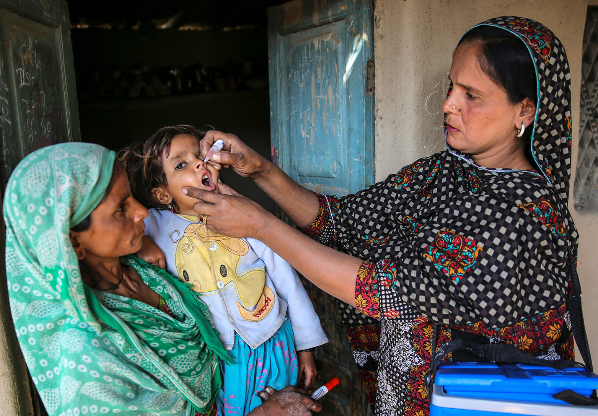
"Effective social mobilization, with emphasis on high-risk populations, is a key component of polio outbreak response....Communication approaches should be straightforward, clear and elicit an urgent response from parents and the community at large."
As a regularly updated resource document, the standard operating procedures (SOPs) summarise the roles and responsibilities of countries and Global Polio Eradication Initiative (GPEI) partners during a polio outbreak or event. Critical aspects of the SOPs result from broad consultation of expert advisory groups, including the World Health Organization (WHO) Strategic Advisory Group of Experts (SAGE) on immunisation, and endorsement by the GPEI Eradication and Outbreak Management Group.
This document updates Version 3, published in January 2019 (see Related Summaries, below). Version 3.1 incorporates lessons learned from response efforts in light of emergencies that have been concentrated around areas of recent monovalent oral polio vaccine (mOPV2) use in sub-Saharan Africa, as well as outbreaks confirmed in other regions of the world (e.g. Western Pacific and Eastern Mediterranean). While efforts to eradicate type 1 wild poliovirus (WPV1) continue in polio-endemic countries, GPEI stresses that the world needs to be prepared for the international spread of WPV and for vaccine-derived poliovirus (VDPV) of serotypes 1, 2, or 3, which can also still emerge in different contexts.
Version 3.1 of the SOPs guides response for all poliovirus types and covers all aspects of outbreak response: detection, notification, and investigation; risk assessment; response standards; vaccination response; surveillance following investigation; communication for development (C4D) and social mobilisation; monitoring and evaluation (M&E) of response; and other elements. The SOPs' strategic framework provides the basis for coordination and collaboration among partners to ensure that a response to a polio event or outbreak includes:
- Fully engaged national and subnational governments;
- Rapid detection, notification, investigation, and risk assessment;
- Strong advocacy, communication, and social mobilisation;
- A robust immunisation response, where indicated; and
- High-quality and enhanced surveillance.
Number 3, above, corresponds to chapter 9 in the SOPs. Here, the GPEI explains that the polio C4D outbreak response approach is designed to redress perceptions and social norms that deter caregivers from vaccinating their children and to rebuild commitment to vaccination, including routine immunisation (RI). Critical C4D steps include:
- raising awareness of campaign dates;
- strengthening community perception of vaccination through building trust in health worker capacity and vaccine safety and efficacy;
- elevating perception of polio risk; and
- addressing bottlenecks in the decision to vaccinate.
Specifically:
- Immediately creating or reinvigorating a national communication or social mobilisation committee is necessary to help initiate C4D outbreak response communication as soon as an outbreak is declared. At this phase, the focus is on building (or rebuilding) caregivers' awareness about polio, OPV, and the fact that there is an outbreak. Communication approaches should be straightforward and clear and should elicit an urgent response from parents and the community at large. C4D activities should be shaped by a review of existing data sources for knowledge, attitudes, practices, and behaviour or, if not available, by a rapid social assessment of norms that may affect vaccination. Gender issues should be integrated into data analysis.
- Plans for subsequent campaigns, including supplementary immunisation activities (SIAs) and a mop-up round, should include C4D interventions to reach missed children and reduce refusals. For campaigns using the short interval additional dose (SIAD) approach, locally appropriate messaging is important so that families understand the process. After each campaign, independent monitoring (IM)/lot quality assurance sampling (LQAS) data and/or other sources should be analysed in a timely way, especially regarding the core indicators for C4D (outlined in the SOPs), in order to amend communication strategies as required.
- Where an outbreak is ongoing for more than 4 months, there may be one or more underlying communication barriers. As the intended audience may include acceptors, vulnerable acceptors, transient groups, or even rejecters, a root cause analysis should be conducted to identify such barriers, whether social or related to access or quality of the service. Reasons for missed children should be well investigated and analysed to adjust strategies for issues such as fatigue of repeated campaigns or mistrust in vaccine or frontline workers.
- Regardless of how the outbreak evolves, the focus of C4D strategies should shift towards supporting RI as soon as possible. The final outbreak response assessment (OBRA) reviews country improvement plans for RI and longer-term preparedness. Achievements and lessons learned from social mobilisation, advocacy, and media and partnership activities at the national, provincial, and district levels should be documented.
GPEI notes that deploying a variety of strategies ensures that communities and decision-makers at local, national, and regional levels are engaged in promoting vaccination. Engagement with religious and community leaders, health providers, parliamentarians, women's and youth groups, or other influencers in the social network is an important strategy to build strong public consensus about the urgency of the outbreak and the need to take collectively the decision to vaccinate. Mass and social media play a critical role for reaching a large audience very quickly, especially where interpersonal communication networks are less strong. In conflict areas, radios can serve as a channelling tool.
Special populations that are hard-to-reach or in conflict areas can be particularly vulnerable to polio outbreaks. Community mobilisers should be selected from the communities, and efforts should be made to include women. To build community trust, (s)he should be trained on key messages and be part of the vaccination team. Global training standards are available for training of vaccinators and other volunteers. Furthermore, community influencers/groups should be consulted and engaged in the planning phase of the campaign, with continuation through to the end of the outbreak. Geographic, security, or demographic challenges could limit access. The use of non-traditional means, such as mobile texting, awareness around water points, days when a population moves from one place to the other, printed messages about polio on food bags, or messages in bread packages and other innovations, may augment standard communication strategies.
English, French
72
GPEI website, April 30 2020 and July 28 2020; and WHO Institutional Repository for Information Sharing (IRIS) website, June 8 2022.
- Log in to post comments