










































Training University Students as Vaccination Champions to Promote Vaccination in Their Multiple Identities and Help Address Vaccine Hesitancy
University College London (Ali, Ashiru-Oredope, Murdan); Public Health England (Ashiru-Oredope)
"...prepare the future vaccination champions to discuss and answer questions when they went about promoting vaccination to their families, friends, neighbours, and others..."
Pharmacies and pharmacists are involved in vaccination in many countries through counselling about and administering vaccines. There are a number of calls for their role to be expanded - for example, to engage in conversations with those who are vaccine hesitant. Given that presciber recommendation and community engagement are two ways of addressing vaccine hesitancy, training university students to become vaccination champions could hold promise, as the champions engage with their communities in their multiple identities. This study describes and assesses the impact of a pilot project that could pave the way for integrating vaccination championing in the pharmacy and other undergraduate/postgraduate curricula.
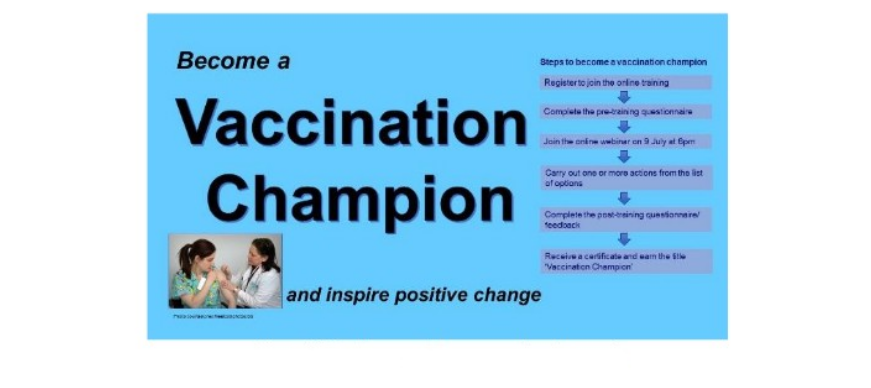
The 'Becoming a Vaccination Champion' training course took place in July 2020. The course was advertised by email to all students enrolled in the MPharm Pharmacy and MSc programmes at the University College London (UCL) School of Pharmacy. The course requirements were to: (i) complete a pre-workshop questionnaire, (ii) attend the two-hour online (Zoom) workshop composed of a presentation interspersed with four Slido polls and two breakout rooms, (iii) conduct an action promoting vaccination within a week of the online workshop, and (iv) complete a post-workshop questionnaire.
Of the 70 people who completed the pre-workshop questionnaire, 57% believed that people in their immediate environment are in favour of vaccination. Overall, they held few misconceptions about vaccination, and were likely/extremely likely to vaccinate their current/future children (96%), encourage family members to get the recommended vaccines (91%), and get themselves vaccinated before travelling abroad 80%). There was some hesitancy, with only 76% agreeing that vaccines are safe, and a considerable proportion of participants unlikely/extremely unlikely to accept newer vaccines (44%) or to accept COVID-19 vaccines (39%).
Fifty-three students, many of whom were female and Black, Asian, and Minority Ethnic (BAME) participants, completed the course. Highlights of their responses to Slido polls include:
- When participants were asked how confident they were about promoting vaccination on a scale of 1-10 (with 10 being very confident), the scores ranged from 2 to 10, with the majority (61% of 48 responses) selecting 5 to 7.
- Responses to the Slido poll question "What are the barriers, if any, to you of becoming a vaccination champion?" indicated barriers related to not knowing vaccine-hesitant people, being vaccine-hesitant themselves (especially regarding vaccination against COVID-19), not knowing how to approach vaccine-hesitant people, lack of time, being unsure of and/or lack of access to reputable sources of information, and insufficient knowledge, confidence, and/or communication skills.
After the course, the students' vaccination-promoting actions ranged from speaking with vaccine-hesitant family, friends, and customers in the pharmacy, to promoting vaccination on various social media platforms. Participants almost always urged their audience to use reputable sources of information about vaccination. It is noteworthy that, of the students who engaged with people they knew to be vaccine-hesitant, at least three of these people subsequently changed their minds, and several decided to conduct more research into vaccination. The authors think the course requirement of conducting and documenting a vaccination promotion action might have helped participants who would have been otherwise too shy/reluctant to contradict/challenge their family members to engage in such conversations.
Findings from the post-workshop questionnaires show that attendance at the online workshop increased vaccination knowledge and reduced (but did not eliminate) misconceptions about vaccination (e.g., more students agreed that vaccines are safe (from 40 to 47 of those answering this question). They were also more likely to say they would accept a COVID-19 vaccine if it were available and offered to them.
Feedback about the workshop was mostly complimentary. In a follow-up Zoom session with seven participants, when the future of the course and how to improve it was discussed, increasing the content, especially regarding debunking vaccine myths, was one theme, and participants unanimously agreed that the vaccination champion course should be part of the degree curriculum rather than an optional activity.
Reflecting on the experience, the researchers note that the fact that course participants themselves had some concerns about vaccines, pre workshop, may reflect their largely BAME status. Ethnicity has been shown to affect vaccination uptake and perceptions about immunisation in the United Kingdom (UK). "The fact that attendance at the workshop reduced concerns about vaccination shown by the increased numbers of participants who agreed that vaccines are safe, held fewer misconceptions about vaccines, were more likely to accept vaccines and to engage with vaccine - hesitant family, friends, neighbours, strangers and patients after attending the workshop, shows that the training of university students to become vaccination champions could be one way of increasing awareness and vaccine uptake in ethnic groups that are especially likely to have low vaccine uptake."
In terms of action points for the future, the researchers indicate:
- Current and future healthcare practitioners should promote vaccination online and serve the needs of those who are seeking more information and are susceptible to persuasion. In future courses, including training on the use of social media to promote vaccination by an appropriately qualified trainer was considered, as per feedback by the course participants.
- It was noted that while the use of the online method to deliver the course was useful, there was no opportunity to practise vaccine conversations face to face, which would have helped the students initiate discussions with their family members and friends. Future similar courses could consider incorporating this type of role playing.
- The vaccination promotion course will be revised and incorporated into the MPharm curriculum, and the course will be offered to students studying other health/life sciences and even non-science subjects, following appropriate adaptations and co-creation, especially for students without a scientific background. The authors believe that anyone can become a vaccination champion, regardless of background knowledge.
In conclusion: "Given that a large proportion of university students are likely to be future parents, training students regarding vaccination and its promotion, and in particular directing them to reputable sources of information, could be one way of reducing their own possible vaccine hesitancy in relation to their future children and increases the likelihood that they will feel sufficiently knowledgeable and confident to promote vaccination to other parents in their social circles....Training students to become vaccination champions will equip them with the resources, and at the very least with reputable sources of information and some knowledge and confidence, to engage in these conversations."
Pharmacy Education 21(1): 407-19. https://doi.org/10.46542/pe.2021.211.407419; and email from Sudaxshina Murdan to The Communication Initiative on September 8 2021.
- Log in to post comments