










































Addressing Vaccine Hesitancy Challenges: LNCT Workshop and Webinar Resources
Image
SummaryText
The Learning Network for Countries in Transition (LNCT) is a country-driven network dedicated to peer learning to support countries as they transition away from Gavi support to full domestic financing of their national immunisation programmes. In support of that mission LNCT hosted 2 events in late 2019/early 2020 that focused on vaccine hesitancy, and this page provides access to some of the resources available to all (non-LNCT members). The events were as follows:
With a focus on building trust, social media monitoring, managing safety perceptions, health worker hesitancy, and engaging minority and vulnerable populations, participants shared experiences, identified global and regional tools to address challenges, and developed action plans, which they planned to go on to implement with follow-up support from LNCT and partners. A few key takeaways emerged, including:
LSHTM began by presenting a summary of the key issues and lessons learned during the November workshop. Armenia shared their experience introducing the HPV vaccine, discussing challenges (including on social media), what worked, and lessons learned. Ghana also shared lessons learned in building healthcare worker confidence to address questions and concerns. The webinar concluded with 15 minutes of a moderated question and answer (Q&A) discussion with the panelists. Below please find the video and slides.
- A workshop held November 18-19 2019 in Geneva, Switzerland - 12 LNCT members from Armenia, Georgia, Ghana, Lao PDR, Uzbekistan, and Vietnam gathered with experts from Gavi, the World Health Organization (WHO), the United Nations Children's Fund (UNICEF), Curatio International Foundation, Common Thread, the London School of Hygiene and Tropical Medicine (LSHTM), and Results for Development (R4D) to discuss local solutions to the global challenge of vaccine hesitancy.
- A follow-up webinar held on February 6 2020 on addressing vaccine hesitancy challenges.
With a focus on building trust, social media monitoring, managing safety perceptions, health worker hesitancy, and engaging minority and vulnerable populations, participants shared experiences, identified global and regional tools to address challenges, and developed action plans, which they planned to go on to implement with follow-up support from LNCT and partners. A few key takeaways emerged, including:
- Issues of low confidence and trust are a common driver of vaccine hesitancy among the LNCT countries. Confidence in vaccination is important to achieve high uptake, and efforts to build and maintain public trust are needed.
- The influence of the spread of misinformation on social media has been a particularly important challenge across LNCT countries.
- While adverse events and other hesitancy challenges are often inevitable, preparedness, planning, and resilience are key. Activities to address concerns and mitigate rumours need to take place on an ongoing basis.
- Hesitancy among healthcare workers (HCWs) was highlighted as a particular concern by LNCT countries. With appropriate training, support, education, mentoring, and coaching, HCWs can help maintain or rebuild confidence in vaccination.
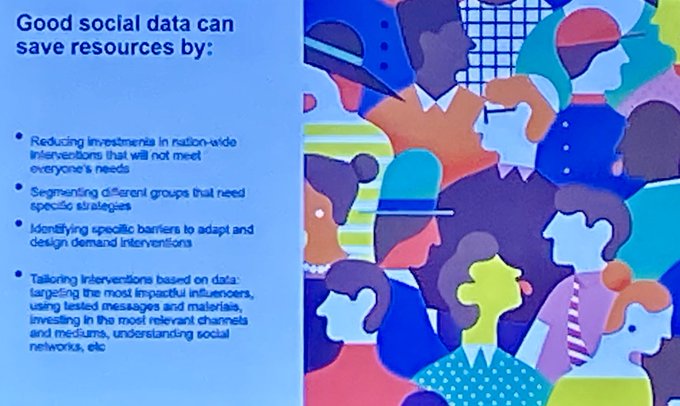
- Specific vulnerabilities of minority populations should be addressed with strategies that are based on inclusion and trust-building. Collecting and analysing "social data" on the social and economic characteristics of under-vaccinated populations may help countries identify at-risk groups and better understand the specific barriers they face when accessing services.
- A wide variety of global and regional tools are available for countries to adapt. For example, UNICEF Europe and Central Asia Regional Office (ECARO)'s Communication for Immunization Resource Pack [PDF] provides brief descriptions of over 100 resources.
- Armenia increased its human papillomavirus (HPV) coverage by launching a large communications campaign that included, among other strategies, training and addressing hesitancy issues amongst HCWs including gynaecologists and neonatologists, recognising that parents get information from medical sources not directly involved in immunisation.
- Georgia conducted a HCW knowledge, attitudes, and practices (KAP) survey as part of its HPV demonstration, which it used to develop a national communication strategy and conduct interpersonal communication (IPC) trainings for HCWs prior to national introduction, with UNICEF support. The IPC trainings included videos demonstrating effective and ineffective communication techniques and on-the-job training components.
- Ghana created a communications group to engage traditional media and look at social media's influence on the spread of information on vaccines. They also added an immunisation course to the HCW curriculum and created a new hire orientation (with the Centers for Disease Control and Prevention - CDC) that includes immunisation topics (e.g., how to communicate with caregivers).
- Lao PDR formed an adverse events following immunisation (AEFI) committee to address public safety concerns proactively, and they plan to review their risk communications strategy for the HPV vaccine before its introduction. They have developed job aids for Expanded Programme on Immunization (EPI) staff on AEFIs and vaccine-preventable diseases (VPDs) to help HCWs communicate more effectively.
- Uzbekistan developed a hesitancy response plan in advance of its HPV introduction, drawing on the experience of its neighbours. Among other strategies, they found holding town halls that allowed caregivers to talk through their concerns face to face with experts to be particularly effective in addressing rumours spread over social media.
- Vietnam held communications workshops with journalists to address persistent AEFI concerns and help them better understand the science of vaccines and AEFIs.
- Interview with Dang Thi Tanh Huyen, Vice Head of National EPI Office, Vietnam - Click here to listen to the interview recording in English.
- Interview with Svetlana Grigoryan, Head of Immunization and Epidemiology, Vaccine Preventable Diseases Department, Armenia - Click here to listen to the interview recording in Russian, and/or transcripts of the interview can be read in English [PDF] or Russian [PDF].
LSHTM began by presenting a summary of the key issues and lessons learned during the November workshop. Armenia shared their experience introducing the HPV vaccine, discussing challenges (including on social media), what worked, and lessons learned. Ghana also shared lessons learned in building healthcare worker confidence to address questions and concerns. The webinar concluded with 15 minutes of a moderated question and answer (Q&A) discussion with the panelists. Below please find the video and slides.
Source
LNCT website; "Announcing LNCT's Vaccine Hesitancy Workshop, November 18-19, 2019 (Geneva, Switzerland)", by Heidi Larson, Pauline Paterson, Leah Ewald, and Kristen de Graaf, November 1 2019; "Takeaways from the LNCT Vaccine Hesitancy Workshop: Geneva, Switzerland (November 18-19, 2019)", by Kristen de Graaf, Ekaterine Adamia, Nona Beradze, and Ivdity Chikovani, December 16 2019; and LNCT Webinar Resources: Addressing Vaccine Hesitancy Challenges, February 10 2020 - all accessed on March 12 2020. Image credit: Sherine Guirguis via Joanna Wiśniewska on Twitter
PDFLink
- Log in to post comments