










































Assessing Community Engagement in Nigeria Polio Eradication Initiative: Application of the Consolidated Framework for Implementation Research
University of Ibadan College of Medicine (Akinyemi, Adebayo, Bassey, Nwaiwu, Owoaje); Johns Hopkins University Bloomberg School of Public Health (Kalbarczyk, Alonge); World Health Organization (WHO) Country Office for Nigeria (Fatiregun)
"These findings can be used by policymakers and researchers to advocate for effective ways to implement community engagement activities."
The wild poliovirus was last detected in Nigeria in 2016, and community engagement has been identified as a principal strategy for achieving this success. The implementation of community engagement strategies in the polio programme has enhanced coverage, acceptability, and ownership of health programmes in high-risk areas, such as hard-to-reach and conflict-affected communities. This study employed the Consolidated Framework for Implementation Research (CFIR) to assess factors that enhanced or impeded the implementation of community engagement strategies in the Nigerian polio eradication initiative (PEI). The CFIR is a multitheoretical framework that has been used to synthesise research evidence from various disciplines into a consolidated framework with multiple constructs of what works across different contexts, and why they work.
The study took place in at least one State from each of the six geopolitical zones in Nigeria (Nasarawa, Borno, Kano, Sokoto, Anambra, Bayelsa, Lagos, Ondo, and Oyo States, as well as the Federal Capital Territory). The 364 respondents included programme managers, policymakers, researchers, and frontline field implementers affiliated with the Global Polio Eradication Initiative (GPEI) core partner organisations, the three tiers of the government health parastatals (local, state and federal levels), and academic/research institutions.
A total of 45.0% of the participants reported that the process of conducting the PEI programme (e.g., planning of stakeholder engagement, engaging appropriate stakeholders, executing the activities as planned, and monitoring engagement outcomes against the stated objectives) was the most important internal contributor to implementing community engagement activities in the community. This was followed by other internal factors (24.0%), including characteristics of individuals within the organisation involved in the PEI activities, awareness of benefits of community engagement, health workers' enthusiasm, and sustained support throughout the stages of the engagement and commitment to the organisation. PEI programme characteristics were cited by 21.0% of respondents as other internal contributors to implementing community engagement activities, including the positive perception of quality and effectiveness of community engagement activities, the adaptability of the strategy to local context, ease of implementation of the strategy, and minimal challenges encountered during implementation.
The most frequently mentioned external contributor to the community engagement activities was the social environment, 56.0%, in which the community engagement activity was implemented (particularly sociocultural beliefs around immunisation). Also, political factors (stakeholders' and political support) within the communities were a commonly mentioned external contributor (26.0%). Economic factors, 16.0%, were also mentioned as contributors to community engagement activities.
The respondents indicated that within the external environment domain, the economic environment (35.7%), such as funding mechanisms, and the social environment (32.9%), such as sociocultural beliefs about vaccination, were the most frequent external challenges to community engagement.
To harness the factors that facilitate community engagement in Nigeria's PEI, the researchers suggest, for example, harnessing staff performance that falls in the category of characteristics of individuals involved in community engagement. Reflections on Africa's polio campaigns show that any initiative is only as good as the quality of the human resource engaging with the community. The PEI focused on local champions called volunteer community mobilisers who advocate for and align with the goals of the programme. They were purposeful in addressing community challenges (non-compliant households, vaccine-rejection cases, missed children) in Northern Nigeria. Engagement of these individuals in the polio programmes, including religious and traditional leaders, has aided the programme to address misconceptions about the benefits of the polio programme, to increase a sense of ownership of the polio programme, and to develop social networks within the community that will be available to work on routine immunisation and other health services as part of the polio legacy.
The external setting - the social environment - was identified as an influential factor: "when properly harnessed, the social environment can contribute to the success of the community engagement goals but if neglected can hinder the successful implementation of a community engagement strategy." In the case of the polio programme in Northern Nigeria, the culture of men preventing visitors from being contact with their wives, beliefs about the content of the polio vaccines, a nomadic way of life, and social norms about immunisation activities negatively affected the coverage rates in these areas. However, engagement of the community members resulted in the identification of the problems and proffering of mutually acceptable solutions. This resistance to immunisation due to misconceptions and cultural beliefs in Northern Nigeria was not as pronounced in the other parts of the country. Thus, the sociocultural context of communities should be considered and extensive dialogue carried out to ensure communities are adequately represented and take ownership of the programme.
In addition to understanding the social context of the community, it is necessary that any community engagement effort understands the politics within the community - e.g., the various political factions with their beliefs and grievances. Most importantly, however, implementers must strive to remain politically neutral, to ensure that no section of the community is unrepresented due to their political affiliations.
When taking into account these facilitating factors, ultimately: "Programme implementers should collaborate transparently with the community, foster trust and maintain a relationship with the community."
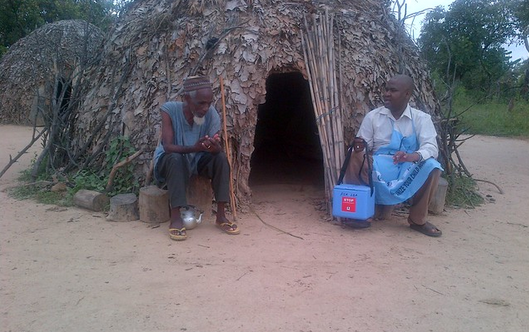
BMJ Open 2021;11:e048694. doi:10.1136/bmjopen-2021-048694. Image caption/credit: "Nigeria FETP [Field Epidemiology Training Programme] resident Dr. Wada Imam Bello dialoguing with the Fulani community leader and grandfather of nomadic children who had not been vaccinated for polio, in Sabon-Lavi Ward of Faskari Local Government Area, Katsina, Nigeria, during the campaign to resolve non-compliance, September 2012." Submitted by Dr. Wada Imam Bello, Nigeria - via Flickr (CC BY 2.0)
- Log in to post comments