










































Barriers to Effective Uptake and Provision of Immunization in a Rural District in Uganda
East Africa Centre for Vaccines and Immunization, or ECAVI (Malande, Munube, Afaayo, Njunwamukama, Mworozi); Makerere University (Malande, Munube, Ayebare, Mworozi); Egerton University (Malande); Mulago National Referral Hospital (Munube, Mworozi); World Health Organization, or WHO (Annet, Bodo, Bakainaga); Sefako Makgatho Health Sciences University (Musyoki)
Studies conducted in Uganda have found that the level of education of the caretakers, awareness of availability of immunisation services, health seeking behaviour, and distance to the service delivery points are the main factors contributing to low immunisation coverage in that country. The Ministry of Health (MOH) has instituted strategies like radio talk shows, mass campaigns, and static and outreach programmes in a bid to change socio-cultural factors, religious beliefs, and attitudes that affect uptake of immunisation - but with little success. The objectives of this study were to evaluate the state of immunisation services and to identify the gaps in immunisation health systems that contribute to low uptake and completion of immunisation schedules in Hoima district, a rural area with a significant part of the population comprising refugees and the mobile migrant border community.
This was a cross-sectional mixed methods study. Between June and August 2017, the researchers carried out a situation analysis of the immunisation services using in-depth interviews with vaccinators, focus group discussions (FGDs), and key informant interviews with ethno-videography. (The study enrolled and analysed 311 caretaker/child pairs in focus group discussions and another 311 participants for completeness of their immunisation schedule.) Secondary data were sourced from records at headquarters and vaccination centres. The quantitative component utilised cluster random sampling with sample size estimated using the World Health Organization (WHO)'s 30 cluster sampling technique.
The research revealed that most residents of Hoima district are very receptive to vaccines and immunisation services. The health workers in Hoima district are willing and committed to immunisation programmes. This was a very positive and encouraging finding, and a departure from findings of other studies that have suggested that health worker attitudes are a major hindrance to caretaker uptake of immunisation services.
However, the study revealed some barriers/gaps in immunisation health systems that contribute to low uptake and completion of immunisation schedules in Hoima district, including the following (illustrated by quotations from FDG participants):
- The existing system in place for identification, reporting, and management of adverse events following immunisation (AEFIs) is not well known by the health workers and community. The MOH is working on a plan, but there has been a delay in national rollout and implementation of this system.
- The distance some caretakers have to cover to reach immunisation centres is long. This also means that health workers performing outreach services have to travel longer distances, which can be challenging when transport facilitation is inadequate, and the geographical terrain is difficult to be covered.
- People from diverse origins who speak different languages have infiltrated Hoima, so the language barrier is a major problem, especially in the refugee camp and areas bordering Congo. This could affect communication between the health workers and caretakers about the need to return for subsequent immunisation visits.
- Some of the community leaders and village health team (VHT) members described inadequate health worker staffing numbers and vaccine stockouts. (The hilly and mountainous rocky terrain, with narrow marram roads that make it difficult to navigate and inadequate transport affect the steady supply of immunisation consumables from the district stores to the various health facilities.)
- Several people cited religion and cultural influences as barriers to effective immunisation services; one caretaker from Buhanika said, "Their God (owobusobozi) stops them from bringing the children for immunization." The researchers indicate that it is difficult to quantify the impact of small cults and religious groups thought to be promoting anti-vaccine sentiments/hesitancy in the district.
- Some respondents reported inadequate male partner involvement as a barrier to effective immunisation.
While this study was not designed and specifically powered to address the question of immunisation coverage in Hoima district, the performance indicators showed worrying results. The results in this group of children revealed completion rates for various vaccines at 95% for Bacillus Calmette-Guérin (BCG), 96% for oral polio vaccine at birth (OPV0), 93% for diphtheria, tetanus, and pertussis (DPT1), 84.5% for DPT2, 81% for DPT3, and 65.5% for measles. These figures are similar to national figures for Uganda, where only 55% of children aged 12-23 months were found to be fully vaccinated, with full vaccination coverage being relatively higher in urban areas (61%) than rural areas (50%).
According to the researchers, there is a need for future studies to test specific interventions in Hoima, which, if successful, can be escalated to cover more districts and entire country with similar immunisation inequities. The researchers indicate that involving the community in their own vaccination to inspire good health seeking behaviour has been documented as an important aspect for the success of the immunisation programme; therefore, exploring the behavioural aspects influencing utilisation of immunisation services in Hoima district is advised. Some other suggestions include:
- Training health workers with refresher/new courses on basics of immunisation/vaccines;
- Carrying out community sensitisation about importance of immunisation;
- Promoting joint planning for immunisation services using the reach every child approach between health workers and communities to be served;
- Developing and implementing a system for identifying, reporting, and management of AEFIs; and
- Designing and piloting a programme that equips health workers and VHTs to offer continuous education for caretakers that runs alongside the static and outreach /mobile immunisation sessions in the district. This can be done by providing enough information, education, and communication (IEC) materials in the local languages - taking note that Hoima district is one with various ethnic groups.
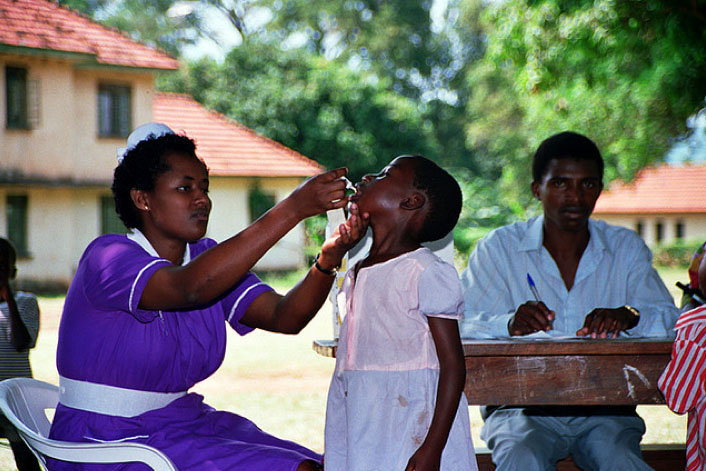
PLoS ONE 14(2): e0212270. https://doi.org/10.1371/journal.pone.0212270. Image credit: Kampala Post
- Log in to post comments