










































Effective Communication of Immunization Data
"Even simple changes to the way data is presented could lead to a greater impact, whether this be better programme performance, increased funding or higher vaccination uptake."
In creating this document, the World Health Organization (WHO) Regional Office for Europe aims to encourage and support effective communication of data related to vaccine-preventable diseases, vaccines, and immunisation. Immunisation data cover a wide range of information collected on a daily, monthly, and annual basis, and at health facility, district, national, and global levels. Staff of immunisation programmes or related entities with the capacity to share the important "stories" contained in these data to the intended audience may be better positioned to support achievement of immunisation targets and goals.
Overview of the resource:
- Section 1 - "Define" - challenges the reader with these questions: What do you want to achieve? What information do you want to convey? Who do you want to reach?
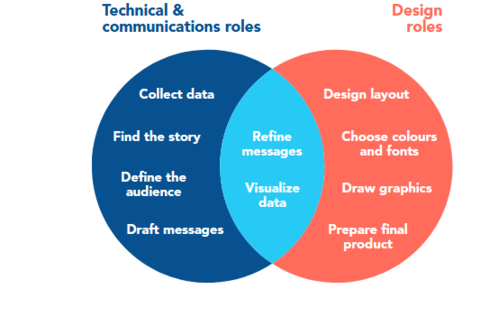
- The chapters in Section 2 provide suggestions for creating effective data visualisations through an iterative process, with topics including: Shaping the messages; choosing and shaping the numbers; format; design principles; colours and patterns; icons and photographs; and working with a designer. (It is noted that, if collaboration with external designers is not possible, training to increase internal communication and graphic design capacities can be a cost-effective first step.)
- Section 3 offers examples of how to disseminate data (e.g., via social media, press packet) and what to consider in choosing the right platform.
- Section 4 includes online resources for inspiration and further learning about effective communication of data.
- Annex 1 is a checklist to help the design team assess and revise draft versions of data visualisations, and Annex 2 is a sample design template.
The information provided in this publication is based on generally accepted best practice, lessons learned by WHO and consulted experts, and published research. But because what works best in a particular context, for a specific intended audience, can vary, WHO recommends focus group testing of any communication product and/or sharing products with, and requesting feedback from, someone who is not comfortable or accustomed to working with numbers.
102
WHO website, January 8 2020.
- Log in to post comments