










































Communication for Immunization
Offered on Λgora, the United Nations Children's Fund (UNICEF)'s global hub for learning and development, this learning programme covers the effective use of communication in immunisation programmes. Developed jointly by UNICEF and the World Health Organization (WHO), the eLearning initiative provides access to training in areas deemed vital to the advancement of the Global Vaccine Action Plan (GVAP) and its vision that everyone live a life free from vaccine-preventable disease.
The learning programme provides national and international WHO and UNICEF immunisation staff (and any other consultants and partners working in support of immunisation) with a better understanding of how communication impacts immunisation programmes and outcomes and how effective communication activities are planned, executed, supervised, and monitored.
The course takes the learner through the step-by-step development of community-informed communication for development (C4D) plans and related activities. The learner is submerged in experiential lessons consisting of "quests" where he or she travels to fictitious countries, meets different characters, and addresses specific problems regarding immunisation coverage and planning. Modules focus on:
- Quest 1: Research & Analysis
- Quest 2: Objectives & Strategies
- Quest 3: Research, Analysis, Objectives & Strategic Design
- Quest 4: Channels, Messages & Pretesting
- Quest 5: Implementation, Monitoring & Evaluation
Each module (quest) should take 20-45 minutes to complete and must be completed in the order presented. A course certificate is generated once the learner completes all the modules, which takes approximately 3 hours in total. At course completion, the learner is expected to be able to:
- List the ways that communication activities impact immunisation programme goals - globally, regionally, and at all levels within a country;
- Explain how C4D and the Social Ecological Model (SEM) can influence positive behavioural changes in immunisation;
- Identify the purpose, components, and steps involved in developing a community-informed C4D plan; and
- Use data to identify behavioural and social barriers to achieving immunisation programme objectives within a specific population, and articulate the communication interventions and goals required to overcome those barriers.
English; French
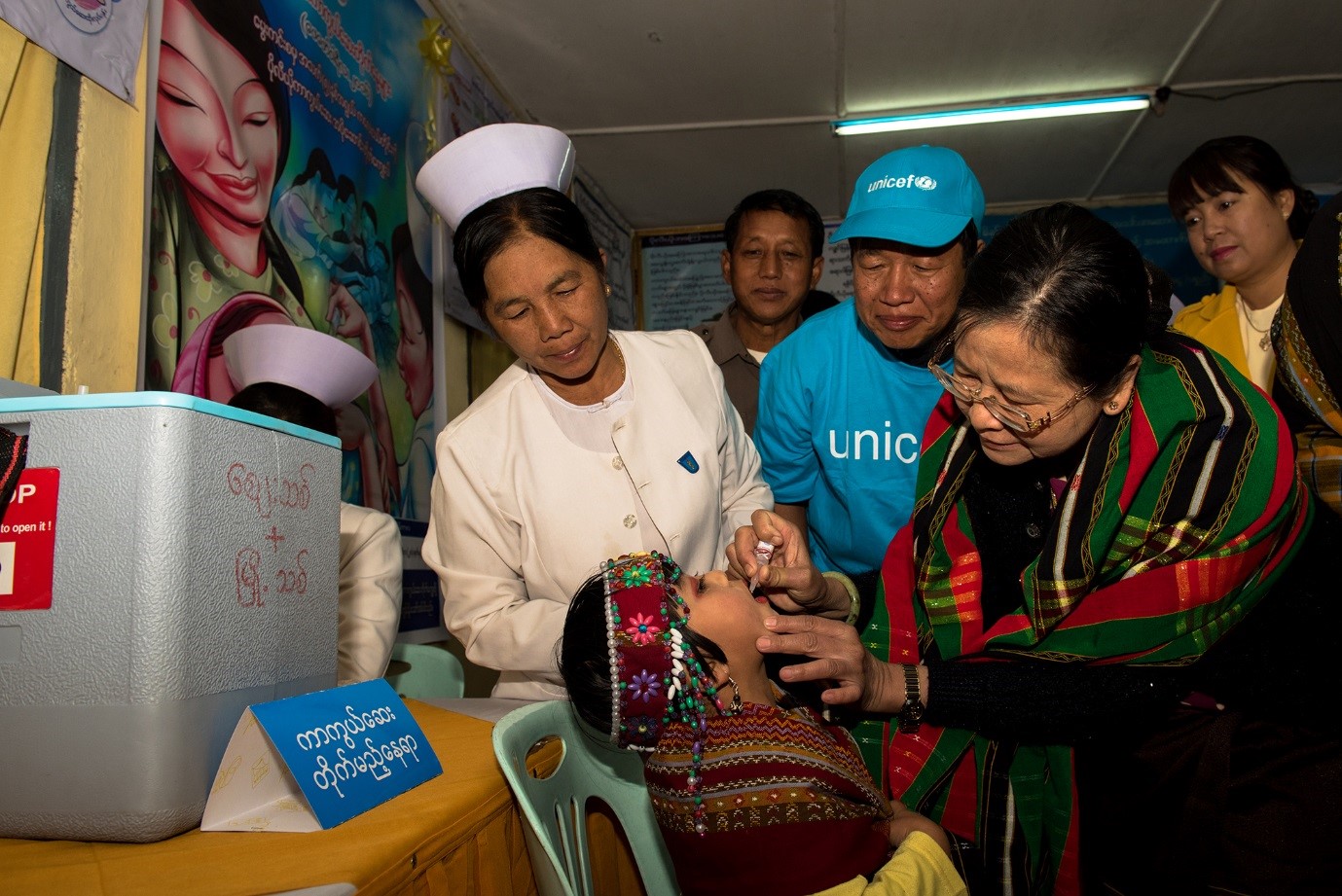
Agora, April 27 2018. Image credit: ©UNICEF Myanmar/2016/Daniele Romeo
- Log in to post comments