










































Building Trust Within and Across Communities for Health Emergency Preparedness
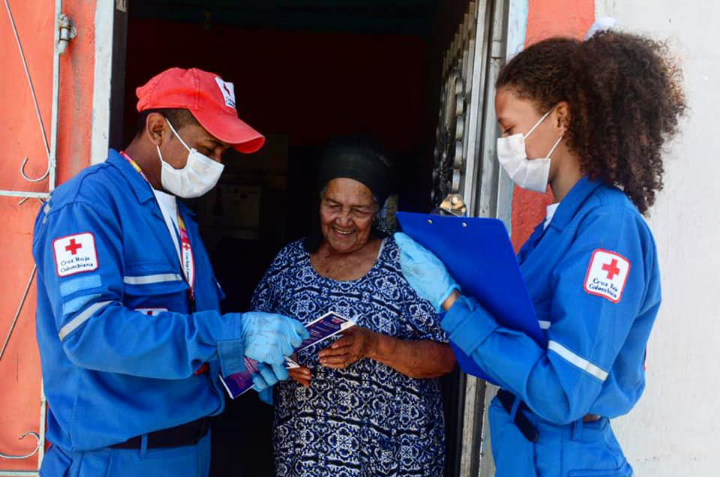
"Mutual trust among the public, governments, civil society, business, and the media is the cornerstone of health emergency preparedness. Rather than being an afterthought, building trust requires overt and intentional community engagement and accountability grounded in real actions along with evidence-based, open communications from trusted sources in every context."
The central reason trust is so important in emergencies is that preparedness and response rely on whole-of-society buy-in and cooperation. We have seen in past crises, such as in the Democratic Republic of Congo during the Ebola outbreak, that low institutional trust and belief in misinformation hampers the adoption of prevention behaviours, including vaccines. To better understand the role of trust in health emergency preparedness and develop strategies for its enhancement, the United Nations Children's Fund (UNICEF) and the International Federation of Red Cross and Red Crescent Societies (IFRC) convened a consultation in April 2020 with experts in data, the media, public health, programme implementation, human behaviour, and research. This report, which emerged from that 3-session video dialogue: examines the impact of mistrust, explores values and strategies for building an atmosphere of trust, and offers recommendations for leaders.
Participants in the consultation, who hailed from academia, non-governmental organisations (NGOs), and the private sector, began by discussing the nature of the trust gap, as well as its causes and impacts. A central issue is that health emergencies tend to exacerbate inequalities. In the United States (US), for example, the COVID-19 death rate for blacks, a historically disadvantaged community, is more than twice as high as that for whites. Marginalised populations have reasons to be mistrustful of government authorities, and their questioning of public health messages and reluctance to seek health care risks exacerbating the disproportionate impact of a crisis.
Part of the problem is that, although trust "depends on dialog, give and take, relationships, and partnerships,...governments and civil society groups generally still default to directive communications rather than developing collaborative approaches and contributing to enabling communities to take their own actions. This is especially true during the COVID-19 crisis, which largely has featured one-way communications from governments and public health authorities without a full understanding of community realities." For example, urging people to wash their hands is futile when they do not have access to water or soap. Among the other risks discussed in the report: Mistrust can become politicised.
Having outlined the nature of the problem, the report outlines the following values for leaders seeking to build an atmosphere of trust:
- Lead with trust.
- Demonstrate ethical, competent behaviour.
- Show-long term commitment to all communities.
- Strive for mutual, deep understanding between leaders and the public that reinforces communities' abilities to take care of themselves.
Leaders are advised to develop a strategic framework to create a context of trust that is characterised by:
- Accountability at all levels, which requires:
- Being transparent about goals and activities;
- Providing updates even when goals haven't been met;
- Being candid about biases, agendas, and sources of funding;
- Openly dealing with ethical lapses of both individuals and organisations;
- Providing relevant resources to meet community needs, and;
- Being honest about shortfalls.
- Attention to secondary impacts and the complexity of crises.
- Efforts to build empowered communities who have the ability to plan, organise, and execute their own emergency response - e.g., by tailoring community engagement interventions to gender, language, and local culture.
- Consistent public health communication, which entails, for example:
- Delivering messages that are honest, transparent, compassionate, and based on science;
- Identifying trusted spokespeople for every community and arming them with valid, up-to-date information (e.g., the Global Polio Eradication Initiative (GPEI)'s engagement of trusted community members - ranging from community health workers to religious leaders to pharmacists - all working to promote an understanding of polio and vaccination);
- Developing mechanisms to ensure information is coming from a valid source and that rumours are squelched;
- Clearly explaining why messages may have changed due to an evolving situation, and ensuring the rationale for the adjustment is evidence based;
- Creating an atmosphere where it is safe for people to ask questions of health workers and medical professionals;
- Taking into account differences in access to information and leadership capabilities between and within countries; and
- Finding different ways of communicating to ensure social distancing is maintained.
- Media engagement to ensure all outlets are transmitting accurate, timely information.
- Action to meet the needs of the most vulnerable, including by addressing secondary impacts like the socioeconomic crisis.
- Continuous learning and improvement to contribute to better preparedness for the next crisis - e.g., by developing metrics to measure trust at the community level to inform future efforts.
As noted here, the following recommendations should be studied and applied in combination with the values and strategies outlined above:
- Promote the centrality of trust: Create the preconditions for trustful relationships and develop strategies for engagement with all stakeholders.
- Foster collaborative leadership.
- Carry out frequent vulnerability assessments to strengthen community engagement.
- Appeal to the responsibility of citizens and promote societal engagement.
- Consult, adapt, and communicate - transparently, consistently, and in a timely manner.
- Establish accountability mechanisms at all levels.
In conclusion: "Trust is a process that must be deliberately attended to and included at the core of all systems. This takes time. When considering how to increase trust, contextual factors, including existing inequities, culture and levels of inequality in a community, are critical considerations."
UNICEF Humanitarian Practice website, November 16 2020. Image credit: IFRC/Colombian Red Cross
- Log in to post comments