










































Contributions of the Polio Network to the COVID-19 Response: Turning the Challenge into an Opportunity for Polio Transition
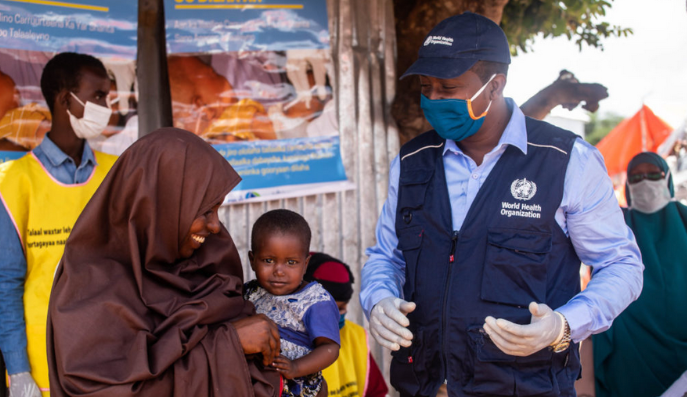
"The global attention to health emergency preparedness and response engendered by COVID-19 offers a prime opportunity to acknowledge the value of the existing infrastructure for eradicating polio and ensure its long-term sustainability."
National health programmes in the African, South-East Asia, and Eastern Mediterranean regions of the World Health Organization (WHO) - regions where the Global Polio Eradication Initiative (GPEI) has its largest footprint - are relying on polio assets to bolster public health capacities and to help to prepare for the long-term recovery and future resilience that will be needed after the COVID-19 pandemic. This WHO report documents the role played by polio eradication personnel during the pandemic globally and in these regions in particular, urging strong action to sustain this network to deliver essential public health services after polio is eradicated.
The report is advanced in the context of polio transition planning. As the world comes closer to achieving polio eradication, the GPEI, which largely has been managed and financed through its international partners (WHO, the United Nations Children's Fund (UNICEF), the United States Centers for Disease Control and Prevention (CDC), the Bill & Melinda Gates Foundation, Rotary International, and Gavi, the Vaccine Alliance), will wind down its operational scope and financial resources and will come to a close. Yet, it would be a mistake, according to WHO, to lose the assets developed over three-plus decades of GPEI operations after the GPEI dissolves. These polio assets fulfil a wide range of public health functions, including disease surveillance, training and capacity building, data management, immunisation, emergency preparedness and response, and the ability to reach the marginalised and hard-to-reach through trusted engagement and social mobilisation networks that extend deeply into communities.
To that end, the Polio Transition Independent Monitoring Board (TIMB), set up in 2017 to monitor the progress on polio transition, has highlighted the value of broader public health services provided by the polio network in resource-constrained settings (see Related Summaries, below, for access to the most recent TIMB report).
As this WHO report outlines, polio assets have several advantages that make them particularly useful for responding to the COVID-19 pandemic. For example, polio personnel have long-standing relationships in countries with people ranging from top health officials to community leaders, which helped them become trusted communicators and team members. Because the polio eradication effort largely relies on community engagement and involves face-to-face contact for everything from communication to vaccination, adaptations were required to meet the protocols for COVID-19 prevention. In India, for example, virtual education materials have been developed, including video puppet shows for children to explain prevention methodologies in a manner they could understand. Polio personnel have also used their communication networks, including local leaders, mosques, and public address systems mounted to motor bikes, to disseminate public health messages related to COVID-19 and have continued communications with community-based groups through physically-distanced visits and use of technological platforms to disseminate messages about COVID-19 prevention and control, answer questions, and encourage parents and other caregivers to continue having their children vaccinated against childhood diseases.
The report goes on to look specifically at polio programme actions to respond to COVID-19 in WHO's African, South-East Asia, and Eastern Mediterranean regions. (For a detailed outline of polio contributions to COVID-19 response and a country-level breakdown of how the polio network stepped up, please see the report annexes.) Many specific examples are provided. For instance, in the South-East Asia Region, which was certified free of wild polio virus (WPV) in 2014, almost 2,600 polio and immunisation staff acted as a focal point for the COVID-19 response in Cox's Bazar, Bangladesh, undertook training of health staff and village governors in Indonesia, and drafted vaccination plans for Rohingya refugees. In Nepal, the network supported COVID-19 field investigations and case clusters, while in Myanmar, personnel formed part of the pandemic incident management team and supported disease surveillance. The report also details how polio assets were able to reach nomadic communities in Kenya to warn them about virus spread, deliver an integrated digital platform for tracking case investigations across the African region, and answer 70,000 calls a day through a polio call centre adapted for COVID-19 in Pakistan. In Uttar Pradesh, India, polio micro-plans were adapted to survey 208 million people twice in three months for COVID-19, resulting in the identification of over 200,000 individuals with symptoms of the virus. The programme plans to use its expertise in immunisation to help to deliver COVID-19 vaccines, as well as to reach at least 80 million children who have missed out on routine immunisations during the pandemic.
Per WHO, these contributions underline that sustaining polio and immunisation capacity puts us in a better position to respond when health crises arise. The report also finds that COVID-19, whilst presenting challenges, provides an opportunity to accelerate the "polio transition" process. WHO regional offices will begin to launch integrated public health teams that will bring together individuals with expertise in polio eradication, emergency response, and immunisation to work collaboratively on the next stages of COVID-19 response and recovery. Showing "transition in action", these teams will exemplify one way via which health systems could be supported in future. Simultaneously, WHO is continuing work to support countries to develop detailed plans modelling how polio capabilities can be sustained, believing these assets have a clear role to advance future national and global health security.
In conclusion: "The current pandemic can be an opportunity for furthering polio transition, especially if the investments made for COVID-19 could be leveraged to build sustainable capacities that would lead to longer-term preparedness and resilient health systems....As the COVID-19 pandemic generates additional attention and adds urgency to emergency preparedness, readiness and resilience, national governments and development partners should coordinate efforts to ensure that the essential public health functions supported by the polio networks are preserved and strengthened."
"COVID-19 shows value of polio infrastructure to support resilient health systems", GPEI, February 8 2021 - accessed on February 23 2021. Image caption/credit: "Mohamed, the Regional Polio Eradication Officer for Banadir, Somalia, participates in an integrated immunization campaign held in September 2020 with strict COVID-19 safety measures in place. In addition to their polio duties, programme personnel have provided substantial support to the pandemic response." ©WHO/Somalia
- Log in to post comments