










































Demand-Side Determinants of Timely Vaccination of Oral Polio Vaccine in Social Mobilization Network Areas of CORE Group Polio Project in Uttar Pradesh, India
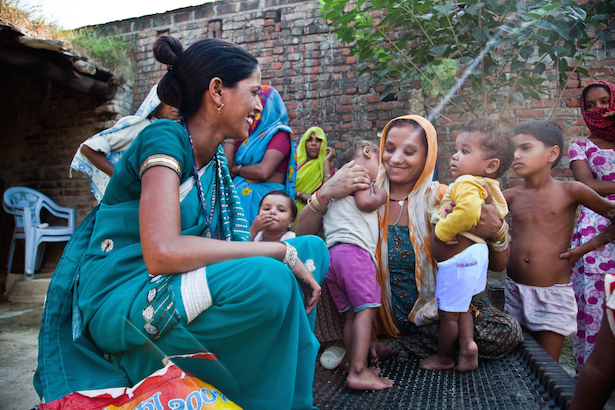
CORE Group Polio Project (CGPP) India
"Immunization programs can tailor their communication strategies and create a sense of urgency to address the issue of timeliness in child immunization. This issue needs to be conveyed to service providers, including vaccinators and shared with the community."
Timeliness is an essential component of child immunisation that substantially reduces susceptibility to vaccine-preventable diseases (VPDs). A study based on district-level household survey (DLHS-3) data reported that a lack of timeliness vaccination of key childhood vaccines is one of the main challenges in India. Drop-out in vaccination of vaccines that are given in a series (e.g., oral polio vaccine, or OPV) is mostly affected by demand-side factors, rather than by supply-side factors. This paper explores the demand-side determinants of timely immunisation of the third dose of OPV (OPV3) among children aged 6-11 months in the catchment areas of CORE Group Polio Project (CGPP) India.
As the researchers explain, vaccine acceptance can be undermined by ignorance or negative attitudes of caregivers towards vaccination. An effective communication response to address the awareness gap requires a better understanding of the intended audience and key messages. "However, a review of literature found insufficient information about appropriate target audience and content of messages on program communication for increasing timeliness of childhood immunization, particularly among Indian children. Responding to this information gap, along with other information needs of the project, CGPP India conducted an in-depth investigation for effectively designing its communication interventions and revamping the strategies to generate demand for routine polio immunization."
Data were collected from May 19 - June 27 2015 from the catchment areas of CGPP India, consisting of 44 work areas of community mobilisation coordinators (CMCs) from 3 of the 12 districts of Uttar Pradesh (UP) in which CGPP works as a member of the Social Mobilization Network (SM Net). In this study, the "Doers" were defined as mothers of timely immunised children (children aged 6-11 months who received OPV3 before reaching the age of 4 months). The "Non-doers" were divided into 2 categories: mothers of children who have not received the first dose of OPV, and mothers of children who received only the first or second dose of OPV (representing actual/potential dropout). A total of 611 children were randomly selected from 3 sampling frames, comprising 266 children who received timely immunisation of OPV3 (Doers), 72 children without OPV1 immunisation (Non-doers - type A) and 273 who received OPV1 or OPV2 (Non-doers - type B). Out of 611 prospective respondents, a total of 583 face-to-face interviews of mothers were conducted, consisting of 254 Doers, 68 Non-doers - type A, and 261 Non-doers - type B.
Determinants of timely OPV3 immunisation were identified through a multinomial regression analysis by modeling the characteristics of index children and survey respondents, surveyed households, respondents' media habits, their exposure to immunisation services, and perceptions towards child immunisation. Background characteristics of the 3 independent samples of Doers and Non-doers survey are presented; some communication-related characteristics include:
- Regarding media habits of respondents, about one-third of mothers did not have exposure to print or electronic media. Television is the most common media, watched by over two-thirds of respondent mothers across the 3 sample groups.
- A large proportion of interviewed mothers stated they ever discussed the importance of childhood immunisation with the local health provider, including CMCs deployed by CGPP India. The majority (>80%) of mothers from all the 3 independent samples stated that the CMC was an information source for childhood immunisation. Compared to the mothers of unimmunised children, more mothers of timely immunised children stated they learned about the upcoming vaccination (due immunisation) through local health care providers and from their family members or neighbours.
- More than two-thirds of respondents said they had been exposed to at least one CGPP Indian-developed information, education, and communication (IEC) resource during a visit to the immunisation session site or routine communication activities of CMCs in the community. More mothers of timely immunised children had more exposure to CGPP India's IEC material than mothers of unimmunised children.
- More mothers of timely immunised children perceived benefits of child immunisation when compared with the other groups of respondents.
Table 3 on page 7 of the article shows the results of the multinomial logistic regression analysis of determinants of timely OPV3 immunisation. The main effects model explaining 48% of the variance identified 8 predictors of timely immunisation: income generation status of mothers, education of fathers, wealth status of households, newspaper reading habit of mothers, having a mobile phone in the household, mothers' visit to immunisation site, mothers' agreement with benefits of child immunisation, and perception that "child immunisation is essential these days".
Notably, the strongest predictor of timely OPV3 immunisation was found to be the fathers' educational level. Children of uneducated or lesser educated fathers had increased odds of not receiving the OPV1 vaccination, as compared to children of more educated fathers (odds ratio (OR) > 10). Some other findings: Respondents who strongly perceived other (non-health) benefits of child immunisation were 3 times more likely to timely vaccinate their children than those who do not. Children from households without a mobile phone were 3.35 times more likely not to receive OPV1. Children of mothers who do not read newspapers were 2.75 times more likely to delay OPV3 immunisation, compared to mothers who read newspapers. Furthermore, mothers who disagreed with the positive attributes of child immunisation were 25 times more likely to delay or not to take their children for OPV immunisation on time.
While this study found the background characteristics of parents and the profile of households to be key determinants of timely OPV immunisation, other determinants are more sensitive to change through specific programme efforts. The researchers suggest that immunisation programmes in India could use the 8 identified demand-side determinants of timeliness and tailor communication strategies accordingly. Among their recommendations:
- Attempt to reach and engage male members of the community, and convey to fathers and other men the significance of immunising children on time.
- Continue to inform the community about immunisation, with messaging that addresses parents' perceptions of non-health benefits and stresses the positive attributes of child immunisation.
- Make children from households with lower wealth quintile or less educated parents the focus of personalised messaging using communication tools and techniques that are appropriate to illiterate or less educated populations.
- Consider audio-visual messaging (via mobile phone) to help mothers and family members understand the importance of timely immunisation.
- Motivate caregivers to visit the immunisation site and make the community aware of the place (venue), day, and timing of immunisation services.
In conclusion: "Further research would be useful to estimate attributable risk for various risk factors of 'No vaccination' and 'delayed vaccination' as well as assessing frontline vaccinators' knowledge, perceptions, and practices about timely immunization."
BMC Infectious Diseases (2018) 18:222. https://doi.org/10.1186/s12879-018-3129-2 - sent via email from Lydia Bologna to The Communication Initiative on May 17 2018. Image credit: Adventist Development and Relief Agency (ADRA) India
- Log in to post comments