










































A Design Thinking Approach to Effective Vaccine Safety Communication
Charité University Medical Center Berlin (Seeber, Rath); Hasso Plattner Institute School of Design Thinking (Michl, Schnjakin, Meinel, Weinberg); King's College London (Rundblad); Icahn School of Medicine at Mount Sinai (Trusko); University of Innsbruck (Gaedicke); The Vienna Vaccine Safety Initiative (Rundblad, Trusko, Gaedicke, Rath)
"The highly complex and controversial topic of vaccine safety communication warrants innovative, user-centered solutions that would start with gaining mutual respect while taking into account the needs, concerns and underlying motives of patients, parents and physicians."
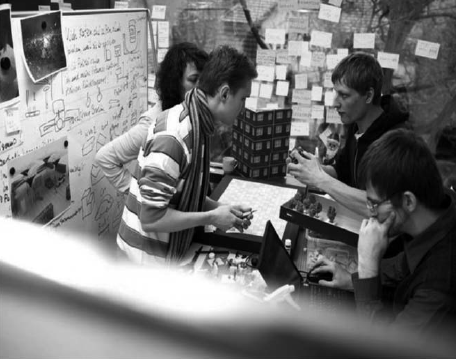
This article examines the application of design thinking to successfully advance vaccine acceptance. Specifically, it explores a non-profit collaborative project conducted by the School of Design Thinking in Potsdam, Germany, and the Vienna Vaccine Safety Initiative (ViVI), an international think tank aiming to promote vaccine safety research and communication (described in detail at Related Summaries, below). The design challenge addressed during the 12-week project, which was dedicated to facilitating dialogue between doctors and parents, was: "How might we enable physicians to encourage parents and children to prevent infectious diseases?" The article describes, step by step, the ideation and innovation process as well as first tangible outcomes of the project.
The organisers of the 2011 project (the authors) explain that highly emotional and polarised debates such as the vaccine safety discourse lend themselves to design thinking, which is a creative process synthetising a variety of viewpoints and positions. Design thinking teams usually consist of four to six young innovators from different fields of study and parts of the world. The interdisciplinary context motivates team members to establish a shared language free of technical terms. The external project partner, the ViVI, provides guidance throughout the process. Before the process is started, the project partners hold several meetings to define a "design challenge" in order to establish an open-ended approach to the topic at hand (see the question, above). Starting with interviews with subject matter experts, parents, and children, the team aimed to gain a better understanding of central issues and diverse viewpoints of vaccination and vaccine communication.
More specifically, the iterative work process is influenced by the way product designers would approach a given problem. The first step for the design thinking team is to understand the scope or content of a given design challenge, to frame a user-centred approach, and to observe potential end-users of a service or product for additional insight and empathy. This includes the uncovering of unconscious motives, latent needs, and central conflicts. Next, the design thinkers aim to generate a point of view, as a consensus process within the multi-disciplinary team to define a "design stance" representing perspectives gained from qualitative research. Only after the initial steps have been reiterated multiple times does the team move on to the ideation of possible solutions. Aiming to maintain a visual and intuitive approach to the design question at hand, rapid prototyping is key, leaving sufficient time to test and generate end-user feedback. Whenever issues are encountered, the previous steps are reiterated until user feedback finally indicates a break-through. Similar to product designers, multiple prototypes are generated to allow for selection and refinement of the most impactful and user-friendly approach. Multiple iterations and feedback loops force the team to keep the "big picture" and the end-user perspective in mind.
The process is explained in detail, but, in short, parental anxieties and confusion were identified as key triggers for emotional conflicts regarding the risks and benefits of routine childhood immunisation. Research has shown that there are two key information sources for parents seeking advice with regard to vaccines besides friends and family: first, healthcare providers (medical doctors and midwives) and, second, online resources and the internet in general. Parents unable to obtain answers during the doctor's visit may feel unsettled about the topic, and will be seeking additional information from alternative sources, often with little or no professional guidance. Contradictory information may lead to rumours or misperceptions, lacking a clearly identifiable source. A concerned parent left alone with this uncertainty may remain passive and unmotivated to comply with immunisation recommendations.
During the explorative phase of the project, it became obvious that a large number of parents are not only worried about the safety of vaccines, but they are also uncertain which vaccines have been administered to their children. Another finding later in the process: In the face of an abundance of vaccine information, tailored information for pregnant women may be more effective and lead to well-informed decisions. "When pediatricians and obstetricians are talking with soon-to-be parents, the topics of vaccination and infectious disease prevention must not be isolated, but rather be embedded in general safety education. The question 'How can I protect my child from being harmed?' is a natural one during pregnancy."
After extensive field research, including interviews with international experts, parents, paediatricians, and children, the design thinking team generated representative "personae" helping to develop empathy with the concerned parent. The team decided to focus on the issue of trust accompanied by time and peer pressure. This pressure emerges with confusing and contradicting information from different peers and media sources. To demystify the rumours around vaccination, the team developed visualisations aiming to put a false claim (e.g., some vaccines may allegedly contain high amounts of dangerous mercury) into perspective using tangible info-graphics, analogies, and objects familiar to the parents.
The team noted that concerned parents often inquire about reliable and neutral online resources helping them to navigate through vaccine information online. An impartial internet platform provided by industry independent institutions appeared to be suitable when providing access to expert consultations. It was suggested to integrate interactive blogs and patient community aspects. To motivate young audiences to get informed about vaccines and immunisation, teenagers could be encouraged to keep a "junior vaccination record" of their own (initially in addition to the official version), including games and quizzes for educational purposes. Digital records could also facilitate the distribution of vaccine-related information to future parents at a time before the child is born, and, with adequate data protection, communication with paediatricians and obstetricians.
During the next phase of the process, rapid prototypes were developed to help shifting the focus of vaccine benefit-risk communication with first-time parents from the stressful first months of life to prenatal care. The mobile vaccination record was identified as a first step towards a user-centred approach to vaccine communication. As a first concrete deliverable, a novel digital vaccination record was developed, the VAccApp™, a modern m-health tool encouraging active vaccine communication between doctors and patients. The VAccApp™ will be at hand in emergency situations and may serve as backup to paper-based records and as a tool for patient empowerment, providing validated and evidence-based vaccine-related information using demystification techniques.
"Improved and extended vaccine communication involving digital media may offer new opportunities for stakeholders to convey important safety information directly to the end-user. In the past, vaccine communication has often been perceived as a top-down monologue issued by medical professionals and health authorities. Innovative online technologies allow direct interaction including bottom-up approaches.... In a well-controlled environment, interested parents and concerned consumers, physicians scientists and politicians may find new avenues to get in touch and to voice their concerns, while correcting misperceptions, and sharing know-how with validated updates on current safety signals or concerns. It is highly effective to encourage questions and an open dialogue, a user-centered approach and use of modern mobile health technologies."
Current Drug Safety, Volume 10, Issue 1, 2015, pages 31-40. DOI: 10.2174/157488631001150407105400 - sent via email from Barbara Rath to The Communication Initiative on February 21 2018. Image credit: Hasso Plattner Institute School of Design Thinking
- Log in to post comments