










































Enhancing Routine Childhood Vaccination Uptake in the Cape Metropolitan District, South Africa: Perspectives and Recommendations from Point-of-Care Vaccinators
Stellenbosch University (Oduwole, Laurenzi, Mahomed, Wiysonge); Cochrane South Africa, South African Medical Research Council (Oduwole, Wiysonge)
"...underscore the importance of enlisting point-of-care vaccinators, as well as other frontline providers, in efforts to promote vaccination across context and setting, involving them in generating solutions and crafting policy."
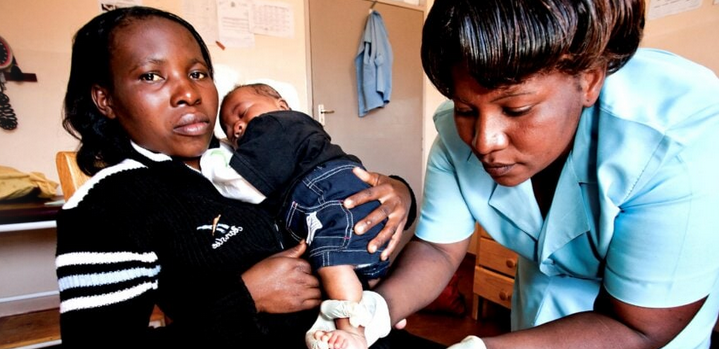
In South Africa, high levels of inequality and health system underperformance have contributed to poor childhood vaccination coverage. Examples of pragmatic challenges include missed opportunities for vaccination, lack of awareness of the vaccination schedule by primary caregivers, consistent vaccine stock-outs, and vaccine hesitancy. Noting that frontline healthcare workers are the ones with direct knowledge of the relevant issues, this study investigates challenges to vaccination experienced by point-of-care vaccinators in South Africa's Cape Town Metropolitan District (Cape Metro) and reports on their current and proposed efforts to combat these challenges. The researchers suggest that their recommendations for increasing vaccination uptake and coverage could be implemented in other similar settings.
The researchers conducted semi-structured interviews with 19 nurse-vaccinators in 16 purposively selected healthcare facilities in the Cape Metro from September to November 2019. The study participants reported both demand- and supply-side challenges, as well as contextual challenges such as community safety issues, in relation to routine vaccination.
Defaulting, described as the missing of scheduled vaccination for any reason, emerged as the most commonly reported demand-side challenge. Study participants indicated that defaulting was frequently due to economic factors, reflective of the clients' socioeconomic status. Their proposed strategies for tracing, reminding, and/or engaging defaulting caregivers include:
- The use of a well-documented, computerised appointment, reminder, and recall telephonic system;
- Engagement of community health workers (CHWs), also called community care workers (CCWs) - thereby creating a sense of shared responsibility between vaccinators and CCWs;
- The use of certificates and promotion as incentives for caregivers; and
- Collaboration with non-governmental organisations (NGOs) to station vaccinators on a specific day of the month at the premises of a particular NGO, which is located in a safe area (e.g., free from gang activity) in the vicinity of the facility. The mothers would be encouraged to bring their children for vaccination on these fixed days at the premises of the NGO.
Participants also shared some solutions for easing barriers to provision of vaccination services (supply side). One such solution was enlisting expanded public works programme (EPWP) beneficiaries, also called "queue marshals", to assist at the facilities. An important caveat is that EPWP candidates enlisted often lack basic training; one participant said, "The queue marshal doesn't have any clinic experience, now she is coming to work in the clinic. Her job is to educate but she herself knows nothing...if [she] could get trained queue marshals, that will also help us. Because then she can do the health education."
Participants provided a number of other recommendations that are structural in nature, such as the following:
- The expanded programme on immunisation (EPI) charts could be expanded and simplified to include information about both the advantages of vaccination and the possible repercussions of delaying or missing routine immunisations.
- The power of mass media establishments such as television, radio, and outdoor billboard advertising could be harnessed to promote routine childhood immunisation, encourage positive perception and reception by caregivers, and improve vaccination coverage overall. One participant relayed that, in contrast to the usual vaccination outreach campaigns that prompt the uptake of the seasonal flu vaccination, a local soap opera had prompted many residents of her community to turn up en masse in 2019. This series had featured a number of scenes in which the Zika virus epidemic was mentioned, leading residents of the community to think the flu vaccination was vaccination against the Zika virus disease. Therefore, they came out voluntarily to be vaccinated.
- One participant suggested that healthcare workers, in partnership with the Department of Health, could set up a "gazebo days", with a small structure erected at the same sites where state-provided child support grants are given out. Healthcare workers could use the opportunity to provide catch-up immunisations and other basic medical services for eligible children.
- Engaging employers to honour "proof of attendance" - documentation to explain caregivers' missing work to bring children for vaccinations - was another suggestion to improve coverage. Employers could even be incentivised to allow their employees to bring their dependents for routine vaccination in a timely manner.
- "Return-to-school" vaccination days could be restored in order to reach children directly and circumvent challenges associated with engaging caregivers. One participant recalled, "Those years, we did immunising at the schools also,...and we didn't miss out on children".
The "findings reiterate the importance of listening to and enlisting perspectives from frontline health providers, especially as context and setting shape the way in which childhood vaccinations can be delivered and taken up." One proposed future research direction is to include the perspectives of mothers and other primary caregivers.
In conclusion: "The interplay of multi-dimensional approaches employed by individuals...and supportive systems provided by the government...will make significant differences in the vaccination deliverables in the Cape Metro area if developed and harnessed optimally."
Vaccines 2022, 10(3), 453; https://doi.org/10.3390/vaccines10030453. Image credit: Pixnio
- Log in to post comments