










































Eradicating Polio: Working with Community Influencers for Catalyzing Change
Date
Summary
"The involvement of influencers in the polio programme and the role they played in overcoming resistance has important lessons."
The Polio Eradication Programme in India witnessed a major roadblock in Uttar Pradesh (UP). Due to myths and misconceptions, communities had a strong resistance towards the oral polio vaccine (OPV). In response, the United Nations Children's Fund (UNICEF) in Uttar Pradesh worked to sensitise and engage with local influencers. The aim of involving influencers was two-fold: to motivate the community towards OPV uptake, and to create a cadre of influencers with the potential to contribute to other development challenges, including routine immunisation. This document sheds light on the involvement of influencers as a key component of UNICEF's Underserved Strategy (USS) for the polio eradication programme in UP.
India's last polio case was reported in West Bengal on January 13 2011. Over the 10 years prior, the majority of polio cases were reported from the state of UP - in particular, from 13 western districts that had a higher proportion of minority populations compared to other districts of the state. In this context, in 2001, UNICEF established the Social Mobilization Network (SMNet) in UP. While the inroads made by SMNet and religious leaders accelerated social mobilisation in support of the Polio Eradication Programme, further efforts were required at the community and household levels to reach out to resistant families and motivate them.
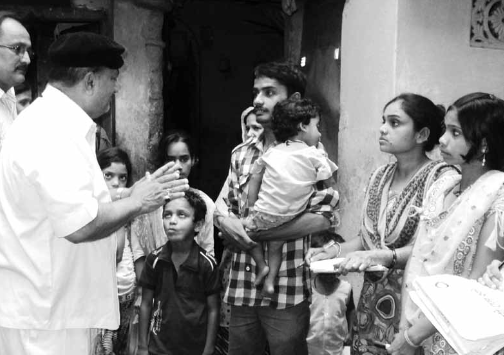
To provide further impetus, UNICEF introduced the concept of influencers. These were individuals with some kind of authority in the community (e.g., religious leaders, Hajjis, medical practitioners, retired army persons, teachers, shopkeepers, local politicians, ward members, and so on) who may or may not have a mass following but who wield significant social, economic, and/or political influence. These influencers were perceived as allies for the cause, especially in dispelling myths/rumours and reducing resistance. Among the specific reasons for involving influencers from the community in the Polio Eradication Programme were:
Specifically, while influential leaders assume different responsibilities that depend on the intended group and activities, in general, their work is classified into 2 categories:
As of 2013, approximately 31,000 influencers had worked voluntarily with the vaccinating teams. In the initial years, participation of influencers was low but later, it was always above 90%.
Ultimately, as chapter 3 in the report outlines, the influencers made an "indispensable contribution" to the Polio Eradication Programme in UP, where resistance towards OPV "was a major road block...Influencers have been effective in tackling this challenge and reaching out to the most resistant families." Their involvement gave the required momentum to social mobilisation at the community and individual levels. It also addressed community ownership and participation of the programme. Furthermore, the approach of influencers working as volunteers provided long-term sustainability. Reportedly, influencers considered their work to be an opportunity to serve their own community. It "reinforced their social standing and provided the personal satisfaction of being heard."
UNICEF explains that, given the range of stakeholders and strategies that were used in UP to overcome resistance among the families, it is difficult to quantify the results achieved by influencers. However, real-life examples provided in the report show the strength of the influencer strategy and how it contributed to changes in community behaviour. "Quantitative data on critical processes involved during the polio rounds suggest that the influencers were always there to give support, particularly in areas where CMCs were active."
UNICEF concludes that the large number of volunteers who served as influencers can be used for other health/development issues in the future. The strategy of involving them is considered sustainable. Periodic meetings and interactions can keep up the momentum.
The Polio Eradication Programme in India witnessed a major roadblock in Uttar Pradesh (UP). Due to myths and misconceptions, communities had a strong resistance towards the oral polio vaccine (OPV). In response, the United Nations Children's Fund (UNICEF) in Uttar Pradesh worked to sensitise and engage with local influencers. The aim of involving influencers was two-fold: to motivate the community towards OPV uptake, and to create a cadre of influencers with the potential to contribute to other development challenges, including routine immunisation. This document sheds light on the involvement of influencers as a key component of UNICEF's Underserved Strategy (USS) for the polio eradication programme in UP.
India's last polio case was reported in West Bengal on January 13 2011. Over the 10 years prior, the majority of polio cases were reported from the state of UP - in particular, from 13 western districts that had a higher proportion of minority populations compared to other districts of the state. In this context, in 2001, UNICEF established the Social Mobilization Network (SMNet) in UP. While the inroads made by SMNet and religious leaders accelerated social mobilisation in support of the Polio Eradication Programme, further efforts were required at the community and household levels to reach out to resistant families and motivate them.
To provide further impetus, UNICEF introduced the concept of influencers. These were individuals with some kind of authority in the community (e.g., religious leaders, Hajjis, medical practitioners, retired army persons, teachers, shopkeepers, local politicians, ward members, and so on) who may or may not have a mass following but who wield significant social, economic, and/or political influence. These influencers were perceived as allies for the cause, especially in dispelling myths/rumours and reducing resistance. Among the specific reasons for involving influencers from the community in the Polio Eradication Programme were:
- There was a high level of trust deficit in the community regarding OPV and the Polio Eradication Programme. Many believed the polio drive was a family planning programme to bring down the population of the minority community.
- It was challenging for the SMNet's Community Mobilization Coordinators (CMCs) to cover the large size of the population in 200-300 households allocated to them.
- Social pressure plays an important role. Influential people from the same community are considered to be a better medium to educate their own communities. People of importance could play a critical role by reinforcing messages and creating an enabling environment for the Polio Eradication Programme.
Specifically, while influential leaders assume different responsibilities that depend on the intended group and activities, in general, their work is classified into 2 categories:
- Prior to the polio vaccination drive, the community influencers: participate in community meetings to facilitate the process of local communication planning; support local mobilisers during interpersonal communication (IPC) and group meetings to deliver essential messages and influence attitudes; and provide logistical support during meetings to ensure effective community participation. Announcements and delivery of messages are also made by Imams (local religious community influencers) from mosques. The local community influencers also: take initiatives to enroll more children at booths; participate in interface meetings and plan for operations at local, block and district level; and support the mobilisation teams by endorsing local information, education, and communication (IEC) materials.
- During the vaccination drive, the community influencers: support the local vaccination teams during their visit to houses in high-risk areas; make personal visits to resistant households to convince the families; and provide meeting space for vaccination teams when required.
As of 2013, approximately 31,000 influencers had worked voluntarily with the vaccinating teams. In the initial years, participation of influencers was low but later, it was always above 90%.
Ultimately, as chapter 3 in the report outlines, the influencers made an "indispensable contribution" to the Polio Eradication Programme in UP, where resistance towards OPV "was a major road block...Influencers have been effective in tackling this challenge and reaching out to the most resistant families." Their involvement gave the required momentum to social mobilisation at the community and individual levels. It also addressed community ownership and participation of the programme. Furthermore, the approach of influencers working as volunteers provided long-term sustainability. Reportedly, influencers considered their work to be an opportunity to serve their own community. It "reinforced their social standing and provided the personal satisfaction of being heard."
UNICEF explains that, given the range of stakeholders and strategies that were used in UP to overcome resistance among the families, it is difficult to quantify the results achieved by influencers. However, real-life examples provided in the report show the strength of the influencer strategy and how it contributed to changes in community behaviour. "Quantitative data on critical processes involved during the polio rounds suggest that the influencers were always there to give support, particularly in areas where CMCs were active."
UNICEF concludes that the large number of volunteers who served as influencers can be used for other health/development issues in the future. The strategy of involving them is considered sustainable. Periodic meetings and interactions can keep up the momentum.
Source
Image credit: ©UNICEF/DSC04277-2012/Shashank
- Log in to post comments