










































Introducing New Vaccines in Low- and Middle-Income Countries: Challenges and Approaches
GSK (Guignard, Praet, Jusot, Baril); Pallas Health Research and Consultancy (Bakker); PHARMO Institute for Drug Outcomes Research (Bakker); Institut Pasteur de Madagascar (Baril)
"[T]ailoring vaccine campaigns to meet the needs, challenges, and cultural priorities of specific regions or communities appear to generate programs with a high rate of success."
The number of new vaccine introductions (NVIs) in low- and middle-income countries (LMICs) has markedly increased since 2010. This paper presents an overview of some of the challenges of NVIs in LMICs, with a focus on programmatic decisions, delivery strategy, information and communication, pharmacovigilance, and post-licensure evaluation. The focus of this summary is on the elements related to messaging, social mobilisation, and partnership. The article also highlights selected field-based initiatives that can facilitate NVIs in LMICs.
Decision-making in LMICs regarding any NVI is primarily made by government policymakers, who may be advised by a National Immunization Technical Advisory Group (NITAG). Recommendations from the World Health Organization (WHO) and the Strategic Advisory Group of Experts on Immunization (SAGE) play an important role. Other global key players include for instance Gavi, which has facilitated access to new and under-utilised vaccines in the economically poorest countries since its creation in 2000, the United Nations Children's Fund (UNICEF), the Bill & Melinda Gates Foundation, and the World Bank.
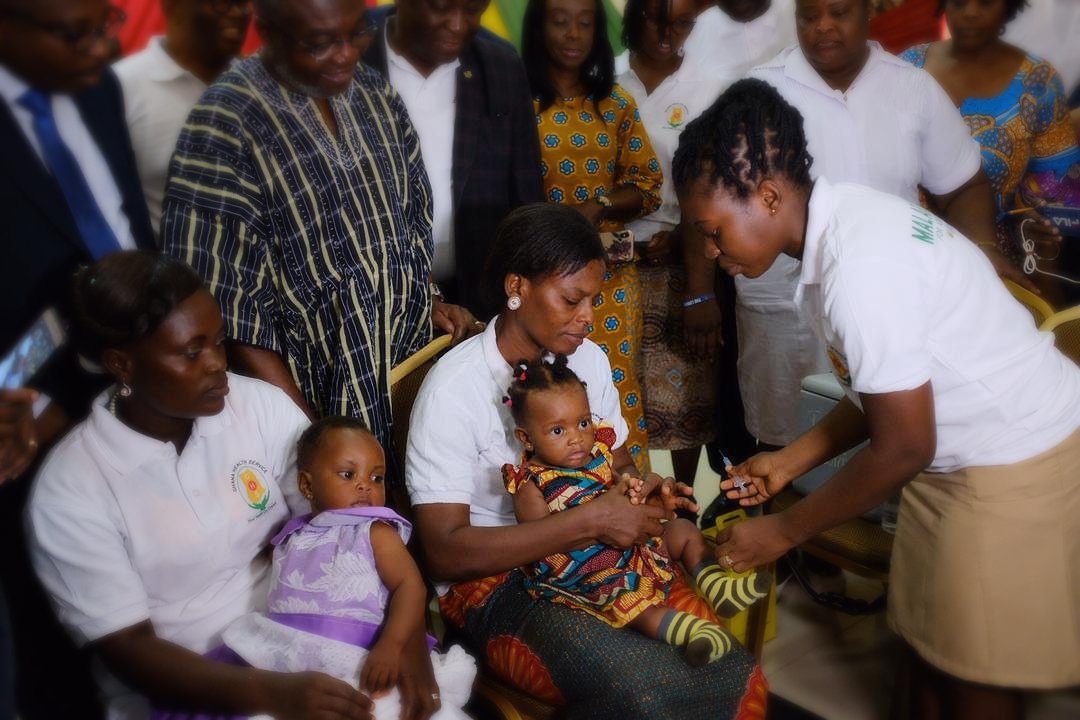
As noted here, implementation research is essential to determine the feasibility of any NVI for a given setting. The introduction of the human papillomavirus (HPV) vaccine is featured as an example, with Table 1 displaying learnings from formative research conducted by PATH as part of HPV pilot programmes in Uganda, Vietnam, and Peru. Communication-related highlights include:
- The pilot vaccination programme in Uganda involved a wide range of government officials. At the district level, leaders helped plan educational activities, participated in radio talk shows, organised meetings at local levels, and mobilised community heads. It was found that uptake could be improved by providing evidence-based education and outreach at least one month before immunisation begins. Educational materials with simple language and graphics helped raise awareness. Key building blocks for community education messages were information on cervical cancer, value of HPV vaccination, and the 3-dose schedule. Communities were reassured following direct experience with the vaccine.
- In Vietnam, government involvement created trust and fostered participation by families, and participation of community leaders was influential in parental acceptance. PATH learned that referring to the vaccine as a "cervical cancer vaccine" when communicating the general public, and as an "HPV vaccine" with health staff, was useful. Parents were particularly interested in vaccine safety and effectiveness; reassurance regarding government recommendations was important.
- In Peru, education by teachers or health workers to children/parents, plus media to disseminate information about the HPV vaccine, raised awareness and reinforced key messages. Health official recommendations provided parental reassurance regarding safety and effectiveness. PATH stresses that information should address the concerns of parents, as well as principal areas where there is lack of knowledge.
However, strategies shown to be effective in pilot projects do not necessarily progress to national implementation, due to the costs or the limited staff resources.
Along those lines, an overarching goal of the WHO Global Vaccine Action Plan (GVAP) 2011-2020 is to provide equal access to necessary immunisation to all persons on a global basis. Supplementary immunisation activities (SIAs) are one approach for reducing inequity within populations. However, while SIAs have shown to be effective in improving uptake, as seen in childhood polio vaccination, a proportion of children may still be missed in such activities. Integrating health interventions may also help improve coverage. In Madagascar, the distribution of insecticide-treated bed nets acted to encourage attendance and participation in a measles vaccination campaign, with positive effects on vaccine uptake.
Other barriers to NVI revolve around issues such as lack of understanding about immunisation, lack of appreciation that vaccines are an effective preventive tool, and fear of adverse events following immunisation (AEFIs). Communication is especially crucial in the context of vaccine hesitancy, where it can help create and/or restore confidence. Communication strategies may involve a wide range of communication tools (including print and electronic/social media) and personnel such as health community workers (HCWs). As noted here, any communication campaign should be tailored to local cultural and societal realities and values. For example, in populations where literacy is low, use of images and drawings with support by HCWs may be effective. The messages should be clear and as simple as possible.
Community engagement is key to any communication strategy and may involve credible influencers (leaders and celebrities) at national and local levels. For example, with regard to the rotavirus vaccine in Zambia, the Program for Awareness and Elimination of Diarrhoea (PAED) expanded to include churches and community gatherings, government Community Development Assistants (CDAs), village chiefs, and traditional leadership structures in the repertoire of outreach activities. In Burkina Faso, for the introduction of meningococcal A conjugate vaccine, a comprehensive communication plan was developed at the time of vaccine introduction planning. While mass media played an important role, local events involved local personages (community volunteers, traditional and religious leaders). This led to 11.4 million individuals between the ages of 1 and 29 years (100% of the intended population) being vaccinated.
In LMICs, evaluation of vaccine coverage, impact, effectiveness, and safety is often challenging and limited by the relative paucity of baseline and post-implementation data. Collaboration between specialised research centres within and across LMICs can provide support for disease surveillance data and vaccine effectiveness studies. Participation in studies may be hampered by low literacy levels, which may be a hurdle to ensure informed consent. In such circumstances, the use of audiobooks and thumbprint signature may be of assistance. A further aspect to be considered is cultural preferences; for instance, informed consent in strongly hierarchical or consensus-driven social groups can have a very different meaning from that in societies with strong personal autonomy.
Following any vaccine introduction, continued post-licensure safety monitoring and evaluation of AEFIs is necessary. However, across LMICs, limited financial resources, inadequate information technology, insufficient infrastructure, inequity in access to health care, and a lack of adequately trained healthcare personnel with little or no awareness of safety monitoring may contribute to difficulties in safety surveillance. The WHO Global Vaccine Safety Blueprint project has helped develop and implement a global support network to ensure that a minimal vaccine safety capacity is available to all countries.
As noted here, it is probable that an increasing number of LMICs will introduce vaccines recommended by the WHO and that the coverage of already introduced vaccines will expand. Looking ahead, one ever-growing development is the use of information and communication technologies (ICTs) to support different aspects of vaccine introduction: interactive digital platforms to train HCWs in multiple locations, mobile phone applications to facilitate the prompt reporting of AEFIs, and mobile technology to facilitate the identification of infants and their mother at the immunisation visit and track coverage. Novel technologies are expensive; however, they may allow saving resources when considering the entire healthcare system.
NITAGs, "which were set-up by 125 countries as of December 2015, will have a critical role in making informed and evidence-based recommendations about the future of immunization programs. Setting-up a NITAG and strengthening data on disease epidemiology should be on the agenda of several countries. The establishment of well-functioning supply systems and the political willingness to sustain funding of immunization will be decisive."
Expert Review of Vaccines 2019, Vol. 18, No. 2, 119-31. https://doi.org/10.1080/14760584.2019.1574224. Image credit: PATH
- Log in to post comments