










































Introducing Rubella Vaccine into National Immunization Programmes
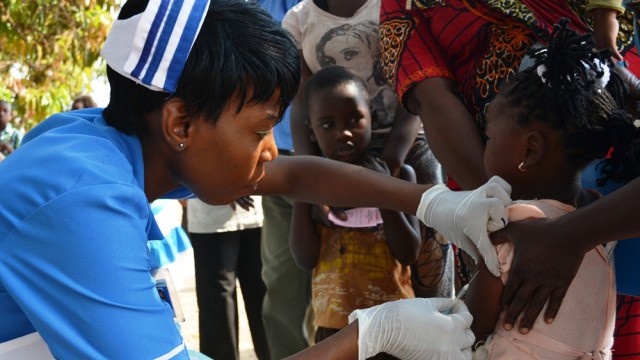
"A communication plan should be developed prior to the introduction of any new vaccine and the introduction of RCV is no exception."
This document is designed for national immunisation programme managers and immunisation partners involved in operational support in countries around the world. Its objectives are:
- to guide the policy discussions and operational aspects of the introduction of rubella containing vaccine (RCV) into the routine immunisation (RI) schedule; and
- to provide technical guidance, up-to-date references on global policy, and technical justification, as well as to address strategic issues - including advocacy, communication, and social mobilisation strategies - related to the introduction and provision of RCV in an RI programme.
Developed by the United Nations Children's Fund (UNICEF) and the World Health Organization (WHO), the comprehensive multi-year plan (cMYP) outlines the national goals, objectives, and strategies based upon situational analyses. It encompasses all aspects of the immunisation programme and highlights synergies between various vaccine initiatives (e.g., polio eradication, measles elimination, and maternal and neonatal tetanus elimination) so that duplication is avoided and separate plans do not need to be created.
It is noted that: "Preparatory activities should include the establishment of a communication committee, coordination and definition of roles among partners and other potential allies and collection of available research and information required to ensure the development of an evidence-based communication plan. For a detailed discussion of communication issues for rubella immunization refer to the section on communications (Annex 1)."
This annex, pages 40-45, offers detailed suggestions for inter-agency coordination committees (ICC): "A communication sub-committee should be formed under the oversight of the ICC, to enhance the planning and implementation of communication activities." Suggestions include: "Once an AEFI [adverse event following immunisation] has occurred, the response should include at least the following elements: effective coordination between the Ministry of Health, the ICC and other high officials; providing the parents and caregivers with factual and clear information; reassure the public that necessary measures are being taken; communicate the results of the investigation to programme managers at all levels; broadcast an official statement about the event on radio and television and publish a statement in newspapers; repeat the message as necessary to dispel fears and reassure the public about the safety of vaccines." The use of social media and the internet are also described as cost-effective tools to promote positive attitudes towards vaccination - though there are challenges such as inequities in internet access.
The annex also provides guidance for strategies to monitor and assess the effectiveness of communication activities, such as how to determine communication indicators that could measure change in attitude towards MR vaccination, health literacy levels, changes in vaccination uptake and observation of vaccination schedules, and so on.
The resource emphasises that, before the introduction of RCV into the national programme, health workers will need to be trained and that "[t]raining materials need to be prepared (or translated) in the appropriate local language and in sufficient quantities. Summarized reference materials and job aids should be developed and provided to the participants so that they have information to refer to and share with others they work with when they return to their post....Studies suggest that for more effective learning interactive and hands-on training like field visits, showing videos of correct practices, small group discussions, demonstrations and skills practice is generally more successful than passive classroom lectures." Among the training topics outlined are the fact that key messages/materials for communities and mothers/caregivers about measles-rubella (MR) and social mobilisation efforts will be needed to ensure that high coverage is achieved in both RI and supplementary immunisation activities (SIAs). The role of interpersonal communication (IPC) skills should also be emphasised, as rubella vaccination is new for many community health workers. They need to know how to relay the message about rubella to the community (e.g., according to WHO, rubella vaccine is safe for children and adults and has been used for many years in many countries.)
This document was published by the Expanded Programme on Immunization (EPI) of the Department of Immunization, Vaccines and Biologicals, WHO.
76
Global Immunization News, September 2015 [PDF], accessed on October 6 2015. Image credit: Measles & Rubella Initiative Blog
- Log in to post comments