










































Knowledge and Trust of Mothers Regarding Childhood Vaccination in Rwanda
Universität Heidelberg (Mbonigaba, Denkinger, McMahon, S. Chen); University of Rwanda (Mbonigaba); Universität Heidelberg (Yu, Reñosa); Research Institute for Tropical Medicine (Reñosa); University of Buea (Cho); The Pennsylvania State University (Q. Chen); Chinese Academy of Medical Sciences and Peking Union Medical College (S. Chen)
"The adoption of vaccinations in Africa and around the world is impacted by misleading information about immunisations, lack of understanding and confidence in vaccination, and other factors."
In East Africa, complete basic childhood vaccine coverage remains a major public health concern with significant differences across countries. For example, throughout the 1994 genocide against the Tutsis in Rwanda, the country's immunisation rate was below 30%, and a high prevalence of infections that could have been prevented by vaccination was observed. Additional research is necessary to identify the environmental and specific variables that raise the risk of vaccine hesitancy (VH) and to learn more about efficient ways to boost vaccine uptake. The study shares the results of a national cross-sectional study that was conducted from January 2022 to March 2022 among parents selected in five Districts of Rwanda.
The study population consisted of 2,126 parents of children (mothers or caregivers) aged 12 to 23 months who were sampled from 50 villages in Rwanda. Independent/demographic variables included age, sex, marital status, relationship with the child(ren), religion, level of education, occupation, number of children in the immunisation bracket, and monthly income. Dependent variables included sources of information about childhood vaccination, parental knowledge of childhood vaccination, trust in childhood vaccination, and both parental knowledge of and trust in childhood vaccination. Parental trust in childhood vaccination was assessed based on two questions: Do you trust the information you receive about the vaccination of your children? How much do you trust the government and public health agencies in the promotion of childhood vaccines?
Most respondents (1,952: 91.8%) received vaccine information from healthcare workers (medical doctors and nurses), while only a few admitted getting information from religious (10.8%) and traditional (9.3%) leaders. Mass media (radio, television, newspapers) and social media (WhatsApp, Facebook, Twitter), as well as relatives, were also sources of vaccine information for the community. The most trusted messengers of vaccine information were healthcare workers.
The majority [1,255 (59%, 95% confidence interval (CI) 56.9-61.1)] of the respondents agreed that getting oneself vaccinated is important for the health of others in the community, thus contributing to herd immunity. An absolute majority [1,943 (91.4%, 95% CI 90.1-92.5)] of the respondents were found to have very good trust in childhood vaccinations, while 2,030 (95.5%, 95% CI 30.6-34.6) had good knowledge of childhood vaccinations. The mean knowledge score was 73.18% (standard deviation (SD) 7.36, range 40-100%), with a median score of 75%. Of the 1,943 mothers/caregivers with very good trust in childhood vaccination, 628 (29.5%, 95% CI 27.6-31.5) had both very good knowledge of and very good trust in childhood vaccinations.
Binomial analysis revealed significant associations of occupation of respondents and knowledge of childhood vaccinations with good trust in childhood vaccinations (p > 0.05). However, binomial analysis revealed no significant associations of demographic characteristics of respondents with both good knowledge of and good trust in childhood vaccinations.
In conclusion, this "study adds to the description of the behaviour of mothers and caregivers towards childhood vaccination in Rwanda, where there is a gap in literature."
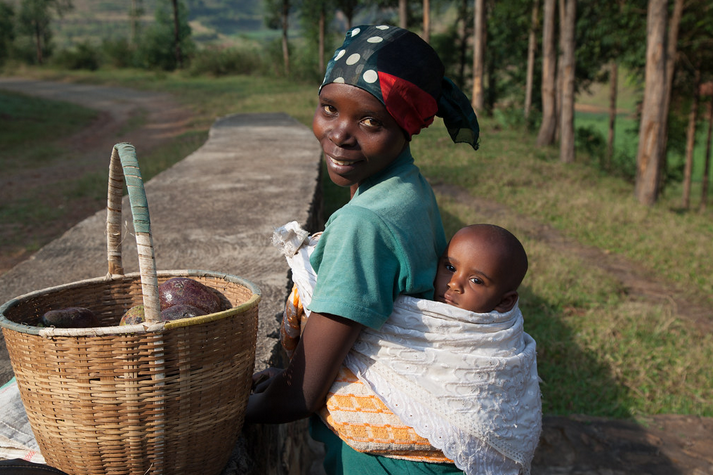
BMC Public Health (2024) 24:1067. Image credit: A'Melody Lee / World Bank via Flickr (CC BY-NC-ND 2.0 Deed)
- Log in to post comments