










































Legacy of Polio - Use of India's Social Mobilization Network for Strengthening of the Universal Immunization Program in India
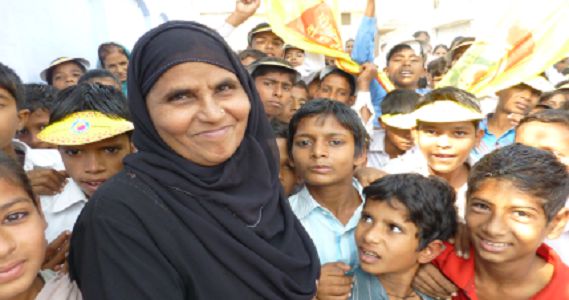
The United Nations Children's Fund, or UNICEF (Deutsch, P. Singh, V. Singh, Curtis, Siddique); Public Health Foundation of India (V. Singh)
This report, included in a special open-access edition of The Journal of Infectious Diseases (available at the link below) exploring polio endgame activities, explores the Social Mobilization Network (SMNet), which "has been lauded as one of the most successful community engagement strategies in public health for its role in polio elimination in India." India's last polio case occurred in January 2011, and the country was certified polio free in 2014, after many years of concerted efforts led by the government of India with support from partners including the World Health Organization (WHO), the United Nations Children's Fund (UNICEF), and Rotary International. In walking the reader through the role of the SMNet in contributing to this accomplishment, the report offers lessons for health-system strengthening for social mobilisation and promoting positive health behaviours for other priority health programmes.
As the authors, explain, the UNICEF-managed SMNet was created as a strategy to eradicate polio by engaging more than 7,000 frontline social mobilisers to advocate for vaccination in some of the most underserved, marginalised, and at-risk communities in India. Experience has shown that the most tenacious pockets of wild poliovirus (WPV) circulation are entrenched in communities with deep-rooted sociocultural resistance to immunisation. At the time, Uttar Pradesh - India's most populous state, with poor sanitation and hygiene, a high enteric disease burden, high population density, and a large birth cohort - offered favourable conditions for poliovirus to spread and, as a result, regularly recorded the highest volume of polio cases in the world. Vaccination coverage in polio campaigns was insufficient to stop transmission, particularly in localised Muslim communities, where rumours about the vaccine led to refusal rates of up to 20%. As a result, the disease burden among the Muslim community was over-represented.
Developed in that context, the SMNet is a 4-tiered community mobilisation and supervisory structure with, at its base, a cadre of over 6,000 Community Mobilization Coordinators (CMCs), of which more than 90% were women from the local communities. As part of the Polio Endgame Strategy, the SMNet developed and demonstrated key strategies such as evidence-based communication planning and microplanning, development and maintenance of interpersonal communication skills for mobilisation of individuals and groups, strong outreach and advocacy, systematic building of an effective partnership for communication and strong supervision, and accountability for action. These strategies are explored in depth in the report. Some highlights:
- Leveraging effective partnerships - In addition to its foundation on a strong polio partnership with multiple stakeholders, as of 2016, 49,266 individual influencers had been identified and engaged by the SMNet to systematically support polio immunisation and the Universal Immunization Program. These include religious leaders, doctors and health practitioners, quacks and rural medical practitioners, teachers, government workers, community-based women groups, Panchayat Raj Institution officials, community leaders and elected representatives, shopkeepers, and brick-kiln owners. For example, members of faith-based institutions were engaged at the highest levels, and on the ground, more than 16,000 mosques were mobilised to regularly make announcements on polio and routine immunisation sessions.
- Human resource capacity building - For example, in SMNet states in 2015 alone, 62,307 auxiliary nurse midwives (ANMs), 135,411 accredited social health activists (ASHAs), and 68395 Anganwadi workers (AWWs) were trained by the polio programme to improve interpersonal communication skills related to the Universal Immunization Program.
- Evidence-based planning - The communication microplans at all levels were based on the need and prepared with comprehensive mapping of households and issues by the CMCs. The SMNet microplans have led to the identification and coverage of almost 256,000 migrant sites, with 166,000 high-risk areas identified as a settled population.
- Communication and social mobilisation approaches for behaviour change - The 3-tiered structure of the SMNet is designed to galvanise social mobilisation and communication for behaviour change at the district, block, and community levels via District, Block and Community Mobilization Coordinators in areas where demand and service delivery is poor. The SMNet uses a multipronged communications approach encompassing: (i) mass and mid-media approaches (using tested materials developed nationally by UNICEF for the government and partners); (ii) information, education, and communication materials; (iii) ground-level community engagement strategy engaging community influencers, religious leaders, house-to-house mobilisation, and mothers' meetings; and (iv) the use of key community sites such as mosques, schools, or religious festivals to generate demand. In addition to these, the report describes SMNet's media engagement strategy.
- Monitoring, evaluation, and supportive supervision - "Regular and timely monitoring, which captures data through simple monitoring formats that feed into real-time campaign planning and decision making, was an indispensable factor behind the success of the SMNet." The report describes 3 forms of monitoring, evaluation, and learning activities under the programme: (i) immunisation reporting system, (ii) concurrent monitoring (both operations and communication) and supportive supervision, and (iii) evaluation studies such as knowledge, attitude, and practice (KAP) studies and SMNet evaluations.
Data cited in the report indicate that, with the support of the SMNet, refusals in both Uttar Pradesh and Bihar have fallen to and remain at less than 1%, and oral polio vaccine (OPV) coverage in SMNet areas is consistently greater than 99%. Though the network focused initially on generating demand for polio vaccination, it later expanded its messaging to promote routine immunisation and other health and sanitation interventions related to maternal and children's health. Evidence suggests that the SMNet's expanded work plan has contributed to a comprehensive increase in full routine immunisation coverage in the high-risk areas: from 36% in 2009 to 81% in 2016 in Uttar Pradesh and from 54% in 2009 to 88.5% in 2016 Bihar. SMNet areas have also witnessed an increase in the number of children vaccinated per session site.
Furthermore: "A large proportion of inequities in routine immunization coverage and health delivery can be attributed to inequalities in social determinants....Routine immunization concurrent monitoring data from 2016 shows that a major proportion (about 64%) of children missed routine immunizations because of insufficient information or understanding and could be reached through community engagement strategies used by SMNet....SMNet's strategies and promotional activities demonstrated that understanding and tackling underlying social determinants contribute to sustained gains in improving immunization coverage."
In conclusion, the authors note that the key lessons learned and human resources of the SMNet have the potential to be used for other government health goals and priorities, such as Reproductive, Maternal, Newborn, Child, and Adolescent Health (RMNCH+A) activities and the Global Action Plan for the Prevention and Control of Pneumonia and Diarrhea, especially in high-risk and hard-to-reach areas. "In sum, the strategies of the SMNet are replicable, proven approaches for health promotion and health-system strengthening, especially for the Universal Immunization Program, and to ensure the equity of health delivery in underserved or difficult-to-access areas."
The Journal of Infectious Diseases, Volume 216, Supplement 1: Pages S260-S266, https://doi.org/10.1093/infdis/jix068. Image credit: UNICEF's India Polio Learning Exchange
- Log in to post comments