










































One Child, One Appointment: How Institutional Discourses Organize the Work of Parents and Nurses in the Provision of Childhood Vaccination for First Nations Children
University of Alberta (MacDonald, Paragg, Kunyk, Kenzie); Maskwacis Health Services (Graham, Littlechild); MacEwan University (Foster-Boucher); University of British Columbia Okanagan (Waters); University of Calgary (Shea-Budgell, Bedingfield, Nelson); Alberta Health Services (McNeil); Laval University (Dubé); Alberta Health (Svenson)
"Achieving high vaccination coverage while attending to the complex and intricate realities of First Nations communities will require community-led solutions."
Health care in Canada is situated within a context of entrenched historical distrust, harms, and racism directed at Indigenous peoples (First Nations, Métis, and Inuit). This context has contributed to low vaccine coverage in First Nations communities. Rather than assuming that solutions to this problem lie in compliance with regulations, this paper used an institutional ethnography (IE) approach to explore the work conducted in one First Nations community, by both vaccination nurses and parents, to have children vaccinated. It highlights the tensions between this work and how the vaccination process is organised within the institution.
IE is grounded in the premise that what people know, and how they know to do it, is produced through, and not independent of, people's activities. Rather than starting research with concepts that are generated by those in power and that can perpetuate inequities, IE can act as a decolonising method of inquiry - in this case, by offering a way to start and stay grounded in what nurses and First Nations families know about vaccination work. IE focuses on how "discourses" - patterns of social meaning - enter into and organise people's work through texts such as policies, practice guidelines, and records/documentation. Through our use of IE, the researchers created an empirical map of how First Nations parents' work intersects with that of community health nurses, and how institutional discourses organise the work required to access and administer vaccination services.
The study was conducted in a large rural First Nations community in central Alberta, Canada, with a population of about 17,000 residents from multiple Nehiyawak (Plains Cree) Nations. It operates one main community health centre that routinely provides vaccination services and three smaller satellite centres that periodically offer vaccinations. The vaccination programme operates within norms that were established when it was administered by the First Nations and Inuit Health Branch (FNIHB). The study was developed in partnership with the community's health services leadership, building on collaborative preexisting research relationships.
Consistent with the IE approach, data collection occurred through four months of observations, interviews with nurses and parents, and review of texts (e.g., policies, practice guidelines, and records/documentation). The researchers found that the "work" nurses engage in to deliver childhood vaccines is highly regulated by standardised texts that prioritise discourses of safety and efficiency. Within the setting of nursing practice in a First Nations community, these regulations do not always support the best interests of families. Nurses and parents are caught between the desire to vaccinate multiple children and the requirement to follow institutionally authorised processes. Vaccination tasks must fit into an allotted slot, and tensions rise when the work does not go to plan. The nurses voice frustration when they spend time duplicating data entry, or when the families cancel appointments or bring extra children. In short, there are always push-pull factors at work for the nurse manager and the nurses in all of the decisions they make. Meanwhile, parents described the challenges they face in arranging transportation and childcare (in light of the one-child-only-per-vaccination-session FNIHB policy)
In short, the IE inquiry revealed that the "one child per appointment" practice that has been established as an unwritten but accepted norm in the health centre is at odds with the mandate to increase vaccination rates. Nurses are held accountable for their vaccination workflows by demonstrating they have completed each step of the FNIHB processes and procedures; completing everything on the checklist is only feasible when one child is seen per hour. Following these practices take precedence over the nurses' ability to attend to the immediate needs of the parents, including immunising other children who are in the health centre. "Health center processes perpetuate the colonial system by placing the nurses in a position where they must work to ensure that First Nations families comply with an institutional agenda that does not accommodate the realities of their lives."
Although this paper focuses on the one-child-per-appointment norm, the study uncovered multiple other textual threads that organise the work of First Nations families attempting to access vaccination services, such as: the 10-month annual school schedule, which has been shown in previous IE work as inflexible, and the consent process for vaccinations, which is especially burdensome for families impacted by the child welfare system. These themes will be explored in future papers. "Exploring new ways of approaching the processes could lead to increased vaccination uptake and satisfaction for parents and nurses."
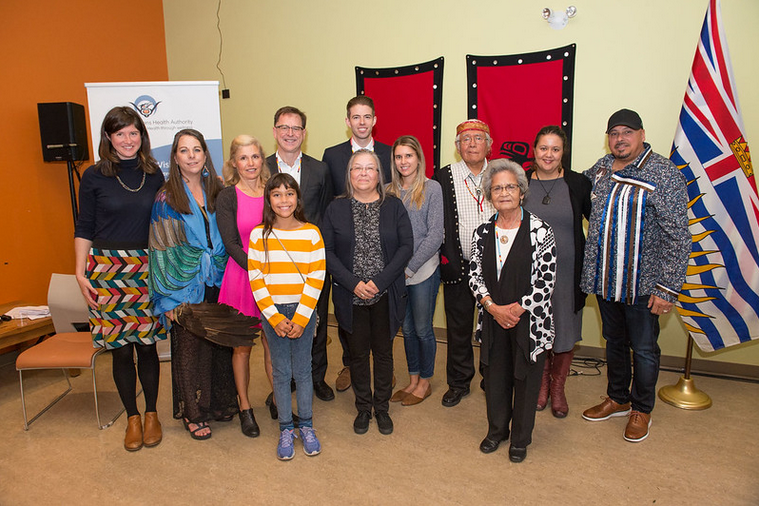
Human Vaccines & Immunotherapeutics, DOI: 10.1080/21645515.2022.2048558. Image credit: Province of British Columbia via Flickr (CC BY-NC-ND 2.0)
- Log in to post comments