










































Pakistan's Polio Priorities
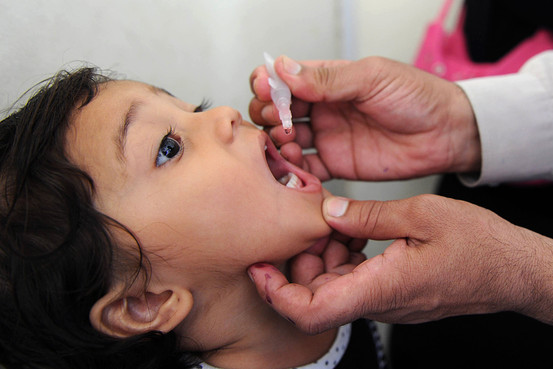
In this commentary, Federal Minister, Government of Pakistan, makes the case that "a high-level body as part of the prime minister's office is essential for advocacy and mobilization of the whole of the government's response to polio." Sania Nishtar writes on the eve of the swearing in of Pakistan's new government (under the leadership of Nawaz Sharif), reflecting that this could be an opportunity to finally eradicate polio from Pakistan, one of three countries where the disease remains endemic. He acknowledges that there are challenges to be overcome, including: providing security to health workers (12 have been murdered since December 2012), reaching children from marginalised and/or remote/nomadic groups, and dealing with deep-seated opposition among some religious leaders, who have persuaded parents not to vaccinate their children against polio.
Nishtar notes that, at the Global Vaccines Summit in Abu Dhabi in April 2013, US$4 billion was pledged to the Polio Eradication and Endgame Strategic Plan. At that summit and at the World Health Assembly in Geneva, Switzerland, in May 2013, he outlined Pakistan's recent progress, which involves reinstating the federal-level ministry of health. He also outlines critical next steps in the eradication plan, some of which are communication related. For example, government needs to focus on gleaning support among the hierarchy of clerics through the ministry of religious affairs so that messages about the positive impact of immunisation can reach grassroots religious leaders throughout the country. Nishtar stresses the need for coordinated support from agencies on the ground in areas that are difficult to reach, as well as the need for better accountability across all levels of government to counter "ghost vaccinations": immunisations that are reported but have not taken place. He suggests that initiatives be developed and/or strengthened to build awareness among parents of the positive impact of vaccinations.
"At the same time as better coordination, polio requires stand alone high-level advocacy because total eradication requires a comprehemsive approach from government, where challenges can be identified and quickly overcome. But most of all, the Pakistani government needs to stay absolutely committed to polio eradication."
India Real Time, a blog of the Wall Street Journal. Image credit: Agence France-Presse/Getty Images
- Log in to post comments