










































Polio Communication and Polling Data: Evidence to Shape Programme in the Last Mile
United Nations Children's Fund, or UNICEF (Haydarov); Harvard Opinion Research Program, or HORP (SteelFisher)
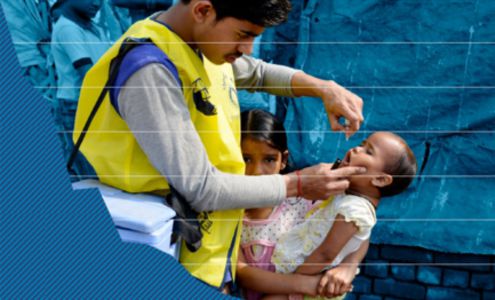
This presentation looks at the role of data in the polio communication context, examining how polls conducted through a partnership between the Harvard Opinion Research Program (HORP) and the United Nations Children's Fund (UNICEF) have informed eradication efforts.
An initial slide looks at the polio communication focus through the years, starting from an effort to convert refusals (change the mind of those refusing to vaccinate their children with the oral polio vaccine, or OPV) and adding efforts to vaccinate all missed children, work on building trust, and mitigation of vulnerabilities and risk. Along the way, in 2013, UNICEF identified a need for higher-quality knowledge, attitudes, and practice (KAP) data. Social data quality at that time was suboptimal, there were no recent KAP data for 2 out of 3 endemic countries (Nigeria, Afghanistan), and all KAP studies had inconsistent, different metrics that were incomparable between countries, and different across time within each country. The result: limited global understanding of the critical social issues that were impacting polio eradication, limited understanding of progress being made, and limited understanding of where UNICEF should invest time and resources.
Thus, HORP and UNICEF undertook formative polio KAP studies, 2013-2018, in Afghanistan, India, Somalia, Uganda, the Democratic Republic of the Congo (DRC), and Nigeria. Strengths included: reliable social data, application to communication for development (C4D), responsiveness, credibility, and impact. Challenges included: cost, time and effort, and sustainability. Subsequent slides outline some of the lessons learned, using data from various KAP countries as illustrations:
- Trust in vaccinators is critical - In Afghanistan 2014-2015, 9% of the 74% polled who trusted vaccinators "a great deal" were uncommitted to OPV; in contract, 54% of those who did not trust were uncommitted. Compassion and morality are critical traits in vaccinators who are trusted.
- Caregivers are more likely to trust local and national institutions - For example, data out of Pakistan, 2017, 70% trust a local government/traditional leader "a great deal", in contract to 21% who trust governments of other countries. Caregivers are especially likely to trust local institutions in some higher-risk areas.
- Social support is not always visible to caregivers - Data from Nigeria 2014 illustrate this.
- Rumours are important to address - In Afghanistan 2014-2015, for example, 19% of caregivers polled said OPV can make boys unable to father children, with only 7% saying that this message is completely false. More specifically, data show that rumours are important to address locally.
According to the Evaluation of Harvard Opinion Research Programme Partnership, On-line Polio Staff Survey, UNICEF 2017, C4D managers from 7 countries and regions that conducted the KAP polls said that the data informed: C4D strategies - focus areas and tactics; National Emergency Action Plans (NEAPs) and preparedness plans; and donor reports - demonstrating impact. The data also provided space for C4D (hard data) and validated other sources.
In Afghanistan, the data are being used to address rumours:
- "Da pula poray" ("On the Border" in pashto) is a radio soap opera using targeted messages based on KAP data with content on combating rumours. The storyline features a female social mobiliser talking about the daily challenges she is facing related to misinformation that threatens her community. The 30-minute format includes 7 minutes of facts, news, and interviews, featuring real people from Pashto the community. Running for 10 years, it has reached 25% of the Pashto audience in polio areas.
- BBC Media Action's "Ghamai" is a child health show for a Pashto audience featuring human interest stories of polio survivors, as well as interviews with mullahs, doctors, and community leaders. The popular call-in show with a doctor features discussion content driven by the first KAP. Its audience is about 30% of the Pashto community; running at the same time as "Da pula poray" on weeknights, the total estimated coverage is 60% of the Pashto audience.
In Nigeria, the data are being used to address knowledge gaps and intentions. KAP data informed actions of the Volunteer Communication Network to engage with caregivers. Elements of BBC Media Action programming (the Madhubi drama series and the Dan Birni feature film) were refocused to increase knowledge. In the past 8 polio campaigns, 97% of house-to-house teams were accompanied by community leaders. Fifty-one percent of cases of non-compliance were resolved by traditional leaders, while 22% were resolved by community and religious leaders. The proportion of mothers influencing the decision to vaccinate children increased from 36% to 42% between August 2016 and July 2017.
In Pakistan, the data are being used to shape the "Sehat Muhafiz" approach to building trust, integrating communications with the overall programme operations. Adoping a localised approach has involved ensuring Sehat Muhafiz/government branding of the programme (debranding in media/public relations (PR) materials of any donor or agency branding). The "Strangers No More" campaign of 2016-2017 centred around the portrayal of vaccinators as being local - from the community - and respectful, knowledgeable, and committed. There has also been a focus on the frontline workforce, involving hiring of local and female vaccinators/frontline workers (FLWs) (countrywide, approximately 61% female team members). Emphasis has been placed on interpersonal communication (IPC) by FLWs and influencers. Finally, there has been an all-society approach across political/social lines, with 12,000 print and electronic stories in English, Urdu, and regional languages featuring an overwhelming positive and neutral media tonality; this has shaped social norms and perceptions in the public sphere.
Finally, the presentation lays out a way forward, which includes: (i) building capacity by supporting high-risk countries with targeted and actionable social research strategies; (ii) continuing transition of polio assets; the HORP partnership serves a broader C4D function in UNICEF; and (iii) developing global guidance and supporting advocacy: maintaining social data, including "hard KAP data" as a critical element in achieving high coverage; producing peer-reviewed publications; creating a KAP management manual for C4D managers based on the Harvard experience; providing social data for complex security and outbreak contexts; and addressing built-in emerging themes such as campaign fatigue and complacency.
Editor's note: The above is a summary of a presentation delivered by Rustam Haydarov and Dr. Gillian SteelFisher at Shifting Norms, Changing Behaviour, Amplifying Voice: What Works? The 2018 International Social and Behavior Change Communication (SBCC) Summit featuring Entertainment Education, held April 16-20 2018 in Nusa Dua, Indonesia.
Email from Rustam Haydarov to The Communication Initiative on May 15 2018.
- Log in to post comments