










































Polio Outbreak Investigation and Response in The Horn of Africa: 2013-2016
World Health Organization (WHO) Horn of Africa Coordination Office - HOA (Okiror, Gathenji, Nwogu); WHO Regional Office for the Eastern Mediterranean (EMRO) Amman (Mulugeta); WHO, Nairobi, Kenya (Onuekwusi); WHO Country Office, Nigeria (Braka); WHO, Juba, South Sudan (Malengemi); United Nations High Commissioner for Refugees (UNHCR), Nairobi, Kenya (Burton); United Nations Children's Fund (UNICEF), Nairobi, Kenya (Haydarov, Toure); American Red Cross, Nairobi, Kenya (Davis); WHO Regional Office for Africa - WHO AFRO (Okeibunor)
"The outbreak response was facilitated by committed local governments, local communities and partner organizations. This resulted in marked reduction of the transmission of the polioviruses."
Political instability, insecurity, and recurrent natural disasters are major drivers of population movements within the Horn of African (HoA). These crises have denied populations of the HoA's 10 countries access to access to lifesaving health services. Children in the difficult terrains and security-compromised areas are not given the required immunisation services; for example, the reported coverage with 3 doses of oral polio vaccine (OPV3) was under 50% in 2012 in Somalia. This article reviews the epidemiology, risk, and programme response to the 2013-2014 poliovirus outbreaks in the HoA and highlights the challenges the programme faced in interrupting poliovirus transmission.
In total, 223 wild poliovirus type 1 (WPV1) cases were reported in 3 countries: Somalia (199), Ethiopia (10), and Kenya (14). In addition, 2 circulating vaccine derived polioviruses type 2 (cVDPV2) cases were reported in South Sudan. The earlier detection of cVDPV from 2008 to 2013 in these countries was a pointer to a permissive environment, suitable for WPV importation and circulation. "Given these precarious realities, the 2013-2016 outbreaks in the HoA were expected and did not come as a surprise. The only surprise is that the teams seemed to have been caught unprepared."
Between 2013 and 2016, when transmission was interrupted, strategies to control the outbreaks included strong acute flaccid paralysis (AFP) surveillance, polio supplementary immunisation activities (SIAs) with oral polio vaccine (OPV) implemented as soon as possible after notification of the first case and continued on a large scale, and targeted SIAs using bivalent OPV. Permanent/transit vaccination points were set up around the insecure areas to deliver vaccines to children who were members of mobile populations.
Polio control and coordination rooms were established in Nairobi, Kenya, and in the outbreak countries to improve the overall coordination of the outbreak response operation across partner organisations by maximising communication, reducing bottlenecks, and streamlining reporting activities. Situation reports on the outbreak were shared with partners on a weekly basis through polio control rooms. There was a technical working group that linked by video call with the regional committees formed inside Somalia that were responsible for operationalising the plans.
Other response activities were undertaken to supplement the immunisation, featuring the use of various communication strategies to create awareness among, and to sensitise and mobilise, the populations against poliovirus transmission. The nature of the outbreaks and many challenges faced by the polio teams, especially in places where anti-government elements resisted the SIAs, required innovative communication approaches. An outbreak communication plan was developed that focused on 5 main strategies: advocacy, mass media/promotion, community engagement/social mobilisation, behaviour change/participatory communication, and capacity building. Here are examples from each of the main outbreak countries:
- In Ethiopia, advocacy with parliamentarians and engagement with the nomadic population leaders were the main strategies employed. Also, through a partnership with Islamic Affairs, between September and December 2014, 1,200 Sheikhs and Imams were sensitised, key messages for polio aligned with the Quran and disseminated, and qur'anic schools were visited and sensitised. Furthermore, social mobilisation committees were set up at operational level in Somali's outbreak region, with 632 committees fully functional between July 2014 and April 2015. There were also efforts to monitor sources of information, which showed that mega[hones were the most common source of information. Finally, there was the production and dissemination of information, education, and communication (IEC) materials and production and dissemination of TV and radio messages.
- In Kenya, a social mobilisation committee was in place under the technical working group and responsible for enunciating the social mobilisation aspects of the response, producing and disseminating the necessary messages, and guiding the lower levels on social mobilisation processes. At the regional level in the outbreak area, this committee was enhanced through the participation of locally based non-governmental organisations (NGOs) interested in health - in particular, the American Red Cross, CORE Group, and Médecins Sans Frontières (MSF). This committee operated with its base in Dadaab camps where the outbreak was centred. Kenya was also hit with a vaccine controversy that was precipitated by the Catholic Church. The communications group addressed this by holding a national stakeholders' forum, engaging in high-level advocacy with the deputy president, producing newspaper supplements explaining the safety of the vaccines, and disseminating messages through the media (26 radio and TV stations aired up to 326 messages and 58 spots in 13 languages - all aimed at easing worry about the safety of OPV). They also leveraged a polio survivor who is the polio ambassador in Kenya to advocate for continuation of the vaccinations. All these activities took place at the height of the outbreak and SIAs.
- Coordinated from the Nairobi office, the Somalia social mobilisation activities centred around networks that were formed locally. By November 2014, 3,323 community mobilisers, 127 district social mobilisers, and 21 regional social mobilisers had been identified and trained. As part the work of the network, advocacy was conducted - reaching 1,364 religious leaders, 1,543 mosques, 1,745,779 persons by phone text messages (SMS), 5,259 villages reached through sound trucks mounted with megaphones, and 3,231 madarasas visited and mobilised for vaccination. Nomads were reached by collecting contact details of the nomad elders; this effort saw 2,106 elders' details collected and used to track nomad movement for vaccination.
- South Sudan social mobilisation activities, which focused on the 32 high-risk counties, were organised and coordinated at the national level. The outbreak area was also the most insecure due to conflict. Advocacy with state and county leaders was conducted. Announcements were made in churches and mosques in local languages (Dinka, Nuer, Arabic, and Shiluk), with IEC materials produced in the same local languages. Training materials to support the capacity-building at local level were also produced. In Bentiu camp, where the outbreak occurred, 125 community mobilisers were identified and trained. They went on to sensitise 10,000 households in the camps and surrounding areas. In the rest of the 32 counties, 566 social mobilisers were identified and trained; they then sensitised over 56,000 households towards embracing vaccinations.
As a consequence of intensified communication and social mobilisation activities, a high level of awareness and a low level of OPV refusal were reported during SIAs.
In summary, the 2013-2014 polio outbreaks in the HoA "were attributed to the existence of clusters of unvaccinated children due to inaccessibility to them by the health system, caused by poor geographical terrain and conflicts. The key lesson therefore is that the existence of populations with low immunity to infections will necessary constitutes breeding grounds for disease outbreak and of course reservoirs to the vectors. Though brought under reasonable control, the outbreaks indicate that the threat of large polio outbreaks resulting from poliovirus importation will remain constant unless polio transmission is interrupted in the remaining polio-endemic countries of the world."
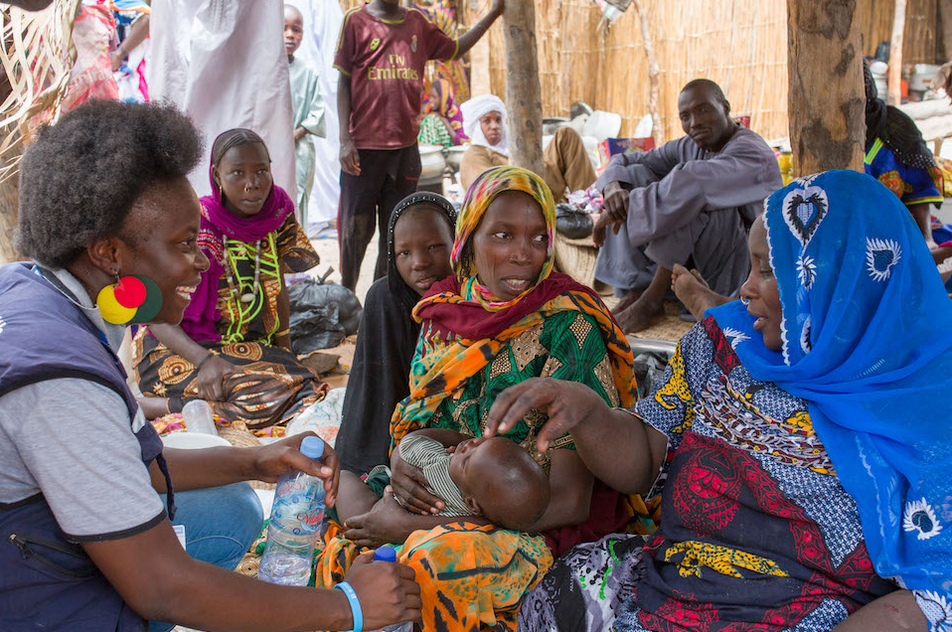
Journal of Immunological Sciences. 2021 Apr 7;Spec Issue(2):1104. doi: 10.29245/2578-3009/2021/S2.1104. Image credit: Christine McNab via WHO AFRO
- Log in to post comments