










































Reasons Why Children Miss Vaccinations in Western Kenya; A Step in a Five-Point Plan to Improve Routine Immunization
American Red Cross (Agócs, Ismail, Sale, Rhoda, Mitto, Hennessey); Kenya Red Cross Society (Ismail, Kamande, Khamati); Ministry of Health of Kenya (Tabu, Momanyi, Mutonga); Biostat Global Consulting (Rhoda)
"[H]aving different approaches for exploring barriers to vaccination provided rich insights to the challenges that healthcare workers and caregivers face and the relationship they have with each other."
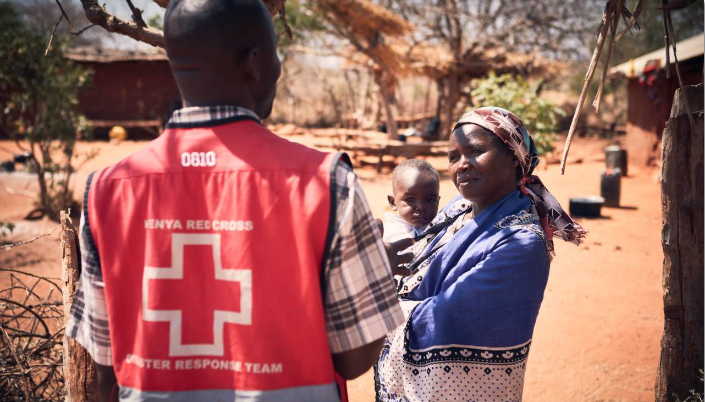
While several approaches for quantifying childhood vaccination coverage rates and understanding reasons for low coverage have been developed, no single approach has been suitable for all countries or situations. The American Red Cross has developed a hybrid approach to geolocate under-vaccinated children and determine the reasons why they miss vaccination by capitalising on the Red Cross Movement's cadre of over 17 million community volunteers across 191 countries. This 5-Point Plan was piloted in November 2019 in Kisii county's Bobasi sub-county, Western Kenya. This paper focuses on Point 2 of the 5-Point Plan as carried out in Bobasi sub-county.
In tune with the Red Cross Movement's primary area of engagement in global vaccination, which is social mobilisation, the 5-Point Plan includes: (1) deploying trusted and respected community volunteers to conduct large-scale house-to-house surveys to identify geographical pockets of children missing a home-based vaccination record or missing some age-appropriate doses ("missed children"), (2) engaging with caregivers and frontline health workers to understand reasons for missed children within those pockets, (3) using the collected data and advocacy to share findings with Ministry of Health and partners to implement change, (4) resolving the identified problems and then conducting social mobilisation to inform the community their concerns have been addressed and to promote vaccination, and (5) evaluating the impact by revisiting areas a year later to re-assess vaccination coverage.
In Bobasi sub-county, volunteers worked to conduct a face-to-face interview in all households, visiting over 60,000 over 7 days. Six pockets of 233 children without a home-based vaccination record or missing an age-appropriate dose of Penta1, Penta3, or measles-containing vaccine were identified. Three activities were carried out to learn why these children were not vaccinated:
- One-on-one interviews: As known and respected members of the community, 19 local schoolteachers were recruited to conduct one-on-one caregiver interviews at households on the line-list of identified children. Having participated in a one-day training, teachers collected and sent data using the Open Data Kit (ODK) mobile phone application.
- Focus group discussions with the caregivers of the under-vaccinated children: Six focus groups were convened at a local venue, usually a church. A standard paper-based tool to guide discussions was developed, and each group was led by a local Red Cross staff person with immunisation experience.
- Interviews with healthcare workers who vaccinate in Bobasi: Frontline healthcare workers were interviewed from all 29 health facilities in Bobasi sub-county, encompassing all vaccination delivery sites. Three interview teams were formed and led by American or Kenyan Red Cross professionals with immunisation experience and were accompanied by a local community health worker and a volunteer from Living Goods, a non-governmental organisation (NGO) involved with local health activities.
The three activities used different methods for categorising reasons for missed vaccinations, and the reasons provided varied. Caregivers most commonly reported complacency during one-on-one interviews (blaming themselves); focus group participants frequently cited bad staff attitude or practice (expressing dissatisfaction); and health staff reported caregiver hesitency, not knowing vaccination due date, and vaccine stock-outs as the most common reasons for caregivers to not have their child vaccinated.
The researchers observe that it is unclear if these are real differences based on experiences of those who participated in the consultations or if the different modes of seeking information influenced the type of information shared. (Table 4 in the paper outlines some pros and cons of each method.) For example, the difference in the findings could be related to people feeling more comfortable speaking openly in a group, or not feeling comfortable complaining about services to a teacher. Regardless, the approach "does point to the value of exploring barriers from different angles to increase the chances of correctly identifying reasons for missing vaccination and identifying the appropriate response."
As reported here, the different perspectives help identify ways forward for immunisation managers to act on. For example, to address the issue of healthcare workers judging caregivers (bad staff attitude), managers could reinforce healthcare worker professionalism and communication skills; actions to combat complacency may be along the lines of social mobilisation or advocacy.
In conclusion: "Point 2 activities complemented one another, allowed community volunteers to contribute information to the Ministry's vaccination program, and provided valuable information and insights for further strengthening the sub-county's already high-performing vaccination services. Letting communities know that their concerns have been heard and acted upon can increase their motivation to seek vaccines and healthcare services in general."
Vaccine Volume 39, Issue 34, 9 August 2021, Pages 4895-4902. https://doi.org/10.1016/j.vaccine.2021.02.071. Image credit: Juozas Cernius/American Red Cross
- Log in to post comments