










































Small Mobile Conditional Cash Transfers (mCCTs) of Different Amounts, Schedules and Design to Improve Routine Childhood Immunization Coverage and Timeliness of Children Aged 0-23 Months in Pakistan: An Open Label Multi-arm Randomized Controlled Trial
IRD Global (Chandir, Siddiqi, Khan); IRD Pakistan (Abdullah); MIT Department of Economics (Duflo, Glennerster)
"Small mCCTs [mobile-based conditional cash transfers]... improve both immunization coverage and timeliness...in LMICs [low- and middle-income countries] like Pakistan."
Sub-optimal immunisation coverage in Pakistan can be attributed to both supply- and demand-side constraints. Until recently, demand-side interventions were limited to social mobilisation, education, and communication. However, there is high uptake of early vaccines (e.g., Bacille Calmette Guérin (BCG), the first vaccine in the schedule); people will often adopt a behaviour that is good for them but takes effort, but then fail to persist. This fact indicates that the majority of Pakistani households can access vaccines, are not deeply opposed to vaccinations, and might therefore respond to demand-side interventions designed to act as nudges to increase uptake and address small barriers to immunisation. This multi-arm randomised controlled trial (RCT) measured the relative effectiveness of different types of small mobile-based conditional cash transfers (mCCTs), as well as the impact of SMS (short messaging service) reminders (with and without mCCTs), on immunisation coverage and timeliness in Karachi, Pakistan.
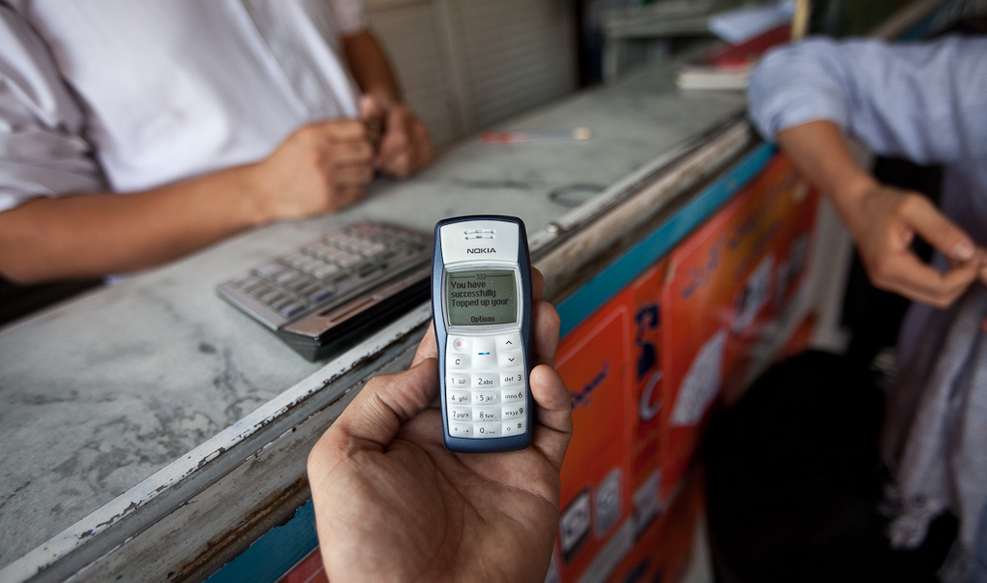
The study was conducted in Korangi town, located in Karachi city in Sindh province of Pakistan, which has full immunisation coverage (FIC) rates below the national average (48.8% of 12-23 month olds). Participants were individually randomised into a 7-arm, factorial, open label study with 5 mCCT arms, one reminder (SMS)-only arm, and one control arm. The mCCT arms varied by: amount [high (about $US15 per fully immunised child) versus low (about $US5 per fully immunised child)], schedule (flat versus rising payments over the schedule), design (certain versus lottery payments), and payment method (airtime or mobile money). Caregiver-child pairs in mCCT and SMS arms received up to 3 automatic SMS reminders: a day before, on the day of, and (if the appointment was missed) 6 days after the scheduled immunisation date. Children were enrolled at BCG, pentavalent-1 (penta-1) or pentavalent-2 (penta-2) vaccination and followed until at least 18 months of age. The FIC at 12 months (primary outcome) was analysed using logit regression.
Between November 6 2017 and October 10 2018, 11,197 caregiver-child pairs were enrolled, with 1,598-1,600 caregiver-child pairs per arm. Data from electronic records showed that the programme was implemented with fidelity: Of all eligible caregivers, 83.9% (8,050/9,598) reported receiving at least 1 SMS reminder, 78.4% (855/1,091) reported receiving at least one mobile money payment, and 82.9% (4,185/5,050) reported receiving at least one airtime payment.
FIC was 62.3% (4,980/7,998) for participants receiving any mCCT, compared to 58.4% (934/1,600) for the SMS arm (adjusted odds ratio [OR]:1.18, 95% confidence interval [CI]: 1.05-1.33, p = 0.005). FIC at 12 months was statistically significantly higher for any mCCT versus SMS (OR:1.18, 95% CI: 1.05-1.33; p = 0.005). Within the mCCT arms, FIC was statistically significantly higher for high versus low amount (OR: 1.16, 95% CI: 1.04-1.29; p = 0.007), certain versus lottery payment (OR: 1.30, 95% CI: 1.17-1.45; p < 0.001), and airtime versus mobile money (OR: 1.17, 95% CI:1.01-1.36; p = 0.043). There was no statistically significant difference between a flat and increasing schedule (OR: 1.03, 95% CI: 0.93-1.15; p = 0.550). SMS had a marginally statistically significant impact on FIC versus control (OR: 1.16, 95% CI: 1.00-1.35; p = 0.046). Findings were similar for up-to-date coverage of penta-3, measles-1, and measles-2 at 18 months.
Thus, this RCT found that small mCCTs ($US 0.8-2.4 per immunisation visit) can increase FIC at 12 months and up-to-date coverage at 18 months at $US23 per additional fully immunised child in resource-constrained settings like Pakistan. On average, larger payments led to higher FIC than lower payments, but: (i) the difference was relatively modest (2.6 percentage points - ppt), (ii) small mCCTs help address ethical concerns (participants are unlikely to take action they strongly oppose for a small mCCT), and (iii) for large CCTs, receipt of hard cash is linked to valid national identity cards (NICs), which are not available to the most vulnerable people in the country.
That said, design details (certainty, schedule, and delivery method of mCCTs) matter as much as the size of payments. For example, lotteries are a method of encouraging immunisation and other health behaviours that is increasingly being explored, and that was tested in this RCT. Across virtually all payment amounts and schedules, this study found that small, certain payments have a larger impact on FIC and are more effective at cost per additional immunisation than the chance to win a bigger payment (a result consistent with prospect theory). The magnitude is large: On average, lottery payments reduce take-up by 5.5 ppt (OR: 1.30, 95% CI:1.17-1.45; p < 0.001) compared to certain payments of the same expected value.
The effect of SMS reminders alone on improving the timeliness of vaccines in this study is consistent with the existing literature, which highlights the utility of reminders for later vaccines administered when there are larger gaps between scheduled visits. As the researchers suggest, the low cost of SMS reminders means they are cost-effective even if they induce small (and thus hard-to-detect) changes in behavior.
Areas for further research include investigating whether vaccine hesitancy or limited access to health care could explain why not all participants responded to mCCTs, as well as looking at the impact of immunisation mCCTs on other health-seeking behaviour. (By driving additional visits to clinics, mCCTs for immunisation could encourage use of other clinic services. Alternatively, mCCTs could reduce utilisation of other services if caregivers end up prioritising immunisation over other health activities.)
In conclusion: "From a policy perspective, programs should explore strategies to introduce small mCCTs for health, or make part of existing cash transfers in LMICs [low- and middle-income countries] conditional on immunization, as an effective policy tool to improve immunization and overall health outcomes for children."
eClinicalMedicine 2022;50: 101500. https://doi.org/10.1016/j.eclinm.2022.101500. Image credit: Jan Chipchase, International Growth Centre - IGC (CC BY-SA 3.0)
- Log in to post comments