










































So Many Choices, How Do I Choose? Considerations for Selecting Digital Health Interventions to Support Immunization Confidence and Demand
Affiliation
HealthEnabled
Date
Summary
"When digital health applications are designed in response to context-specific factors limiting vaccine uptake, they have the potential to make new connections, provide engaging content, and support quality service delivery."
Immunisation demand is built on positive attitudes toward vaccines, positive perceptions about the quality of services, and intentions to actively seek out and advocate for others to use these services. The local community, health system, media environment, social norms, and individual perceptions operate in an iterative cycle to influence vaccine uptake and demand for immunisation. Digital health interventions have the potential to help reduce barriers and enhance opportunities for immunisation access, uptake, and demand in low- and middle-income countries (LMICs). This paper presents early evidence and experiences with digital health interventions for immunisation demand to help stakeholders make decisions, guide investment, coordinate efforts, and design and implement digital health interventions to support vaccine confidence and demand.
The paper is based on work HealthEnabled has carried out in collaboration with Gavi, the Vaccine Alliance, along with the United Nations Children's Fund (UNICEF), the World Health Organization (WHO), and the Vaccination Demand Hub. This work, which entails a series of reviews designed to provide recommendations for country immunisation programmes, informs 2 complementary resources to guide the use of digital health interventions for vaccine confidence and immunisation demand. They are available at Related Summaries below, and they form the basis of the key intervention areas highlighted in this paper.
As the authors stress, any solution or approach to increase demand will depend on current challenges and needs of the community. In some cases, a digital health intervention may be able to help address prioritised immunization demand needs. UNICEF's Journey to Health and Immunization (seen in Figure 1 of the paper) is a framework to help programme planners and implementers identify situations and help overcome barriers faced by both caregivers and health workers in the intended community, society, and local context. Another resource for helping to understand the local context and barriers to uptake in a community is WHO's behavioural and social drivers of vaccine uptake tools (see Related Summaries, below). These standardised questions examine the situation at the facility and household levels to help programmes measure underlying barriers, inform programme planning, and tailor demand and communication interventions.
The paper goes on to discuss:
In conclusion: "This overview of digital applications for immunization confidence and demand should serve as a starting point to guide future design, implementation, and evaluation. It is also meant to draw attention to this topic and encourage program planners to strengthen the evidence base; share experiences with the broader immunization community; and document lessons, challenges, and recommendations to inform future activities....With appropriate planning and investment, technologies for digital immunization demand can become useful mechanisms to promote immunization confidence and demand and help achieve the goal of providing the full schedule of lifesaving vaccines to all children everywhere."
Immunisation demand is built on positive attitudes toward vaccines, positive perceptions about the quality of services, and intentions to actively seek out and advocate for others to use these services. The local community, health system, media environment, social norms, and individual perceptions operate in an iterative cycle to influence vaccine uptake and demand for immunisation. Digital health interventions have the potential to help reduce barriers and enhance opportunities for immunisation access, uptake, and demand in low- and middle-income countries (LMICs). This paper presents early evidence and experiences with digital health interventions for immunisation demand to help stakeholders make decisions, guide investment, coordinate efforts, and design and implement digital health interventions to support vaccine confidence and demand.
The paper is based on work HealthEnabled has carried out in collaboration with Gavi, the Vaccine Alliance, along with the United Nations Children's Fund (UNICEF), the World Health Organization (WHO), and the Vaccination Demand Hub. This work, which entails a series of reviews designed to provide recommendations for country immunisation programmes, informs 2 complementary resources to guide the use of digital health interventions for vaccine confidence and immunisation demand. They are available at Related Summaries below, and they form the basis of the key intervention areas highlighted in this paper.
As the authors stress, any solution or approach to increase demand will depend on current challenges and needs of the community. In some cases, a digital health intervention may be able to help address prioritised immunization demand needs. UNICEF's Journey to Health and Immunization (seen in Figure 1 of the paper) is a framework to help programme planners and implementers identify situations and help overcome barriers faced by both caregivers and health workers in the intended community, society, and local context. Another resource for helping to understand the local context and barriers to uptake in a community is WHO's behavioural and social drivers of vaccine uptake tools (see Related Summaries, below). These standardised questions examine the situation at the facility and household levels to help programmes measure underlying barriers, inform programme planning, and tailor demand and communication interventions.
The paper goes on to discuss:
- Digital social listening to understand vaccine sentiment - can provide actionable insights that can then be used to inform community engagement strategies, policies, communication campaigns, and quality improvement activities.
- Digital communication to promote immunisation and provide basic information for how to access immunisation services - can help build trust and reinforce immunisation as a positive social norm, counter misinformation, provide nudges, and offer information on where and when to access services.
- Digital support tools for health workers to provide quality immunisation services - can help: enhance these workers' knowledge, awareness, and beliefs; boost confidence, motivation, and satisfaction; support provision of quality services; and provide supportive supervision.
In conclusion: "This overview of digital applications for immunization confidence and demand should serve as a starting point to guide future design, implementation, and evaluation. It is also meant to draw attention to this topic and encourage program planners to strengthen the evidence base; share experiences with the broader immunization community; and document lessons, challenges, and recommendations to inform future activities....With appropriate planning and investment, technologies for digital immunization demand can become useful mechanisms to promote immunization confidence and demand and help achieve the goal of providing the full schedule of lifesaving vaccines to all children everywhere."
Source
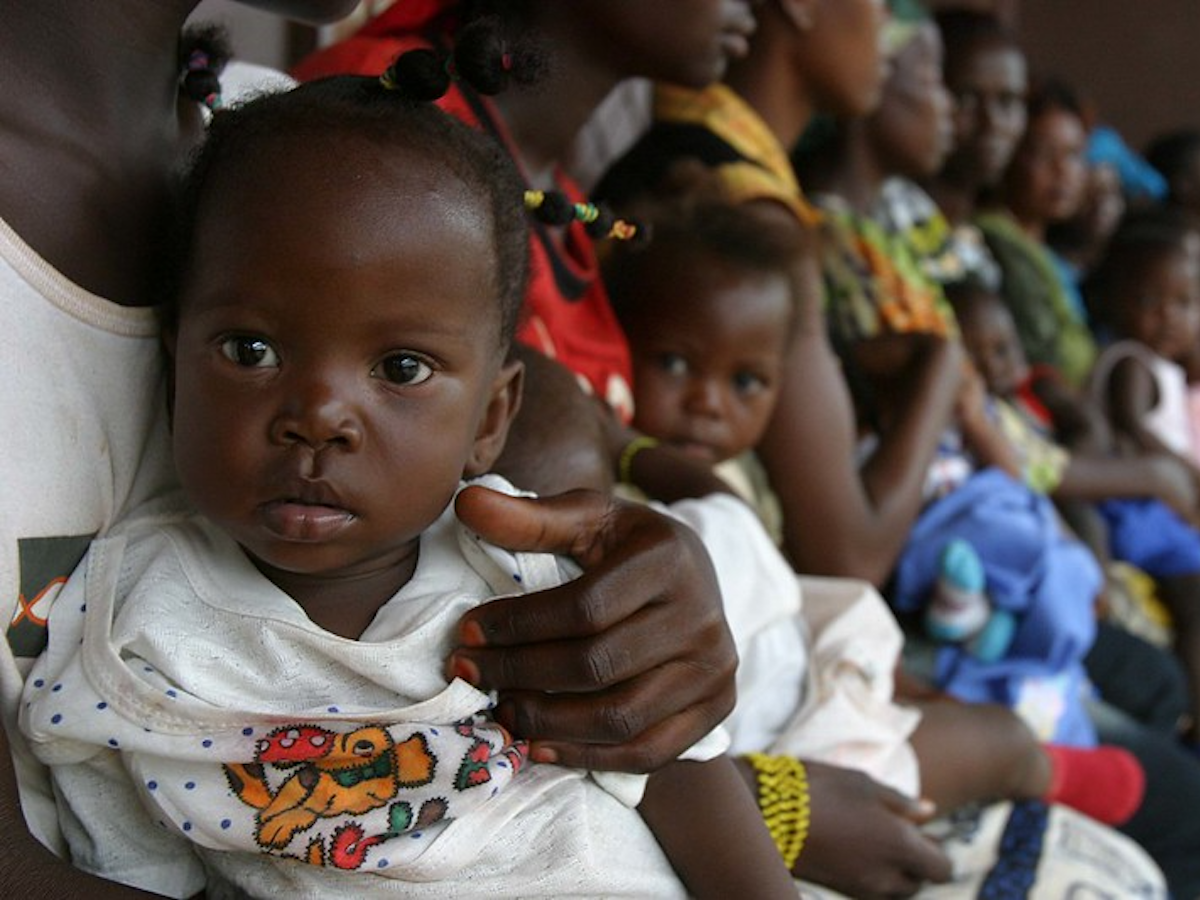
Journal of Medical Internet Research 2023;25:e47713. Image caption/credit: Mothers and babies aged between 0 and 5 years are lining up in a health post at Begoua, a district of the Central African Republic's capital Bangui, waiting for the two drops of the oral polio vaccine. Pierre Holtz for UNICEF via Flickr ((CC BY 2.0)
- Log in to post comments