










































Social Mobilization Guide for Vaccination Campaign and Routine Immunization
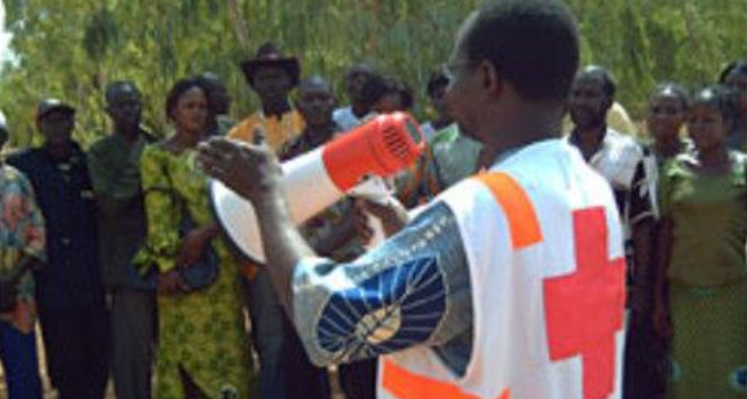
"A successful immunization programme depends upon effective vaccine supply and logistics, but it is just as important that the community has confidence in, and supports and demands, safe and effective immunization services."
The International Federation of Red Cross and Red Crescent Societies (IFRC) has learned that community participation in immunisation programmes results in higher coverage and ultimately reduces the incidence of vaccine-preventable diseases (VPDs). To ensure that immunisation services meet the needs of communities, managers and health workers (HWs) need to form a close partnership with communities, while using effective communication skills and tools. In that light, this guide focuses on the tools and techniques relevant to communication focused on social mobilisation (SM) for immunisation.
IFRC recommends house-to-house (H2H) mobilisation visits as a strategy to increase community demand for immunisation. H2H SM combines multiple communication channels but largely promotes interpersonal communication (IPC) between Red Cross and/or other community volunteers and the caregivers (mothers, fathers, guardians, and community leaders). This guide provides the "how", outlining a step-by-step approach to conducting an effective and fruitful H2H mobilisation visit. Objectives include:
- Provide evidence-based guidance on conducting practical SM and communication for vaccination campaigns conducted by Red Cross and Red Crescent (RC/RC);
- Facilitate the systematic application of SM within RC/RC to ensure a more coherent and comprehensive approach;
- Establish Standard Operating Procedures (SOPs) and train community members, volunteers, and community health workers (CHWs);
- Motivate volunteers through a consistent approach, supportive supervision, and clearly defined tasks; and Expand to other countries the work done in some RC/RC countries.
The guide explores topics such as:
- Conducting routine immunisation (RI): summary checklist
- Conducting supplementary immunisation activities (SIAs): summary checklists (national- and district-level)
- Communication methods - e.g., advocacy visits (for instance, with political, religious leaders) and H2H strategy
- Planning for SM - e.g., team selection/composition for SM
- Training for conducting H2H mobilisation
- Messages
- Communication channels and media mix
- Monitoring and evaluating the SM campaign
The guide concludes with 10 annexes (e.g., Survey - Assessing Awareness of an Upcoming SM; and Example of an Action Plan at the Local Level).
63
Image credit: IFRC
- Log in to post comments