










































Subnational Gender Inequality and Childhood Immunization: An Ecological Analysis of the Subnational Gender Development Index and DTP Coverage Outcomes across 57 Countries
World Health Organization, or WHO (Johns, Kirkby, Goodman, Heidari, Shendale, Hosseinpoor); Gavi, the Vaccine Alliance (Munro)
"Better understanding the drivers of subnational inequalities - such as subnational differences in gender inequality - can enable targeted and tailored approaches to improve not only gender equality, but also reach these missed communities to improve immunization coverage and equity."
Gender-related barriers to immunisation operate at the individual, interpersonal, community, and broader socio-structural levels. These barriers include those faced: by caregivers (who are frequently women), such as lower health education and literacy, travel restriction, and limited household decision-making influence; by health workers (who are disproportionately women), such as gender pay gap, workplace harassment, and inequitable exposures to health risks; and by policymakers (often men), who enact laws and guidelines that may amplify or reinforce gender inequities. This paper hypothesises that the relationship between greater gender equality and higher immunisation coverage that has been demonstrated at national and individual levels will also be evident when examining subnational-level data.
The researchers conducted an ecological analysis examining the association between the Subnational Gender Development Index (SGDI) and 2 measures of immunisation: zero-dose diphtheria-tetanus-pertussis (DTP) prevalence and 3-dose DTP coverage. Using data from 2010-2019 across 702 subnational regions within 57 low- and middle-income countries (LMICs), they assessed these relationships using fractional logistic regression models, as well as a series of analyses to account for the nested geographies of subnational regions within countries. Subnational regions were dichotomised to higher gender inequality (top quintile of SGDI) and lower gender inequality (lower four quintiles of SGDI).
Adjusted models show that subnational regions with higher gender inequality (favouring men) are expected to have 5.8 percentage points greater zero-dose prevalence than regions with lower inequality [16.4% (95% confidence interval (CI) 14.5-18.4%) in higher-inequality regions versus 10.6% (95% CI 9.5-11.7%) in lower-inequality regions], and 8.2 percentage points lower DTP3 immunisation coverage [71.0% (95% CI 68.3-73.7%) in higher-inequality regions versus 79.2% (95% CI 77.7-80.7%) in lower-inequality regions]. In models accounting for country-level clustering of gender inequality, the magnitude and strength of associations are reduced somewhat, but they remain statistically significant in the hypothesised direction.
In discussing the findings, the researchers note the alignment of these data with prior work examining gender inequality and childhood outcomes. These studies find that gender equality and the related construct of women's empowerment (e.g., as measured by social independence [including such items as schooling attainment and access to information], decision-making control, and attitudes towards violence) are associated with improved immunisation coverage, decreased child mortality, and other positive child health outcomes. Existing work has also demonstrated substantial subnational inequality in immunisation, highlighting the relevance of subnational policies and outreach efforts, as well as intra-country variations in immunisation access and resources.
In exploring avenues for future study, the researchers note that, while these findings demonstrate an association between gender inequality and immunisation coverage, they do not elucidate the pathways through which that association may be causal. Qualitative work could clarify the contextual pathways through which restrictive gender norms and gender-related barriers hamper immunisation efforts. Further work is also needed to understand which interventions are effective in addressing and circumventing gender-related barriers to immunisation. Multi-sectoral, gender-responsive, and gender-transformative approaches may hold promise to improve immunisation coverage and equity.
In conclusion: "In conjunction with published work demonstrating meaningful associations between greater gender equality and better childhood immunization outcomes in individual- and country-level analyses, these findings lend further strength to calls for efforts towards greater gender equality to improve childhood immunization and child health outcomes broadly."
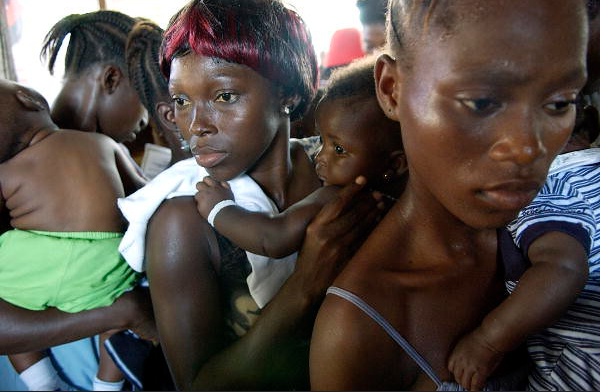
Vaccines 2022, 10, 1951. https://doi.org/10.3390/vaccines10111951. Image caption/credit: Mothers line up with their children to receive polio vaccinations in Salamanca, Liberia. UN Photo/Eric Kanalstein via Flickr (CC BY-NC-ND 2.0)
- Log in to post comments