










































Vaccination Demand Observatory
"We can't address people's concerns if we don't first understand them. Then we must speak with - not at - people, where they are, about what matters to them." - Angus Thomson, PhD, Senior Social Scientist for UNICEF
Launched in April 2021, the Vaccination Demand Observatory (VDO) offers tools, training, technical support, and research to equip in-country teams to mitigate the impact of misinformation and mistrust on all vaccines. This effort to combat vaccine hesitancy worldwide is a collaborative project of the United Nations Children's Fund (UNICEF), PGP (The Public Good Projects), and the Yale Institute for Global Health.
The VDO is organised in three pillars:
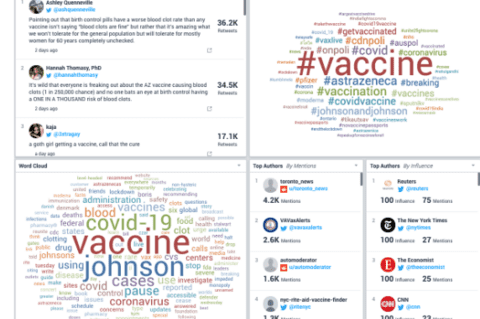
- Social listening analytics and insight generation: The VDO aggregates UNICEF's existing community reporting tools (e.g., surveys, field reports, and local media sources not included in any existing global media monitoring system) into a single system to track and characterising local vaccine narratives. The VDO focuses on aggregating both online and offline listening sources to ensure the voices of the digitally disenfranchised are also heard. The VDO Dashboard is built to support individual countries' immunisation programmes and risk communication and community engagement (RCCE) task forces. Alerts to misinformation, disinformation, and gaps in information are provided to each participating country and visualised within the Dashboard.
- A training and education programme to tackle challenges related to all vaccines: The VDO's field infodemiology training consists of modules delivered via mobile phone and online, with practical hints and resources designed to help infodemic managers to monitor misinformation and respond to it with evidence-based communication strategies. The VDO also provides ongoing training and technical assistance to country offices, partners, and stakeholders in these areas: disease surveillance and social network analysis; field investigations and study design; communication, including communication for development (C4D), RCCE, and methods of marketing and advertising. Technical assistance includes continued support with media monitoring programmes, data sharing, and other technical aspects of the VDO.
- The Vaccine Acceptance Interventions Lab (VAIL): VAIL prioritises action-oriented research to respond to misinformation, drawing on behavioural and social research and insights from social listening to develop engaging, relevant content to fill information gaps. VAIL facilitates country-level research, including process and outcome evaluations throughout the year. UNICEF country offices play an active role in these studies, sharing their local expertise globally. The Yale Institute for Global Health develops and tests communications across multiple countries and populations. These findings are then shared through the VDO with UNICEF country offices and their partners and in peer-reviewed publications. VAIL also develops "inoculation" messages to "vaccinate" people against vaccine misinformation. The content and programmes are rapid field tested for tone, format, and behaviour change impact before being implemented. They are customised to each country's context and evaluated by potential traction and impact. VAIL also provides communication materials, such as video, images, and text, that are freely available. For example, the VDO's "Vaccine Misinformation Management Field Guide" (available at Related Summaries, below) aims to help organisations develop strategic and well-coordinated national action plans to rapidly counter vaccine misinformation and build demand for vaccination.
Working much like a disease surveillance system, a VDO-supported country programme will contextualise vaccine conversations, characterising questions, concerns, and misinformation, to provide regular updates to local health agencies and partner organisations. A field infodemic manager coordinates the listening, analytics, and identification and assessment of vaccine rumours and information gaps to provide real-time actionable insights and recommendations to the teams who are engaging with communities. The VDO's first on-the-ground project is ongoing in multiple West African countries, supporting UNICEF polio teams in the launch of a new oral polio vaccine.
Immunisation and Vaccines
The VDO was created as countries began rolling out COVID-19 vaccination. Public uncertainty about this and other phases of the pandemic has been exacerbated by an "infodemic", a confusing epidemic of information and misinformation. Meanwhile, children's access to education, health, and protection services - including vaccines - was severely disrupted by the pandemic.
As a provider of vaccines to almost half of the world's children, UNICEF's local-level footprint, which takes the form of RCCE, social mobilisation, and partnership in countries around the world, is informed in real time by the VDO's social listening programme. UNICEF also works through the Vaccination Demand Hub, a global coordination and knowledge-sharing platform that provides thought leadership and technical guidance to regions and countries to build public trust and confidence in vaccination.
Adaptive Social Listening to Inform Effective Vaccine Public Engagement Strategies [PDF], by Joe Smyser, PGP, April 15 2021; "Vaccination Demand Observatory launched to strengthen local communication programmes to address vaccine misinformation", UNICEF press release, April 28 2021; and VDO - all accessed on November 2 2022. Image credit: Joe Smyser
- Log in to post comments