










































Vaccine Hesitancy, A Public Health Problem
University of Camerino (Petrelli, Contratti, Grappasonni); University of Milan (Tanzi)
"Streamlining resources through a continual process of study and sharing of results (and unsuccessful attempts) obtained is essential, and will contribute to creating a cooperative network, a shared process for the solution to the problem of vaccine hesitancy."
This paper analyses the possible causes of vaccine hesitancy (VH), the scope of the phenomenon, and its consequences in an attempt to identify effective actions to address this problem.
VH is described here as delay in acceptance, or refusal, of vaccines despite availability of vaccination services. VH is complex and context specific, varying across time, place, and vaccines. The paper cites a survey on vaccine confidence of approximately 66,000 individuals across 67 different countries. The data analysis revealed that the European region has a higher percentage of negative opinions on vaccine importance, safety, and effectiveness. There is evidence that the importance of immunisation is still acknowledged in low- and middle-income countries, where the safety of a vaccine is secondary to the real risk of contracting infectious diseases like polio, diphtheria, etc.; in the above-mentioned survey, it is underlined that 0.2%, 1.2%, and 1.3% of respondents from Bangladesh, Saudi Arabia, and Argentina are skeptical about vaccine safety, whereas the same sentiment is expressed by 45.2%, 38.3%, and 31.0% of French, Bosnian, and Japanese respondents. Furthermore, the data from the survey reveal that the subgroup composed of people over age 65 is more confident to express the efficacy of vaccines, probably because they well remember the diseases against which we defend ourselves today.
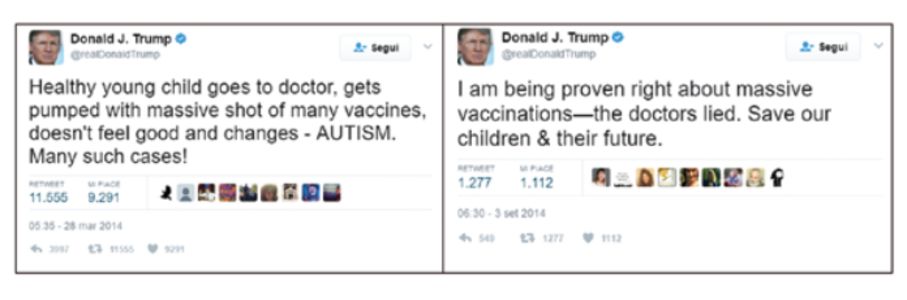
What has contributed to the evolution and spread of VH? The authors look, for example, at the role of the World Wide Web, whose democratic nature has led to a loss of credibility of content (some reliable knowledge is difficult to find) and of authors (everyone is his or her own editor). Disinformation in the field of vaccines is often well planned by a clique of people who also take advantage of the way they can spread their message quickly through social media. The authors argue that Icelanders use this powerful tool (the internet) in the right way. They cite a 2013-14 internet-based survey conducted in Iceland to gauge public opinion on childhood vaccinations showing very low levels of VH and a similar result (92% of positive responses) revealing the deep trust individuals place in Icelandic health authorities. In a country where the internet is considered a basic necessity, used by almost everyone (100% of people aged 16-24 and 95% of people aged 24-74 - data updated to 2014), its use doesn't represent a dangerous determinant for vaccine acceptance and VH. "We should see it as an example for a use of digital platforms that is more correct and aware, that is, at the same time, monitored and reviewed by those in charge, especially when fundamental rights like public health and vaccines are at stake."
The paper next covers strategies of intervention that have been created to address VH. These include, for instance:
- Continuous monitoring of the problem - using, for example, the TIP (Tailoring Immunization Programmes), a guide developed by the World Health Organization (WHO)/Europe to identify hesitant people after a targeted division of the population in sub-groups at sub-national level such that barriers to vaccination can then be determined, and evidence-based tools for tailored interventions can be implemented.
- Democratic measures to rescue hesitant people and to perform a cultural change in the field of vaccines - along the lines of the WHO recommendation that identification of hesitant individuals must be followed by their interception and salvage through multi-component strategies. "Contrary to what might be thought, parents don't just have to learn about concepts, but they also have to establish a real, interactive dialogue, in which first of all their natural concerns and fears must be listened to and understood." The authors cite a study published by the British Medical Journal, which found that using pictures and short stories about sick children to inform parents on risks related to vaccine-preventable diseases, is far more effective than attempts to correct mistaken beliefs on the risks linked to vaccines. The authors suggest that the method/timing of face-to-face dialogue is also important; in their opinion, communication between a doctor and parents during the pre-birth period could be successful for a number of reasons: a) the greater amount of time future parents have to take part in one or more meetings with healthcare workers or experts in the field; b) well-timed interception of uncertain or hesitant parents; c) the opportunity to reach an informed or right choice before the birth of the child; d) awareness of lack of proven risks of immunisation during pregnancy. Healthcare workers must develop skills like: a) extensive knowledge of VH; b) ability to enter into a dialogue with any person showing uncertainty, c) sensitivity in the individuation of hesitancy in any particular person, understanding the reasons for this hesitancy to help him/her and increase their knowledge about the problem. The process of cultural change in the field of vaccines involves not only adults (parents, healthcare workers, or graduate students), but must also begin from a young age, starting from the education imparted to adolescents and also to younger children. Also noted here is the fact that the development of campaigns (e.g., using mass media) to raise awareness about the advantages of vaccines and their safety through a targeted strategy of advocacy is more feasible using tailored marketing strategies with an easy understandable communication format. Advocacy can be realised with many means of expression, including photography.
- Undemocratic measures - necessary in particular moments of crisis and emergency, like when a sudden drop in vaccine coverage is taking place, something that is difficult to tackle in a short space of time. In fact, the advantage of these measures, contrary to the previous measures mentioned, consists in the rapid achievement of results, due to taking action in contrast with people connected to anti-vaccination movements and others who are hesitant or dubious. Examples include mandatory vaccine requirements for admission to public or private first and secondary schools, including day-care centres. The real danger of measures like this (and others discussed in the paper) consists in the "undemocratic" nature of the decision, which "could increase people's discontent because they are being deprived of their freedom of choice."
The paper concludes with a look at the future of VH and interventions, pointing to the fact that "Their validity is always limited to the time and context of application, and for this reason research in the field of vaccines is still in need of significant investments, both in terms of economic and human resources."
Annali di igiene: medicina preventiva e di comunita 2018; 30(2): 86-103 doi:10.7416/ai.2018.2200
- Log in to post comments