










































Group Influence on Attitudes Towards Polio Vaccination in Pakistan: Role of Group Identification and Perceived Group Support for Polio Vaccines
Quaid-i-Azam University
"The influential role of group norms in the context of vaccination holds important implications for mobilising community as a whole to promote vaccine acceptance."
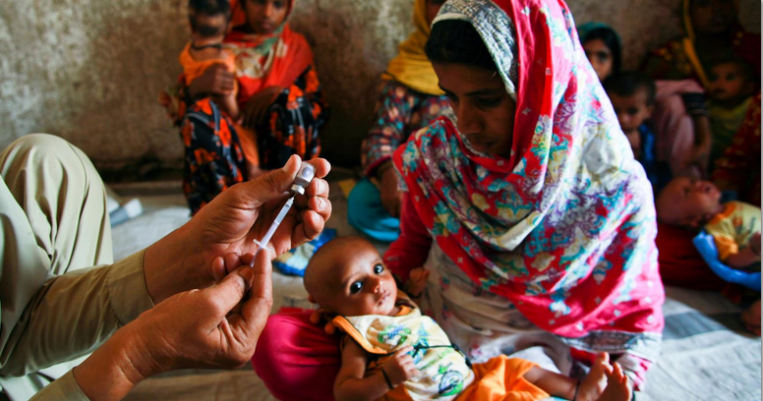
Pakistan reported the highest cases of polio globally in 2020. Significant barriers responsible for the persistence of polio in Pakistan are vaccine hesitancy and refusal by parents. Polio vaccine refusals are common among individuals citing religious reasons and individuals belonging to certain ethnic groups, like Pakhtuns; therefore, affiliation with religious or ethnic groups seems to be associated with vaccine decision-making. This article studies the moderating role of perceived group normative support on the effect of group identification (GI) on scepticism and advocacy domains of attitude towards polio vaccination.
The concept of GI is derived from social identity theory, according to which groups help in defining the self-concept of people and provide them with an identity. GI or the intrinsic desire to fit into a group makes people conform to expected standards or norms of that group, which are group members' beliefs about what is acceptable (actual or perceived). Group norms are influential in the context of vaccination: Research suggests that strong group norms that are supportive of vaccination reduce hesitancy and increase vaccine intentions in case of influenza and COVID-19 vaccines. The present study explores how this link operates in context of polio vaccination.
The cross-sectional analytical study was conducted at the National Institute of Psychology, Quaid-i-Azam University, Islamabad, Pakistan, in June 2020. Participants included 310 adult residents of Pakistan who were approached through the online platform Psytoolkit. Data were collected by means of 3 scales: (i) attitude towards polio vaccination scale (ATPVS) - with 2 sub-scales of scepticism and advocacy (where high scores on the latter indicated belief in the effectiveness of polio vaccines and support for the vaccination campaign); (ii) group identification scale (GIS); and (iii) a measure of perceived group normative support (PGNS) for polio vaccination.
The study found that scepticism was negatively associated with advocacy (p<0.01) and PGNS (p<0.01). Advocacy was positively associated with GI (p<0.01) and PGNS (p<0.01). The relationship between GI and PGNS was also positive (p<0.01). GI led to a more prominent increase in advocacy of polio vaccination under high levels of PGNS as compared to low levels of PGNS. Thus, PGNS moderated the relationship between GI and advocacy of polio vaccination.
The finding that increase in GI was related to positive attitudes towards polio vaccination reflects the fact that GI enhances group members' willingness to engage in actions that benefit their group's welfare. This concern for social welfare also encompasses vaccine decision-making. Increase in PGNS for polio vaccination leads to an increase in advocacy of polio vaccination and a decrease in scepticism towards polio vaccination because societal norms and collective values affect one's attitudes about vaccination. For example, supportive group norms predict increase in vaccine intention and acceptance.
The main finding of the present study is that PGNS interacted with GI to positively affect advocacy of polio vaccination. This is in line with the assumption that GI influences attitudes by means of group norms because the desire to identify with one's groups makes one conform to the expected standard of that group, including in the case of health-promoting behaviour.
In light of these findings, the researchers suggest that vaccination can be promoted by appealing to consensus and unity of norms. Furthermore, since GI is what promotes aligning of attitudes with group norms, promoting identification with groups that support polio vaccination can lead to the internalisation of these positive norms. For example, religion matters in polio refusals, so doubts about polio vaccines can be assuaged by enlisting the help of influential figures from a religious group.
In conclusion: "This research points towards the benefits of group influence in promoting support for vaccination. Furthermore, the insight gained can help in identifying individuals and contexts that increase susceptibility to anti-polio vaccination propaganda. In the long run, more individualised campaigns can be designed and implemented that can help in achieving complete eradication of polio from Pakistan."
Journal Of Pakistan Medical Association May 2022, Volume 72, Issue 5. Image credit: Dan Casperz/DFID via Flickr (CC BY-SA 2.0)
- Log in to post comments