










































Exploring Public Perceptions of Vaccine-Derived Poliovirus and a Novel Oral Polio Vaccine in the Democratic Republic of the Congo, Kenya, and Nigeria
FHI 360 (Lorenzetti, Namey, Lawton); United Nations Children's Fund (UNICEF) headquarters (Haydarov, McIntosh); UNICEF Nigeria Country Office (Nam, Hasan); UNICEF Western and Central Africa Regional Office (Monj); UNICEF Kenya Country Office (Abeyesekera); UNICEF Democratic Republic of the Congo (Kabwau)
"Scientifically-informed decisions intended to benefit the community may not be well-received by communities if they are not supported by adequate communications interventions."
In November 2020, the Global Polio Eradication Initiative (GPEI) introduced novel oral polio vaccine Type 2 (nOPV2) to address circulating vaccine-derived poliovirus Type 2 (cVDPV2). Although nOPV2 is a more genetically stable vaccine than monovalent OPV Type 2 (mOPV2), communities and health workers may not initially trust it due to its novelty, potential side effects, and introduction under an Emergency Use Listing (EUL). This paper explores how nOPV2 introduction might be perceived by stakeholders and identifies communications barriers related to nOPV2 hesitancy.
The research was conducted in the Democratic Republic of the Congo (DRC), Kenya, and Nigeria between January and March 2020. The team used a rapid qualitative approach to conduct focus group discussions (FGDs) and in-depth interviews (IDIs) with 4 stakeholder groups: caregivers of children under 5, polio frontline workers, healthcare practitioners, and social/health influencers. Data are presented according to awareness, attitudes/beliefs, and concerns about cVDPV2 and nOPV2. Some detailed findings and/or illustrative quotes are provided in supporting tables.
The FGDs and IDIs revealed that, although all sites have experienced cVDPV2 outbreak responses in recent years, awareness and knowledge of cVDPV2 was low. However, many described their beliefs regarding the causes of recent polio outbreaks or positive environmental samples in their countries. For example, frontline workers pointed to social resistance in rural areas or among religious groups as one cause of outbreaks. As a new vaccine, there was no baseline awareness of nOPV2; however, there was high awareness of previous OPV campaigns and common expressions of campaign fatigue across sites.
All stakeholder groups anticipated initial hesitancy, fear, and suspicion from caregivers due to nOPV2 introduction, with primary concerns linked to vaccine testing, safety, effectiveness, side effects, and support from authorities. Many caregivers displayed a "wait-and-see" approach, expressing the desire to allow time to confirm there were no adverse reactions. Other caregivers (e.g., in DRC and Kenya) suggested that the "real" motivation behind vaccination campaigns was to sterilise certain groups, and a few social influencers in Kenya said a new vaccine was another sign of Western exploitation of Africans for pharmaceutical development.
However, frontline workers and healthcare practitioners were generally supportive of the introduction of nOPV2 and tended to view it as a positive development if it is proven to be an improved vaccine (for example, if it is shown to be more effective and, therefore, reduces the need for frequent polio campaigns), well-tested, and proven safe. Across sites, most caregivers indicated they would allow their child to receive nOPV2 if proven safe and effective. Some caregivers believed that nOPV2 would be beneficial because international organisations or their government were endorsing its use.
Across stakeholder groups and sites, respondents believed that acceptability of nOPV2 hinged upon information, including content and source of messages. Caregivers emphasised the need to raise awareness, provide a clear explanation of the new drug, and answer common questions. Caregivers will expect information on what is being offered and why from healthcare providers and frontline workers, but they will look to traditional and religious leaders and their own social networks for endorsement and to build confidence. Frontline workers across sites frequently expressed a need for information and training to equip themselves with strategies for countering hesitation among caregivers. Nearly all frontline workers believed they could be effective in deploying nOPV2 if training and communication strategies were in place.
In DRC and Kenya, social influencers offered suggestions for effectively disseminating information to increase confidence in nOPV2, most of which focused on cultivating awareness and trust with religious and community leaders. A few social influencers also pointed to the role of media to influence public opinion about nOPV2. Journalists across sites wished to clearly explain the introduction of nOPV2 and reported needing answers about the testing conducted to develop the vaccine, differences between old and new vaccines, and the reasons why a change had been made. Journalists in Nigeria felt that clear and accurate information, presented without jargon, would be the foundation of their own reporting.
However, a subset of frontline workers and social influencers believed that saying nothing about the switch to nOPV2 would better facilitate acceptability, as this would avoid raising alarm and, potentially, a new wave of vaccine hesitancy. Others endorsed a degree of transparency yet contended that concepts related to the changes to OPV have associations with negative perceptions (e.g., genetic modification) that could be exacerbated by public discussion. Healthcare practitioners felt some caregivers may perceive a hidden agenda or that educated caregivers in Kenya and Nigeria would look online to learn about genetic modification and find only misinformation. A Kenyan journalist recommended that information be shared carefully, suggesting that it may be "better just to say it's an improved vaccine".
Only healthcare providers and social influencers were asked how the introduction of nOPV2 under the EUL might affect acceptability and uptake of the vaccine. Stakeholders called for clear communication to caregivers and those who influence their decision to vaccinate about the rationale for roll-out under the EUL.
Thus, according to respondents in this research, communications interventions that present appropriate information endorsed by local stakeholders have an opportunity to increase vaccine acceptability and reduce hesitancy, whether by trying to address rumours or assuage fears of the unknown. Caregivers indicated that their confidence is boosted when they hear consistent messages from health authorities (from the ministry level down to frontline workers), media, and community and religious leaders. Findings suggests that social media will be influential in shaping the perceptions of caregivers, though this will vary by location.
In conclusion, the researchers suggest that ensuring alignment of messaging among health officials, community leaders, traditional media, and social media will be important for maintaining caregiver acceptance of nOPV2. They urge: "public health officials have a small window for 'getting things right' when rolling out new programs, highlighting the importance of incorporating and addressing the specific attitudes, beliefs, and concerns of stakeholders presented here in the development of an nOPV2 communication strategy."
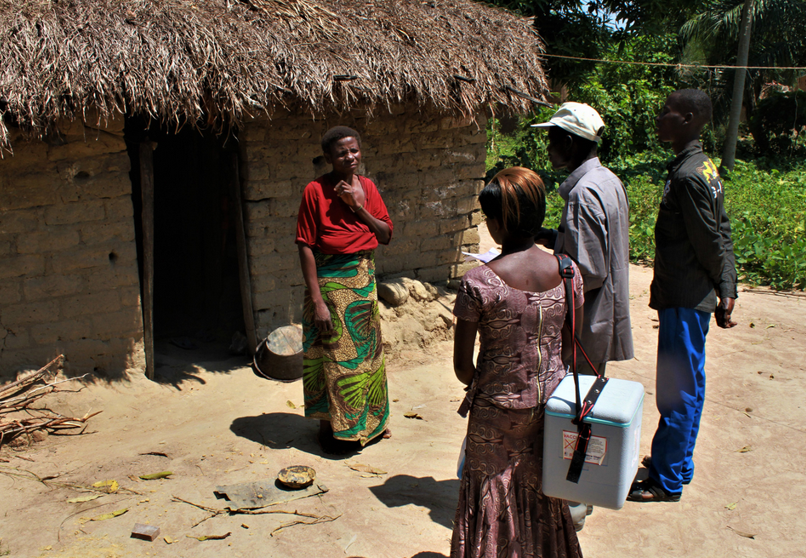
Vaccine, https://doi.org/10.1016/j.vaccine.2022.05.020. Image credit: © UNICEF/Serge Wingi
- Log in to post comments