










































Zero- or Missed-dose Children in Nigeria: Contributing Factors and Interventions to Overcome Immunization Service Delivery Challenges
University of Iowa (Mahachi); independent consultant (Kessels); World Health Organization, or WHO (Boateng, Achoribo, Mitula, Ekeman, Lochlainn, Rosewell, Sodha, Abela-Ridder, Gabrielli)
"...highlights that the systemic, long-standing, and population-level challenges faced to improve access to childhood vaccination in Nigeria are well known and widely studied - and begs the question of how Nigeria can operationalize this knowledge to meet its goal of sustainably improving immunization coverage..."
People who do not receive a single dose of any vaccine in the routine national immunisation schedule ("zero dose") or who do not complete the schedule ("missed dose") are not only vulnerable to vaccine-preventable diseases but are often already disadvantaged due to poverty, conflict, and lack of access to basic health services. Globally, more 22.7 million children are estimated to be zero- or missed-dose, of which an estimated 3.1 million reside in Nigeria. This scoping review aims to summarise all identified risk factors and interventions specific to zero- or missed-dose children in Nigeria. The below summary focuses on communication-related findings and insights to emerge from the review.
A search of the PubMed/MEDLINE and Embase databases for relevant papers published between April 2011 and April 2021 led to 127 papers that met inclusion criteria. The most common vaccine studied was polio (n = 26, 21% of papers).
Risk factors for zero-or missed-dose children are categorised in three groups: (i) individual factors; (ii) community factors; and (iii) health system factors. They are prioritised by frequency of inclusion in the studies considered, referred to as "n". In summary, the most frequently identified factors for determining childhood vaccine uptake were: maternal education and literacy (n = 22); access to health facilities (n = 17); socioeconomic status (n = 16); fears and misconceptions about vaccination (n = 14); vaccine availability (n = 13); and giving birth in a health facility (n = 12). Literature on reported risk factors within Nigeria aligns with key risk factors reported in other parts of the world, including knowledge of vaccines, parental education, misinformation, and lack of access to vaccines and healthcare services. Missed opportunities for vaccination tend to be greater in low- and middle-income settings.
Literature assessing implementation of interventions reflected the historically polio- and campaign-centric strategy used in Nigeria. Most interventions were assessed as part of a multi-factorial approach and were identified as effective by the respective study authors. Specific interventions are categorised in four groups: (i) implementing community engagement, sensitisation, and mobilisation; (ii) sustaining vaccination coverage; (iii) reaching out specifically to zero- or missed-dose children; and (iv) holding vaccination campaigns. Examples of findings reported in the literature in the first (i) category of intervention include:
- Training community members to advocate for vaccination: Training volunteer community mobilisers, traditional and religious leaders (e.g., traditional barbers), schoolteachers, and other community leaders to advocate for vaccination was found to have improved vaccination acceptance and uptake, particularly in traditional Muslim societies. Actions included "baby tracking" by volunteers to remind new mothers to vaccinate newborns and involvement of women and youth to help identify missed children.
- Engaging hard-to-reach communities: Engaging youth groups, leveraging existing structures, and using multi-pronged approaches to extend vaccination services, including screening tools for healthcare workers to identify vaccination needs and mobilising communities, increased coverage in hard-to-reach and security-challenged communities.
- Providing health education interventions for caregivers to increase vaccine awareness: Focused, short (5-minute) health education sessions were more effective than longer (10- to 15-minute) generic health promotion messages, and frequent vaccination messaging was preferred (i.e., not just during vaccination campaigns). Successful interventions included group health education for parents and pregnant women attending vaccination or antenatal clinics, and participatory learning on infant vaccination for older women.
- Tailoring communication to preferred channels: Healthcare workers and media are the most common sources of information, with radio and town announcers preferred in rural settings and media preferred in urban and rural settings. Radio / television and home visits were preferred by Muslim women unable to leave their homes due to Purdah system.
- Building awareness through media campaigns: Activities included media, sensitisation and enlightenment campaigns, statements from religious leaders, road shows, etc. to increase vaccine awareness.
- Engaging community liaisons: Engaging nomadic 'Ardos'a, who know migratory patterns of their communities, to act as community liaisons and to provide dates and times of vaccination visits helped mobilise nomadic communities for childhood vaccination.
- Training healthcare workers: Strengthening healthcare workers' interpersonal communication skills to increase successful interactions with caregivers and arranging home visits by healthcare workers helped increase coverage.
- Offering language support: Providing interpreters for native languages in primary healthcare facilities enabled better communication around vaccination.
The most frequently mentioned interventions in all categories involved: training community members as vaccination advocates (n = 8); engaging hard-to-reach communities (n = 8); sending reminders for follow-up appointments (n = 5); and offering health education to increase vaccine awareness (n = 4).
According to the researchers, the findings from this review "could be operationalised...to inform Nigeria's next review of existing vaccination plans; and as a basis to further investigate risk factors and successful interventions - e.g., to better understand root-causes, and /or identify specific measures and recommendations for future action."
In conclusion: "improving childhood vaccination coverage in Nigeria will require substantial and sustained commitment for implementation of routine childhood vaccination programs. Such efforts will need to be adaptive to local circumstances, mindful of the needs of Nigeria's heterogenous population, and agile in the face of inevitable future challenges that may distract focus and resourcing."
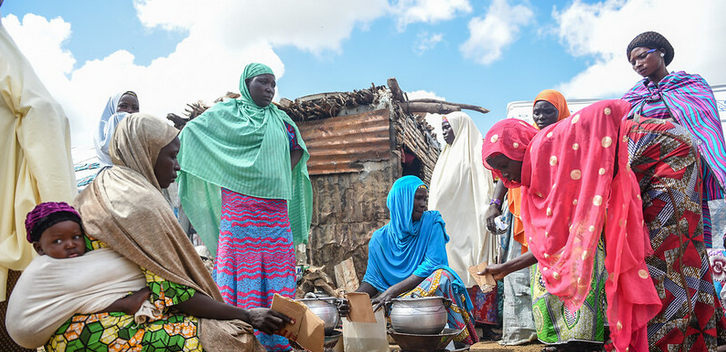
Vaccine https://doi.org/10.1016/j.vaccine.2022.07.058. Image credit: rawpixel.com / U.S. Agency for International Development - CC0 1.0 Universal (CC0 1.0)
- Log in to post comments