










































Religious Affiliation as a Driver of Immunization Coverage: Analyses of Zero-Dose Vaccine Prevalence in 66 Low- and Middle-Income Countries
Federal University of Pelotas (Santos, Cata-Preta, Wendt, Arroyave, Barros, Victora); Pontifícia Universidade Católica do Paraná (Wendt); Gavi, The Vaccine Alliance (Hogan, Mengistu)
"Analyses of gaps in coverage according to religion are relevant to renewing efforts to reach groups that are being left behind, with an important role in the reduction of zero-dose children."
Belief systems can have direct implications on health-seeking behaviour, including vaccination. For instance, religious beliefs can negatively affect vaccination uptake through perceived theological objections to vaccination. With the goal of informing interventions meant to increase uptake of vaccination in zero-dose communities, this study explores the links between religion and zero-dose status across 66 low and middle-income countries (LMICs).
The surveys included in the analyses were all Demographic and Health Surveys (DHS) and Multiple Indicator Cluster Surveys (MICS) with publicly available datasets that were carried out from 2010 onwards in LMICs and that provided information on child vaccination status and household religion. The proportion of children who failed to receive any doses of a diphtheria-pertussis-tetanus (DPT)-containing vaccine - a proxy for no access to routine vaccination or zero-dose status - was the outcome of interest. Differences among religious groups were assessed using a test for heterogeneity. Additional analyses were performed controlling for the fixed effect of country, household wealth, maternal education, and urban-rural residence.
A total of 159,063 children from 66 countries were included in the analyses. In 27 countries, there was significant heterogeneity in no-DPT prevalence according to religion. The lowest frequency of no-DPT children was observed among Buddhists, followed by Hindus, both of which had significantly lower prevalence of no-DPT compared to Christians. On the other extreme, folk religions and Muslims showed the highest frequency of no-DPT in the unadjusted analyses. These analyses are likely biased by national no-DPT prevalence levels in the few countries where some religions are common, as is the case for Hindus and Buddhists. The bias is removed when fixed effects for country are included in the model.
Pooled analyses adjusted for wealth, maternal education, and area of residence showed that Muslim children had 76% higher no-DPT prevalence than Christian children. Even in Muslim-majority countries, Muslim children were less likely to be vaccinated than children from religious minorities in the same country. In addition, socioeconomic gaps in vaccination coverage were wider for Muslim children compared to children from other religions.
In short, the study found that children from Muslim households - as well as from Folk and religiously unaffiliated households, albeit to a lesser extent - had higher no-DPT prevalence compared to children from Christian households, even after controlling for national prevalence and household-level factors.
To explain the gaps in immunisation according to religion, literature cited here has pointed to active messages from religious leaders against vaccination, reliance on traditional healers, and/or resistance to Western medicine. In Africa, which includes most of the countries with high zero-dose prevalence, religious affiliation represents a major source of identity and social connection, with religious leaders having direct influence over the health decisions of members of their respective religious groups.
For example, in Nigeria, a country with one of the highest zero-dose prevalences, religious leaders play a significant role in individual attitudes, behaviours, and social norms that have historically influenced child health care, with strong assertions and speculations against vaccination. A polio immunisation campaign in 2003 had to be suspended in the northern states of the country due to a counter campaign in which Muslim leaders urged parents not to allow their children to be immunised. Claims were made that polio vaccines were contaminated with anti-fertility agents, carcinogens, and HIV, being part of a Western plot to reduce the Muslim population.
The researchers stress that there are nuances to keep in mind when interpreting the study's results:
- "[V]accine hesitancy is not driven by theological basis, but rather beliefs within specific communities....As a result, religious beliefs with respect to vaccination are complex and diverse within one religion."
- "[T]he overall pattern described in the study is not present in every country. Religious communities are diverse in terms of beliefs, religious expressions, and engagement even in the community level, let alone from a global perspective."
In conclusion: "Identification of religious gaps is likely essential for identifying delivery channels for health education regarding immunization in many countries. It also provides an important step for further in-depth investigations to elucidate the reasons for low coverage. Experience from Sierra Leone, Angola, and India suggests that involvement of Islamic leaders had positive effects on child immunization coverage,...indicating an important role for religious leaders and faith-based organizations in reaching zero-dose children."
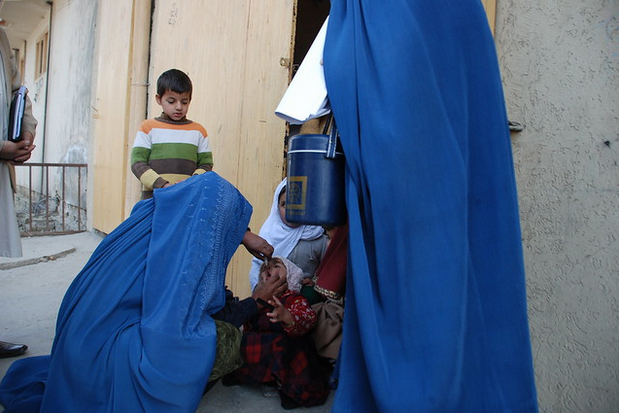
Frontiers in Public Health 10:977512. doi: 10.3389/fpubh.2022.977512. Image credit: © EU - photo by EC/ECHO/Pierre Prakash (CC BY-ND 2.0)
- Log in to post comments