










































Interventions for Improving Coverage of Childhood Immunisation in Low- and Middle-Income Countries
University of Calabar Teaching Hospital (Oyo-Ita, Meremikwu); Stellenbosch University and South African Medical Research Council(Wiysonge); University of Tucson (Oringanje); Excellence & Friends Management Consult - EFMC (Nwachukwu); University of Calabar Teaching Hospital - ITDR/P (Oduwole)
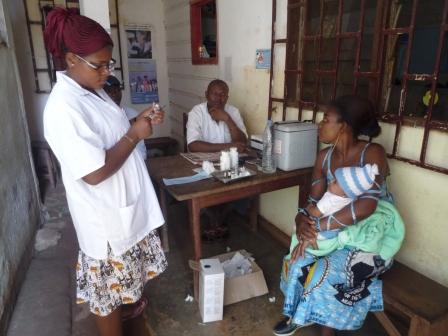
"Giving information about vaccination to parents and community members, handing out specially designed vaccination reminder cards, offering vaccines through regular immunisation outreach with and without household incentives (rewards), identifying unvaccinated children through home visits and referring them to health clinics, and integrating vaccination services with other services may lead to more children getting vaccinated."
The aim of this Cochrane review was to evaluate the effect of different strategies to increase the number of children in low-and-middle-income countries (LMICs) who are vaccinated to prevent infection by a disease. As explained here, the concerted global effort to use immunisation as a public health strategy began when the World Health Organization (WHO) launched the Expanded Programme on Immunization (EPI) in 1974. The proportion of children who receive the full series of 3 doses of diphtheria-tetanus-pertussis containing vaccines (DTP3) by 12 months of age is traditionally used as a standard measure of the programme's ability to reach the intended population and is used as an indicator of the overall performance of EPI programmes. About 18.7 million children under one year of age were said to be unvaccinated with DTP3 globally in 2014. Close to 70% of these children live in 10 LMICs in Africa and South-East Asia. There are varied reasons for failing to achieve universal coverage in different settings, such as vaccine hesitancy, which the Strategic Advisory Group of Experts on Immunisation (SAGE) defines as a behaviour that includes confidence, complacency, and convenience. In order to reach partially vaccinated and unvaccinated people, whatever the reason, the Decade of Vaccines Collaboration developed the Global Vaccine Action Plan (GVAP), whose mission is to extend, by 2020 and beyond, the full benefit of immunisation to all people, regardless of where they are born, who they are, or where they live. The GVAP coverage target was to achieve DTP3 coverage of 90% in all countries by 2015; but only 129 (66%) countries have achieved this coverage target as of this writing.
Table 1 in the review presents a matrix of interventions to address the wide range of issues affecting uptake of vaccines in various settings due to social, economic, cultural, geographical, political, and religious factors. Broadly, these strategies could include recipient-oriented interventions, for example, communication interventions to inform and educate through face-to-face interaction, use of mass media, printed material, etc; provider-oriented interventions, such as audit and feedback and chart-based or computerised provider reminders; health system interventions, such as outreach programmes and improved quality of delivery of care; and advocacy to promote the development of policies to support vaccine uptake.
Eligible studies were randomised controlled trials (RCT), non-RCTs, controlled before-after studies, and interrupted time series conducted in LMICs involving children aged from birth to 4 years, caregivers, and healthcare providers. The review authors searched for studies that were published up to May 2016. Fourteen studies (10 cluster RCTs and 4 individual RCTs) met the inclusion criteria. These were conducted in Georgia (1 study), Ghana (1 study), Honduras (1 study), India (2 studies), Mali (1 study), Mexico (1 study), Nicaragua (1 study), Nepal (2 study), Pakistan (4 studies), and Zimbabwe (1 study). The interventions evaluated in the studies included community-based health education (3 studies), facility-based health education (3 studies), household incentives (3 studies), regular immunisation outreach sessions (1 study), home visits (1 study), supportive supervision (1 study), information campaigns (1 study), and integration of immunisation services with intermittent preventive treatment of malaria (1 study). These were implemented either as single interventions or as multi-faceted interventions.
The studies compared people receiving these strategies to people who only received the usual healthcare services. The researchers found moderate-certainty evidence that health education at village meetings or at home probably improves coverage with three doses of diphtheria-tetanus-pertussis vaccines (DTP3: risk ratio (RR) 1.68, 95% confidence interval (CI) 1.09 to 2.59). We also found low-certainty evidence that facility-based health education plus redesigned vaccination reminder cards may improve DTP3 coverage (RR 1.50, 95% CI 1.21 to 1.87). Household monetary incentives may have little or no effect on full immunisation coverage (RR 1.05, 95% CI 0.90 to 1.23, low-certainty evidence). Regular immunisation outreach may improve full immunisation coverage (RR 3.09, 95% CI 1.69 to 5.67, low-certainty evidence) which may substantially improve if combined with household incentives (RR 6.66, 95% CI 3.93 to 11.28, low-certainty evidence). Home visits to identify non-vaccinated children and refer them to health clinics may improve uptake of three doses of oral polio vaccine (RR 1.22, 95% CI 1.07 to 1.39, low-certainty evidence). There was low-certainty evidence that integration of immunisation with other services may improve DTP3 coverage (RR 1.92, 95% CI 1.42 to 2.59).
The included studies evaluated interventions that varied enormously in content and in the intensity of delivery, raising questions regarding the likely impact of interventions in different settings and regarding how best to implement the interventions. Furthermore, there is paucity of data on the sustainability of the interventions presented in this review, as none of the included studies reported long-term follow-up data. In exploring implications of this review for practice, one of the researchers' observations is that this review showed that evidence-based discussion that aims at knowledge translation to community members may be more effective than conventional health education strategies. However, it has been observed that interventions such as community meetings may be cost intensive. Health system interventions such as home visits and regular immunisation outreach sessions are likely to be useful for difficult-to-reach communities, they say, though there were no data to assess the cost of their implementation. Participant reminder interventions have consistently shown improvement in vaccination in this review from studies in LMICs and in another review from high-income countries (Jacobson Vann, 2005). Therefore, it may be possible to adapt this intervention to suit different settings. This review suggests that more rigorous studies are required to evaluate:
- participant reminder and recall interventions that are adaptable to LMICs, as this approach has been shown to be effective in high-income countries;
- community-based health education strategies, including mass campaigns, as these interventions may be more effective than facility-based health education;
- provider-oriented and multi-faceted interventions (e.g., reaching every district strategy) for improving childhood immunisation coverage in LMICs;
- regulation to make vaccination a requirement for school entry;
- incentives for vaccination providers; and
- plans of action for immunisation coverage and disease reduction.
"These studies should be based on factors influencing vaccination uptake within specified context, identified from qualitative studies, to aid translatability to similar contextual settings. Larson 2014 has identified the paucity of qualitative data as a setback to identifying how factors associated with vaccine hesitancy interact with one another."
Cochrane Database of Systematic Reviews 2016, Issue 7. Art. No.: CD008145. DOI: 10.1002/14651858.CD008145.pub3 - sourced from "Routine Immunization: A Personal View", July 16 2016, accessed on July 19 2016. Image credit: Cochrane Community
- Log in to post comments